Not the Maya, but Brussels: Italian political scientist explains to 1news.az who is setting a new doomsday date for Europe, and why

Until recently, humanity searched on its own for signs of an approaching apocalypse, listened to prophecies about the end of the world, and anxiously awaited fateful dates.
Today the situation looks far more unusual: it is now states themselves that are urging people to prepare for the possible collapse of the familiar world. Governments are advising citizens to stock up on water, food, medicines, and cash, warning of the risks of large-scale blackouts, cyberattacks, energy supply disruptions, and military conflicts. And while the end of the world used to be the stuff of conspiracy theories, talk of survival in the event of a global crisis is now increasingly heard at the official level.
The date of November 17, 2026, has attracted particular attention. According to viral publications, on that day the world will supposedly face a massive cyberattack, the internet will be shut down for three months, and bank accounts will be zeroed out. Some authors have already dubbed the alleged scenario «COVID 2.0». However, there is no reliable confirmation of these claims: in the United States, a routine test of the FEMA and FCC emergency alert system is indeed scheduled for November 17, but it has nothing to do with shutting down the global internet.
Particular attention is drawn to the scale of this campaign: according to the reports being circulated, at least 33 states are recommending that their citizens build up emergency supplies in case of emergencies. The United Kingdom is calling on households to prepare for three days of self-sufficiency, Germany recommends having a ten-day supply of essential products, while Sweden and Norway are aiming at roughly a week. At the center of the European preparedness strategy is the 72-hour standard — the period during which citizens must be able to meet their basic needs on their own.
But does this mean that the authorities really expect a large-scale catastrophe? And why does preparation for emergencies increasingly resemble a return to the atmosphere of the Cold War?
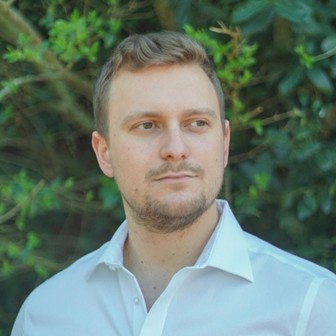
In an interview with 1news.az, associate professor at the Department of Political Philosophy and Geopolitics at UniDolomiti University in Belluno, Italian political scientist and professor Lorenzo Maria Pacini stated that what is happening cannot be viewed solely as a technical modernization of civil defense.
«These changes can no longer be called gradual: behind them lies a quite specific sequence of documents», the interviewee noted.
From a Finnish report to Brussels’ strategy: how Europe is changing its civil defense system
According to him, an important milestone was the report by former Finnish President Sauli Niinistö, «Safer Together», presented to the European Commission in October 2024. In March 2025, Brussels adopted the European Union Preparedness Strategy for emergencies, which introduced the widely discussed 72-hour self-sufficiency standard. Back in November 2024, Sweden sent households a brochure titled «If crisis or war comes». Subsequently, similar recommendations began to appear in other European states as well.
«On November 3, the European Commission supplemented these measures with practical recommendations for households and announced the holding of an annual EU Preparedness Day, which will take place for the first time on October 23, 2027», the expert noted.
However, as Pacini believes, it is not only the content of the recommendations that is changing, but the very philosophy of civil protection.
«In the Italian tradition, as in most countries of continental Europe, the civil protection system was created primarily to respond to earthquakes, floods, and man-made accidents. It relies on municipalities, volunteers, and the principle of mutual assistance after an emergency. The new model is based on the Scandinavian concept of comprehensive defense, according to which the civilian population is regarded as an integral part of the national defense system. It is no coincidence that the author of the aforementioned report was a Finnish politician», the political scientist explained.
He also drew attention to the change in official terminology: instead of the familiar «protection», the concepts of «preparedness» and «readiness», borrowed from military planning, are increasingly used.
«That is why I would say that Europe is not simply modernizing its civil protection system, but integrating it into a broader security and defense system. This is a political choice that deserves open discussion rather than being presented as an ordinary technical adjustment. The main problem lies in the reasons for what is happening: Europe wants to go to war with Russia. That, in my view, is precisely what explains the change of course», the expert explained.
Pacini links the change in Europe’s course to the policies of Brussels itself. In his opinion, tensions in international relations have largely become a consequence of the decisions of European leaders.
Crisis preparedness or preparation for war?
«There are also systemic problems within Europe itself: a deteriorating technological situation, energy supply disruptions, and growing social instability. The large-scale power outage on the Iberian Peninsula on April 28, 2025, plunged Spain and Portugal into darkness for several hours. The final ENTSO-E report, published in March 2026, attributed the incident to systemic failures in voltage regulation and grid management rather than to an external attack. This is worth dwelling on in particular: one of the most serious incidents of that period was caused by an internal vulnerability of an overly complex system», the interviewee emphasized.
Among other factors, he highlights tensions around the Strait of Hormuz, disruptions in the energy sector, incidents involving undersea cables in the Baltic Sea, and growing uncertainty regarding security guarantees from the United States. All of this, in his opinion, is forcing European states to consider their ability to cope with crises on their own.
Cyberspace as a new battlefield: how vulnerable is Europe
A separate danger is posed by modern Europe’s digital dependence. In an era when banking operations, transportation, trade, and public services are almost entirely integrated into digital infrastructure, even a local failure can trigger a chain reaction.
Pacini draws attention to the fact that European digital systems depend on a limited number of suppliers, many of which are located outside the continent. As a result, the failure of a single critically important link can affect several sectors at once.
«Cyberspace is no longer merely a sphere accompanying conflicts. It has itself become one of the battlefields», the political scientist believes.
As a telling example, he cites the September 2025 cyberattack on a provider of passenger check-in software, which simultaneously disrupted the operations of the airports of Brussels, Berlin, and Heathrow.
At the same time, as Pacini emphasizes, the real cyber threat lies not so much in the number of attacks as in the vulnerability of the digital infrastructure itself.
«Europe is far more vulnerable than its official statements admit, although the sources of this vulnerability are not always where media headlines point», he noted.
In support of his words, he refers to the report by the European Union Agency for Cybersecurity, ENISA, «Threat Landscape 2025», which analyzed nearly 4,900 incidents over the year. According to the data cited by the expert, almost 80% of them were hacktivist operations, predominantly DDoS attacks with a relatively low level of impact. At the same time, state-linked structures intensified espionage activity, especially against government institutions.
«All attention is focused on hacktivism, while the real danger lies in the concentration of risks», the interviewee emphasized.
That is precisely why the expert considers recommendations to keep cash, battery-powered radios, and flashlights at home to be entirely logical.
«The return to the use of cash and radio receivers has a profound meaning. It is an indirect acknowledgment that the digital system in itself does not possess sufficient resilience», he explained.
According to Pacini, during the blackout on the Iberian Peninsula, card payments stopped working, and people began looking for battery-powered radios to get information about what was happening. He also believes that cash is a matter of sovereignty: a society deprived of physical money is completely dependent on infrastructure it does not own.
«The fact that a European government recommends keeping cash banknotes at home while Brussels promotes the digital euro represents a remarkable contradiction. The use of analog backup means is not nostalgia for the past, but the oldest engineering principle: a critically important system must necessarily have a backup mechanism that is not subject to the same vulnerabilities», the expert notes.
72 hours without state assistance: who is responsible for citizens’ survival
However, the concept of 72-hour self-sufficiency has another side. In effect, it assumes that in the first days of an emergency, families must meet their basic needs on their own. Pacini draws attention to the fact that such a model simultaneously reduces the burden on government services and shifts part of the responsibility onto citizens.
«A state that for thirty years has been cutting the volume of public services and privatizing infrastructure is now asking citizens to meet their basic needs on their own for three days. If you read this message between the lines, it means that the state system will not be able to come to your aid immediately», the expert believes.
Moreover, the political scientist sees a connection between the spread of civil preparedness recommendations and the large-scale plans for European rearmament. He recalls that the EU preparedness strategy was presented in the same period as the ReArm Europe plan, which provides for the mobilization of about 800 billion euros.
«A population that keeps a survival kit at home more easily accepts the redistribution of public spending in favor of defense and the rhetoric of a war economy. A century ago, Walter Lippmann described this mechanism as the "manufacture of consent". Carl Schmitt, for his part, would add that whoever defines the emergency also defines the political order. This is a psychological war that began many years ago.
Do European governments expect instability to increase? Their own documents say so directly, and I believe that in this they are right — at least when it comes to the outlook through 2030. What I disagree with is their interpretation of what is happening. Brussels views the transition to a multipolar world as a threat from which it is necessary to defend oneself through a buildup of armaments. I, on the other hand, consider it an objective condition of the international system, with which one must learn to come to terms. A significant part of the instability that Europe fears has become a consequence of the rejection of independent diplomacy and, above all, of constant calls for war. Whoever calls for war will sooner or later get it», Pacini stated.
In his opinion, the problem lies not in the need itself to keep a supply of water or a first-aid kit at home, but in how the state explains what is happening to the population. If citizens are offered preparation for emergencies but are not told what measures the authorities will take during those same 72 hours, such recommendations may be perceived as an admission of their own helplessness.
The political scientist also warns of the risk of anxiety turning into a permanent public condition. In Italy, for example, the first such recommendations in 2025 provoked irony rather than fear. However, as the expert notes, behind this reaction there may lie a weakening of trust in official institutions.
«Trust is the resource that is spent first in conditions of a real emergency», he emphasized.
From the Mayan calendar to official warnings: how the fear of the end of the world has changed
But how different is the current situation from earlier mass expectations of the end of the world? It is enough to recall 2012, when predictions associated with the Mayan calendar made quite a few people seriously consider a possible global catastrophe.
Pacini believes that a comparison with that period is quite telling, but there is a fundamental difference between the two phenomena.
«The panic of 2012 was a millenarian phenomenon that arose from below: a misinterpretation of the Mayan calendar, amplified by the entertainment industry and the market for survival goods. This phenomenon had a specific date, and as soon as it passed, the fear disappeared. No official institution supported such forecasts. The closest historical analogues can be considered the Cold War, when governments issued civil defense manuals and schoolchildren practiced hiding under their desks during possible attacks. Another example is the Y2K problem in 1999: a technical threat that was handled by state institutions and that ultimately did not lead to the expected catastrophic consequences», he recalled.
Today, however, according to the political scientist, the source of anxiety is the state itself. Instead of waiting for one specific date, citizens are being asked to constantly take into account the possibility of various crises — from blackouts to military conflicts and cyberattacks.
«I do not expect mass apocalyptic hysteria similar to what was observed in 2012. Rather, what awaits us is something more subtle and long-lasting: a chronic, low-intensity sense of insecurity that gradually becomes part of everyday life, and along with it, part of the mechanism for governing society», Pacini believes.
Not the end of the world, but a gradual crisis of civilization
In conclusion, the expert draws attention to another feature of the current period: what may be at issue is not so much a sudden end of the world as a gradual weakening of the familiar mechanisms by which modern civilization functions.
«The real process we are witnessing today consists not in a complete collapse, but in the gradual simplification of complex systems: high-tech and complex systems are becoming increasingly expensive and difficult to maintain, while failures in their operation occur ever more frequently and are ever more interconnected», he explained.
In Pacini’s opinion, the 72-hour survival kit is the first official acknowledgment that modern technological civilization can no longer guarantee the continuity of its own functioning.
«Such an acknowledgment is in itself a healthy step. It is only important that Europe draw the right conclusions from it: that it not shift to permanent mobilization against an external enemy, but restore its own autonomy, develop local capabilities, and pursue a diplomatic policy that makes it possible to reduce risks rather than simply prepare to survive them», the Italian political scientist summed up.