An apology is not a humiliating concession to the victor

Acknowledging historical responsibility is not an invention of modern diplomacy, nor is it a humiliating concession to the victor.
It is possible to sign a peace treaty, open borders, launch trade, and begin discussing joint projects. It is possible to exchange handshakes, utter the right words about the future, and convince the public that the page of conflict has been turned. But there is one thing that cannot be annulled by a diplomatic signature — what people have lived through. If behind the beautiful words about peace there remains an unwillingness to acknowledge the suffering inflicted, then the question arises: exactly which page is being proposed to be turned, and why should the injured party pretend that what was written on it never happened?
This is precisely the meaning of the demand that Armenia offer an official apology to the Azerbaijani people. This is not about placing collective guilt on every Armenian, nor about making the current generation answer for every episode of a complex history. It is about the state's willingness to acknowledge that the rights of hundreds of thousands of people were trampled as a result of the criminal policy of its former authorities.
For a person who was forced to leave home, the homeland is not a point on a map. It is the family home, the native school, the graves of ancestors. Exile deprives a person not only of property, but also of a familiar world, of the connection to the place where previous generations lived, and of the opportunity to pass on to descendants what one once received from one's parents.
Azerbaijanis experienced such exile in various historical periods. The events of the early 20th century, the deportation of the Azerbaijani population from the Armenian SSR in 1948-1953, and then the mass expulsion of Azerbaijanis from Armenia in the late 1980s became different stages of this tragic history. In the latter case, about 250,000 people were forced to leave their homes. Behind that figure are thousands of families who had to start life anew, leaving behind their native places, property, customary way of life, and the memory of several generations.
Then came war, the occupation of Azerbaijani territories, and new suffering. Destroyed cities and villages, obliterated monuments of culture and religion, mined lands, the fates of the missing — all of this became the heavy legacy of the conflict. After restoring its territorial integrity, Azerbaijan gained the opportunity to bring the liberated territories back to life and to return people to their native hearths, yet the consequences of the war have still not disappeared.

Addressing the participants of the International Baku Forum on Climate Change and Human Rights on October 1, 2024, President Ilham Aliyev stated: "Armenia must apologize for all these crimes." In the same address, he pointed to the Armenian side's refusal to provide information about the fate of those missing in the First Karabakh War and the exact location of mass graves. Therefore, the issue concerns not only an assessment of the past, but also responsibility toward people who have waited for decades for answers about the fate of their loved ones.
When a state finds the courage to bow its head
World history knows examples where official acknowledgment of responsibility became an important step toward restoring relations between peoples. In 1995, Japanese Prime Minister Tomiichi Murayama expressed deep remorse and apologized for Japan's colonial domination and aggression against its neighbors. The historical disagreements between the Land of the Rising Sun and its neighbors did not disappear, but these statements themselves signaled a readiness to acknowledge the suffering inflicted.
In 2021, Germany recognized as genocide the crimes of the colonial period committed by its authorities against the Herero and Nama peoples on the territory of present-day Namibia, and expressed remorse, announcing financial support for the country's development. In 2008, Italy apologized to Libya for its colonial past and assumed financial obligations under a bilateral agreement. In 2000, the president of Montenegro, Milo Djukanovic, apologized to Croatia for the suffering and damage caused to Croatian citizens during the war in the 1990s.
But a special place among such gestures belongs to the kneeling of West German Chancellor Willy Brandt — an act that became a moral benchmark for generations of politicians.
On December 7, 1970, Brandt was in Warsaw, where a treaty on the normalization of relations between West Germany and Poland was being signed. After laying a wreath at the Monument to the Heroes of the Warsaw Ghetto, the chancellor unexpectedly dropped to his knees. This was not part of a pre-prepared scenario. There followed no long speech in which every word had been weighed by advisers. Before the eyes of delegations and journalists, the head of the West German government bowed before the memory of the victims of Nazi crimes. For a few moments, diplomatic protocol gave way to a gesture whose meaning needed no translation.
Brandt himself had opposed Nazism and spent years in emigration. He was not personally involved in the crimes committed by the Nazi regime, and he could have emphasized that circumstance. But, having become chancellor, he understood the difference between personal innocence and the historical responsibility of a state. His gesture expressed a readiness to acknowledge the crimes committed in the name of the country he represented.
Brandt did not humiliate Germany. His act became a symbol of political courage and one of the landmark episodes of postwar European reconciliation. He showed that a state does not become weaker by acknowledging the suffering of others, and that an attempt to hide from the past behind formal explanations does not make it stronger. On the contrary, the ability to acknowledge historical truth can strengthen trust in a country more convincingly than the loudest assurances of peacefulness.
And here arises a question that can no longer be avoided with general words about the complexity of history. If a German chancellor, personally uninvolved in Nazi crimes, found the strength to express remorse before his country's victims, why should an official apology from Armenia for the expulsion of Azerbaijanis be perceived as something impossible? Of course, Armenian-Azerbaijani history is not identical to German-Polish history. But a moral principle does not require mechanically transferring someone else's experience. Acknowledging the pain inflicted is not capitulation and not a renunciation of national dignity. It is a readiness to stop justifying or hushing up the tragedy of a neighboring people.
A peace that does not demand forgetting
The durability of peace between Armenia and Azerbaijan will depend not only on signed documents and open transport routes, but also on the parties' readiness to resolve the issues left behind by the conflict. For people who lost their native homes, diplomatic agreements matter when they are followed by concrete steps, and when their fates do not disappear from the agenda immediately after yet another statement about a peaceful future.
That is why an official apology from Armenia is important not as a ritual phrase for the sake of a diplomatic gesture. It could signify a fundamental change in attitude toward the past — an acknowledgment that the expulsion of Azerbaijanis and the suffering inflicted on them cannot be written off as inconvenient circumstances of history. One cannot seriously call for reconciliation while expecting that one side will forget its own tragedy and the other will not even have to call it by its name.
There is also a political dimension to this problem. Revanchist statements continue to be heard in the Armenian public and political space, and historical interpretations are at times used to justify territorial claims.
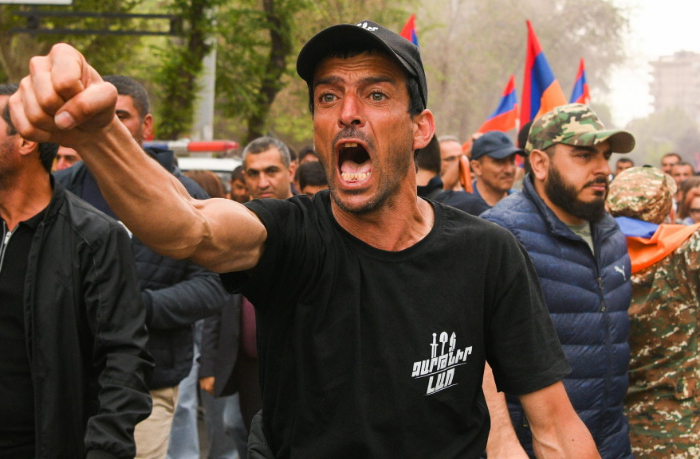
Such sentiments contradict the prospect of good-neighborly relations. If the region's future is indeed linked to peace, respect for internationally recognized borders and the sovereignty of neighbors must become a stable foundation of state policy, and not a temporary formula for negotiations.
For Azerbaijan, it is also a matter of principle that the fates of people expelled from their historical homeland do not disappear from the bilateral agenda. The questions of return, preservation of historical heritage, and recognition of the damage inflicted require substantive consideration within the framework of international law. No less important are the fates of the missing and information about the sites of mass graves. Official acknowledgment of responsibility must be accompanied by assistance in establishing the fate of the missing, the provision of available information, and the preservation of cultural heritage.
Azerbaijan does not need conflict for the sake of conflict. Its interests are served by a durable peace, the development of the region, the restoration of the liberated territories, and the ability of people to live without the threat of a new war. But such a peace must not be built on the unspoken condition that the injured party is obliged to remain silent about what it endured so as not to complicate negotiations. Respect for peace also presupposes respect for the human dignity of those who paid for the former enmity with their own home, their past, and their accustomed life.
An apology will not return the lost years, will not rebuild destroyed homes, and will not resurrect the dead. But it is capable of drawing a line between the refusal to acknowledge the suffering of others and the readiness to accept historical responsibility. Willy Brandt once showed that such a step does not always require long speeches; sometimes all that is needed is the courage to acknowledge what others prefer to look away from.