The shattered storefronts of French "democracy": why street chaos will not take root in Azerbaijan
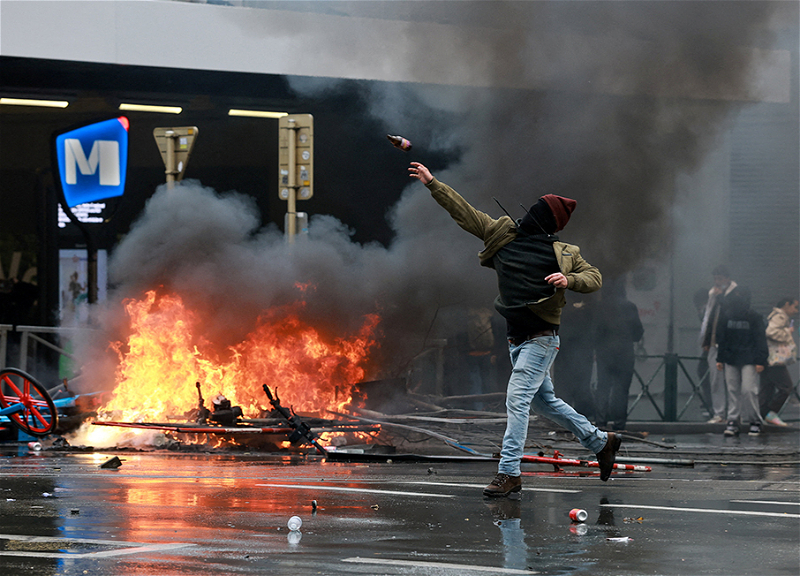
The events that have unfolded in France in recent days have once again demonstrated to the whole world the destructive consequences brought about by the helplessness of state governance and the absence of a clear balance between law and order and public freedoms.
When hundreds of thousands of people take to the streets, and cities are engulfed in smoke from arson and the din of clashes with police, this is no longer about defending rights, but about a deep crisis of statehood itself.
The scale of the recent demonstrations is striking in its destructiveness. According to official data from the country's Interior Ministry, the number of participants in the October 17 protests was around 550,000 people, while trade union representatives claimed 800,000 demonstrators. However, behind these figures lies not a constructive dialogue between society and the authorities, but a spontaneous revolt that swept away the most elementary norms of law and order. Paris, Lyon, Marseille and many other French cities turned into an arena of fierce clashes, where tear gas and water cannons became the only arguments of the security forces, and the protesters responded with smashed storefronts, burned cars and looted shops.
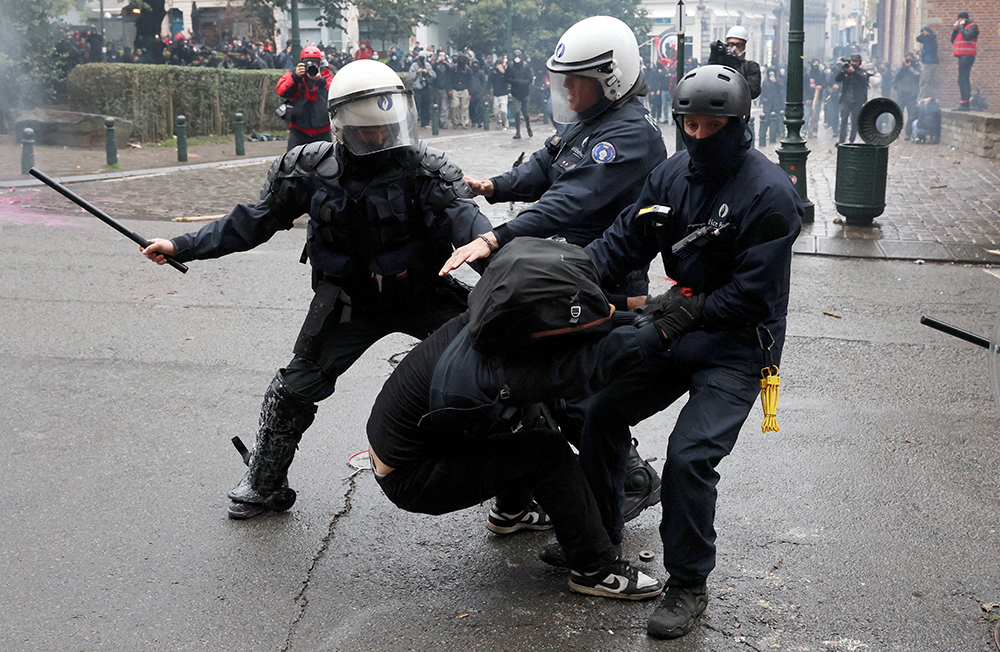


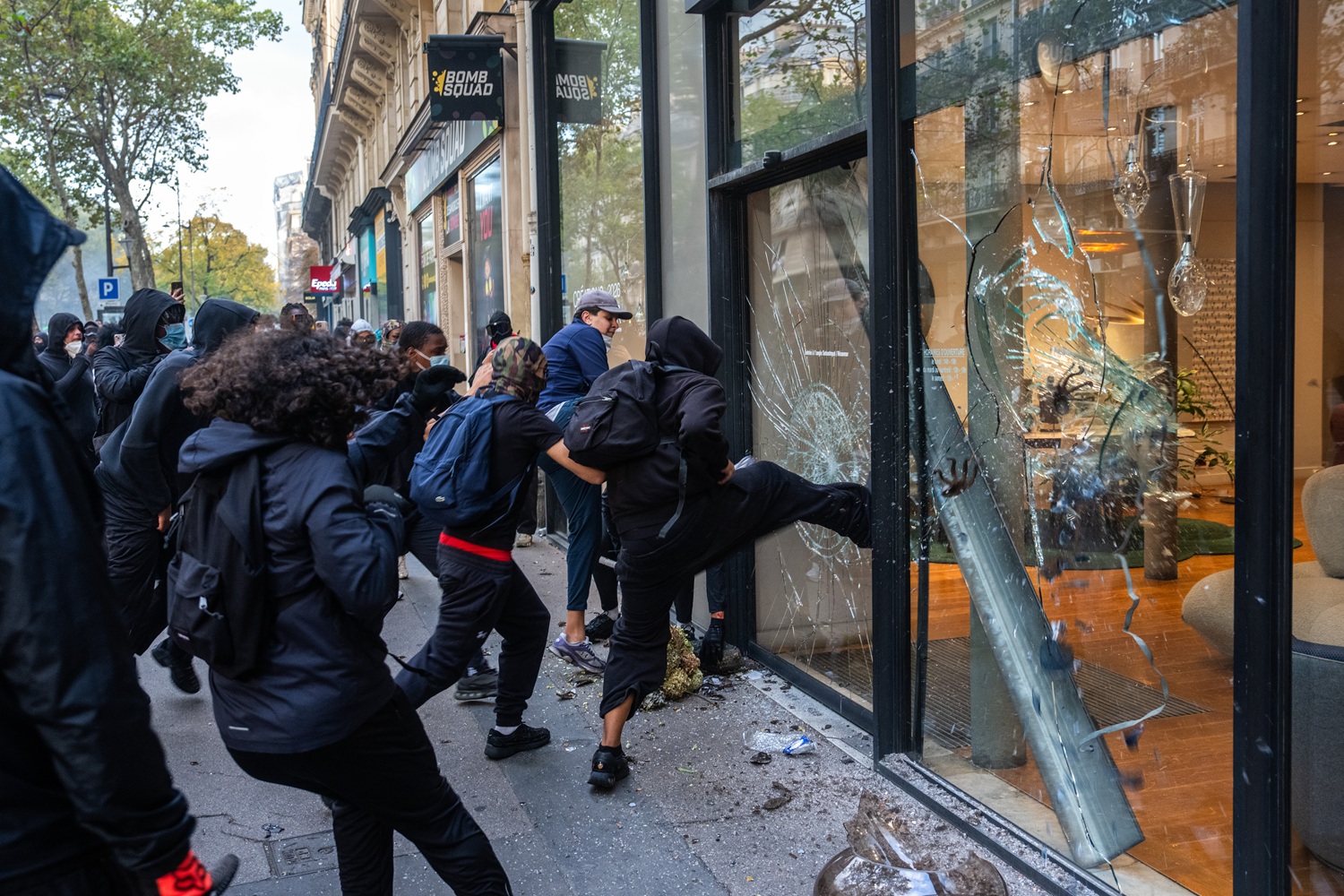
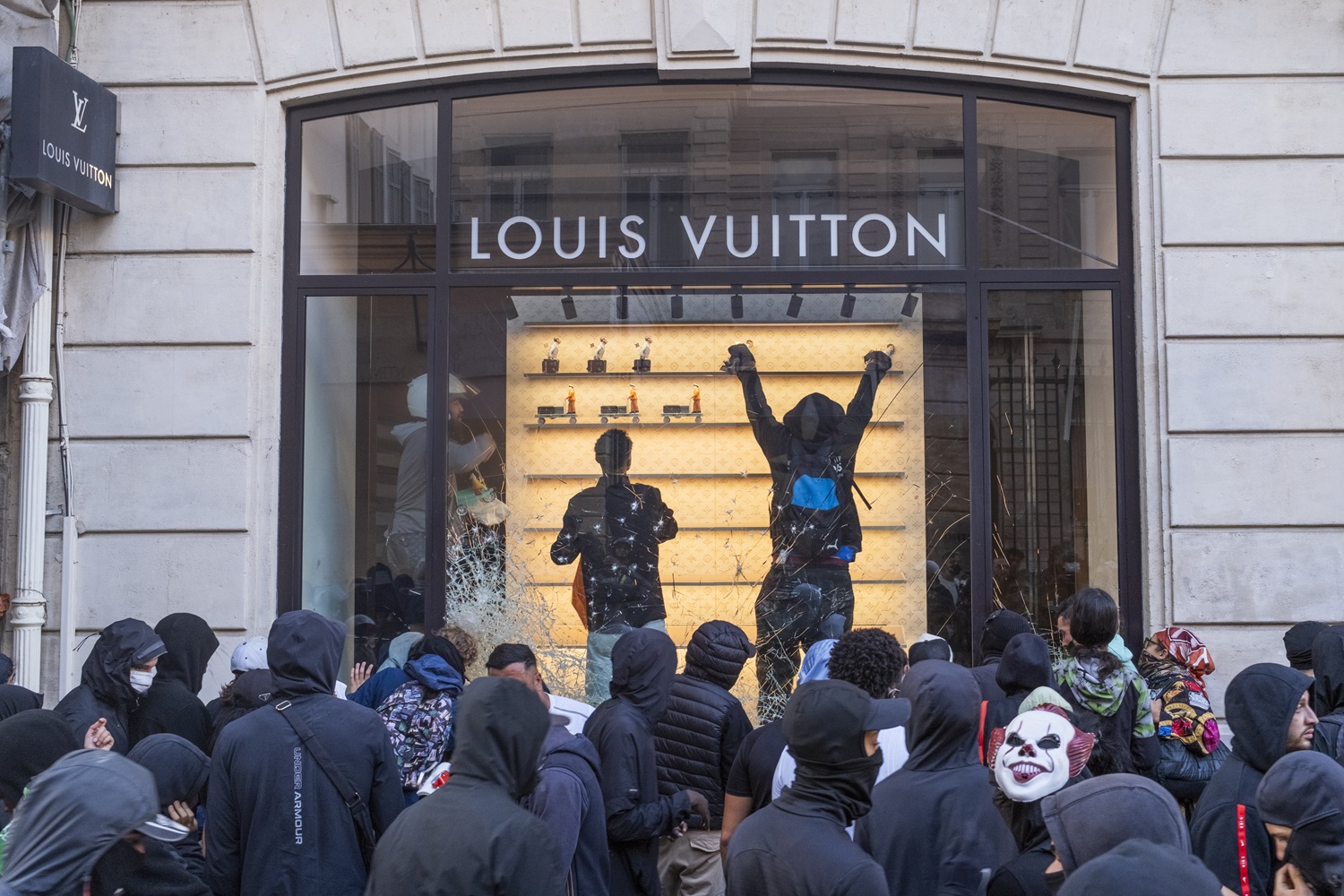
The main cause of what is happening has been the systemic incompetence of the French authorities and of President Emmanuel Macron personally. Years of ill-conceived decisions in social policy, disregard for the steady rise in the cost of living, and the inability to build an effective mechanism to protect the interests of their own citizens have led to a situation where any expression of discontent is instantly radicalized. Police brutality, on the one hand, and rampant street crime, on the other, show that the situation has completely spun out of control.
In this blazing reality, those who suffer most are the ones who have nothing to do with politics. Small and medium-sized businesses — the owners of cozy cafés, family restaurants, small shops and workshops — lose their life's work in an instant. Smashed facades, looted warehouses, burned-out terraces and colossal losses have become the constant companions of European "street-style democracy." When the street element prevails over the law, the economic fabric of society collapses, and citizens are deprived of the most basic sense of security in their own homes.
What is happening in France today is not a random outburst of street discontent, but the logical finale of Emmanuel Macron's long-standing policy, which has completely ignored the social needs of his own people. It is enough to recall the harsh suppression of the "yellow vests" movement and the multimillion-strong protests against pension reform to understand that popular anger did not arise out of nowhere. The stubbornness of the Élysée Palace, deliberately splitting society, has finally pushed the country to the edge of the abyss.
To justify police arbitrariness and conceal the catastrophic drop in ratings ahead of the elections, the authorities resort to elaborate provocations. Specially trained radical groups stage arson attacks and lootings, turning the legitimate demands of students and workers into controlled chaos. This artificial vandalism is needed by the authorities solely to intimidate citizens, justify police batons and, quite possibly, introduce a state of emergency to crush the opposition and independent media. At the same time, the riots in the streets serve as a convenient screen diverting public attention from loud corruption scandals and financial machinations within the French elite itself.
However, the most cynical element in this situation is the European institutions. The European Parliament, the European Commission and Ursula von der Leyen personally, accustomed to churning out biased reports about "human rights violations" and lecturing other countries — including Azerbaijan — are today maintaining a shameful silence. When police brutally beat demonstrators in the center of Paris and the number of those arrested runs into the thousands, the Eurobureaucracy prefers to turn a blind eye.
The illusion of "civic protest" and the true organizers of the unrest
The Parisian scenario clearly proves a fundamental thesis: any mass street protest, even if it begins under peaceful or social slogans, inevitably slides into chaos and destruction. As soon as a procession goes beyond the bounds of the civilized legal framework, provocateurs, extremist elements and outright criminals instantly appear in its ranks.
This lesson is extremely important for analyzing the situations that certain forces are trying to provoke inside Azerbaijan. The recent discussions that arose around the government's decision to introduce a unified school uniform clearly demonstrated the difference between natural public opinion and attempts to artificially stir up the situation.
The decision on unified standards in educational institutions is normal state practice aimed at maintaining discipline, equality and order among students. Of course, any innovation may raise questions among parents, and in a healthy society these questions are resolved through constructive dialogue with school administrations and the ministry.
However, in reality we saw how a relatively small group of people, led by radically minded elements and outright provocateurs, tried to turn an ordinary administrative issue into a pretext for confrontation. The intentions of these individuals had nothing to do with concern for children or the quality of education. The attempts by certain radicals to resort to extreme measures, up to and including deliberate arson at schools and the violation of public order, revealed their true face.

Thanks to the timely and professional steps of law enforcement agencies, as well as the perceptiveness of society itself, these local flare-ups quickly fizzled out. The country simply lacks the critical mass for such actions, since citizens deeply understand the value of civil peace and remember perfectly well the destructive price of street upheavals, which is why any marginal calls for destabilization do not meet with the slightest response among the broader public.
Puppet masters abroad: why they are trying to export chaos to Azerbaijan
Having suffered defeat inside the country, marginal circles and external opponents of Azerbaijan have changed tactics.
Today we are seeing how attempts to create the appearance of a "mass protest movement" have moved beyond Azerbaijan's borders. Sitting in foreign offices, under the wing of foreign sponsors and anti-Azerbaijani centers of influence, these radical groups stage pickets in front of our country's embassies.
The organizers of such actions are destructive forces openly opposing the interests of the Azerbaijani state. Their goal is by no means to resolve the social or everyday problems of Azerbaijani citizens. They are carrying out a very specific political order aimed at discrediting Azerbaijan's international reputation and artificially creating a picture of "instability."
The mechanics of this process are extremely simple and transparent. First, just a handful of activists gather abroad, but through controlled media resources and social networks this handful of people is deliberately presented to audiences as the supposed "true voice of the people." In parallel, there is constant parasitism on purely local topics, when any minor everyday grievance or working discussion inside the country — whether it be the issue of school uniforms or utility tariffs — is instantly picked up by external manipulators and blown up to the scale of an artificial "national crisis." Ultimately, all of this comes down to an attempt to export controlled chaos, where the main imported thesis is the covert legitimization of street violence as supposedly "the only effective instrument of civic participation."
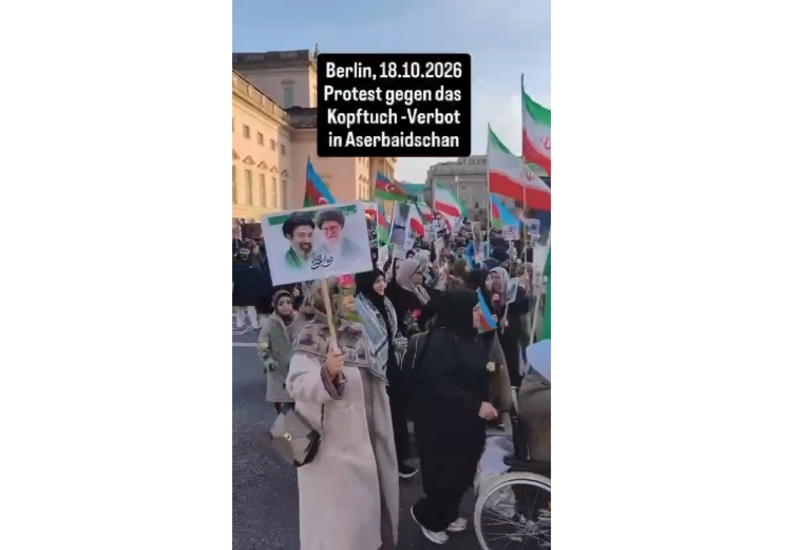
They are trying to impose on us a European model in which burned streets, ransacked shops and paralyzed urban infrastructure are considered "attributes of democracy." But Azerbaijani society is mature enough to recognize this manipulation. Street mayhem is not freedom; it is an evil that destroys the economy, undermines the foundations of small business and deprives people of confidence in tomorrow.
Azerbaijan has made its choice in favor of stability, sovereignty and progressive development. All attempts by radical forces — both internal provocateurs and their inspirers abroad — to export chaos and ruin to our country are doomed to failure, because the main guarantor of order in the country is the conscious unity of the people and the state.