Impunity is an invitation to a new war

Impunity is perhaps one of the most dangerous phenomena in international politics.
It arises where a violation of international law entails no real consequences, and the aggressor gains grounds to believe that it will be able to act in the future as well without incurring serious costs for its irresponsible actions. Moreover, such a violation of international law ceases to seem a risky undertaking, and yesterday's conflict turns into a precedent for tomorrow's.
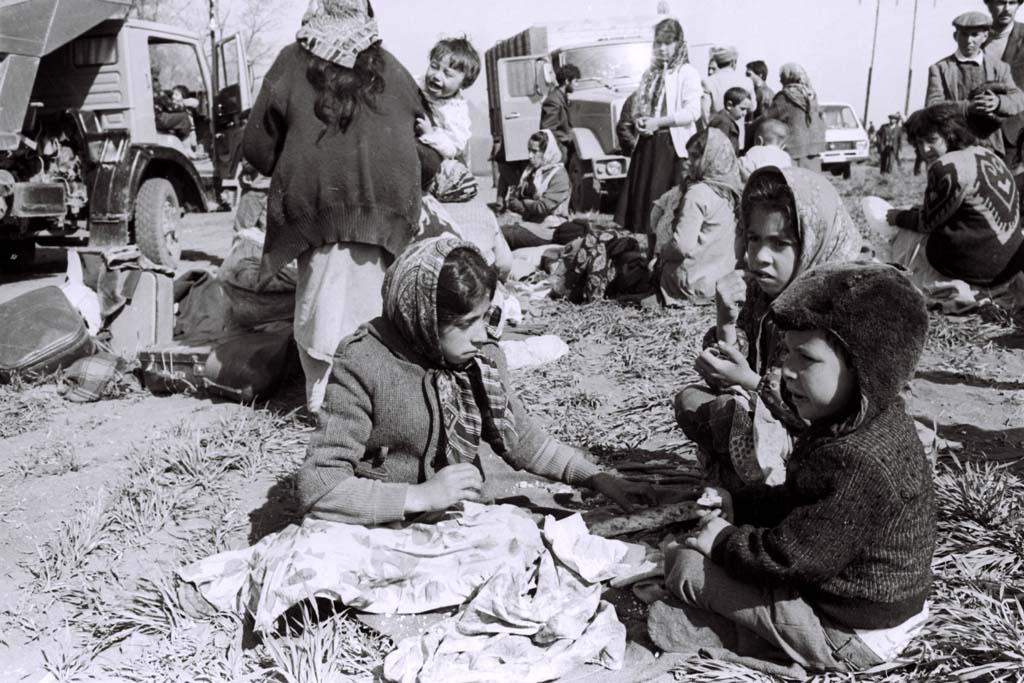
Azerbaijan's history provides a vivid illustration of what such logic leads to. For almost thirty years, the Armenian occupation of Azerbaijani territories remained an unresolved problem, despite international documents, negotiations, and numerous declarations of commitment to peace. Behind the diplomatic formulas lay a reality in which hundreds of thousands of people were deprived of their homes, while the hope of restoring justice gradually turned into waiting with no definite deadline.
As President Ilham Aliyev emphasized at the VII World Forum on Intercultural Dialogue in Baku, "in essence, the negotiating format was built in such a way that the conflict would not be resolved but would remain 'frozen'; apparently, there was a consensus on this issue among the world's leading powers."
At that time, Azerbaijan was essentially expected to show endless patience. It was assumed that the negotiation process could continue for years, if not decades, while the consequences of the occupation would remain primarily Azerbaijan's own problem. But any patience has a limit, especially when it comes to a state's sovereignty, the rights of its citizens, and the possibility of returning to their own land.
"We were not going to remain an occupied country forever, a people whose elementary human rights are endlessly violated," Ilham Aliyev stated. Behind this phrase stands Baku's fundamental position. Peace talks make sense as long as they lead to a settlement rather than serving as a convenient way to preserve the existing state of affairs.
Azerbaijan participated in the diplomatic process but did not agree to make a frozen conflict a permanent condition of its existence. When it became obvious that the negotiations were not producing results, the country exercised its lawful right to self-defense. The Second Karabakh War of 2020 and the anti-terrorist operation of 2023 ended the occupation, making it possible to restore territorial integrity and sovereignty within internationally recognized borders.

This is a fundamental point. It is not that military force should replace diplomacy. It is that diplomacy loses its meaning when one side expects to keep what it has seized while the other must endlessly wait for international demands to be fulfilled. If a peace process is incapable of bringing a solution closer, its very continuation does not yet mean that peace is becoming closer.
A right that had to be secured independently
The fate of the four UN Security Council resolutions adopted in 1993 is telling. They demanded the immediate, complete, and unconditional withdrawal of Armenian troops from the occupied territories of Azerbaijan, yet for three decades they were never implemented. The international community had legal decisions at its disposal but did not ensure their implementation.
And here a quite reasonable question arises: what is the value of decisions by international organizations if their implementation depends exclusively on the goodwill of those to whom they are addressed? A document not backed by an effective enforcement mechanism may record a legal position, but by itself it does not guarantee the restoration of violated rights. Moreover, prolonged inaction creates the dangerous impression that international norms can be observed selectively.
At the "SCO Plus" format meeting in Bishkek on September 1, Ilham Aliyev again drew attention to this problem. The president noted that the UN Security Council resolutions were implemented thirty years later, and that Azerbaijan restored its territorial integrity through its own efforts, without the UN's participation in carrying out these decisions. He also emphasized the need for mechanisms that would make it possible to ensure the implementation of resolutions in the shortest possible time.
For Baku, this is not an abstract debate about reforming international institutions. Azerbaijan experienced firsthand the gap between proclaimed principles and actual practice. Armenia was not subjected to sanctions for the occupation, ethnic cleansing, and destruction of Azerbaijani historical and religious heritage in the seized territories. It is precisely this contrast that Ilham Aliyev calls a manifestation of double standards.
Double standards are dangerous not only because of the injustice toward a particular country. They undermine confidence in international law as a whole. If states see that the consequences of breaking the rules are determined not by the gravity of the violation itself but by the political situation, the temptation arises to test the limits of what is permissible. And when such calculation becomes part of state policy, the risk of new conflicts grows.
A victory after which one must stop
However, the Azerbaijani experience is important not only for how the occupation was ended. No less significant is the question of what happened after territorial integrity was restored. Victory opened up the possibility for the country to continue the armed confrontation, guided by accumulated grievances and the desire to punish the adversary. Baku chose a different path — it offered peace.
"We were the initiators of the peace agreement with Armenia, because we did not want endless wars and did not want to take revenge," Ilham Aliyev said. And then he formulated a thought that contains one of the main lessons of the Azerbaijani experience: "I always say that we took our revenge on the battlefield, and we should not go further, otherwise it will be an endless war."
These words contain no call to forget the past or to abandon a fair assessment of what happened. On the contrary, it is a matter of understanding the line beyond which the restoration of justice may give way to an endless chain of retribution. If each side considers it necessary to deliver the next blow in response to the previous one, even a military victory does not become the end of the conflict. It only opens its next stage.
The Azerbaijani approach proceeds from a different understanding of the outcome of war. The state must restore violated rights, ensure its security, and create conditions under which new clashes lose their meaning. The peace agreement initialed by Azerbaijan and Armenia in Washington in August 2025 became an important step in this direction. The very fact of the transition from many years of confrontation to the search for practical forms of cooperation shows that ending a war requires political will no less than waging it.
At the same time, peace cannot be considered guaranteed merely because the parties have signed a document or declared their intention to normalize relations. It requires consistent actions, mutual respect for sovereignty, and the rejection of revanchist goals. It is no less important that the Azerbaijani-Armenian process not be turned from the outside into an instrument of pressure on one of the parties, and that normalization not be replaced by attempts to impose one's own notions of acceptable solutions.
So why do wars begin again and again? According to Ilham Aliyev, their roots are largely connected with aggression, ambitions, a sense of superiority, and the conviction of one's own impunity. When a country's leadership considers itself entitled to dispose of its neighbors' fate, and the price of such a decision seems acceptable, diplomatic warnings rarely prove to be a sufficient deterrent.
Therefore, preventing conflicts requires more than calls for dialogue. It is necessary to ensure that international obligations are fulfilled, that violations do not go without consequences, and that the sovereignty of states does not depend on how influential their allies are. At the same time, the victorious side must understand that a lasting peace cannot be built on the endless humiliation of the defeated. Firmness on security issues and a readiness for political settlement do not contradict each other — provided that peace does not mean renouncing one's own legitimate rights.
Azerbaijan has traveled the path from a country whose territories remained under many years of occupation to a state that restored its sovereignty and came forward with the initiative of a peace agreement. This experience should not be mechanically transferred to any conflict: every confrontation has its own history, its own participants and circumstances. But one conclusion is universal. It is impossible to endlessly maintain the illusion of a settlement while leaving the root causes of the conflict untouched, and it is impossible to count on a durable and just peace if aggression turns out to be more advantageous than observing the law.
Ultimately, a war ends not when one side exhausts its ability to continue the struggle, but when conditions arise for ending the hostility. This requires both the strength capable of protecting the state from aggression and the political will to stop once legitimate goals have been achieved. The Azerbaijani experience shows that these two conditions can be combined.
The international community should draw one more lesson from it. Justice that has to be restored exclusively by one's own efforts is evidence of the ineffectiveness of the international system, of its serious failure. So that new wars do not repeat old scenarios, it is necessary to ensure that a violation of international law inevitably entails harsh consequences. And at the same time to recognize that a genuine victory must open the road to peace rather than become a justification for the next war.