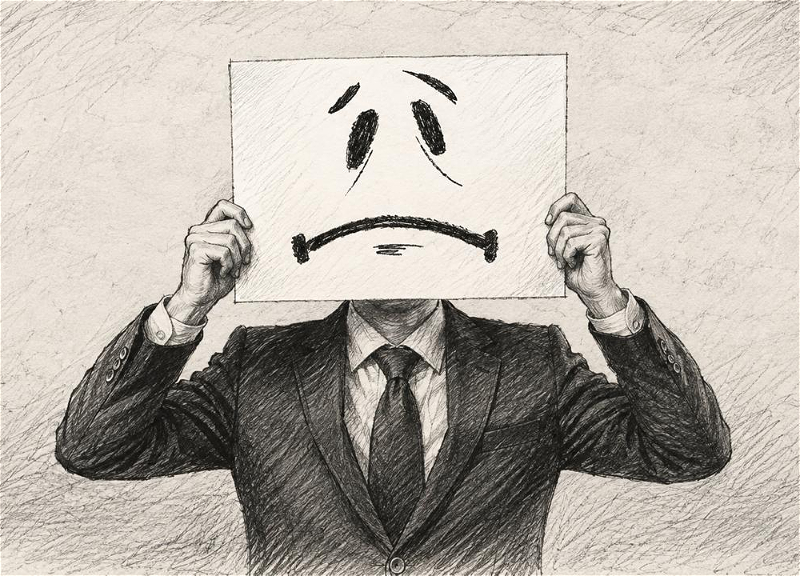
Scientists record record growth of mental disorders in the world

Over the past three decades, mental disorders have become one of the most serious threats to global population health.
According to a study by the international group of scientists "Global Burden of Disease," published in the scientific journal Lancet, since 1990 the number of registered cases of mental illness in the world has almost doubled. While in the early 1990s the scale of the problem was significantly lower, by 2023 specialists had already recorded 1.17 billion cases of various mental disorders.
The researchers note that the overall growth in the prevalence of such diseases over 33 years amounted to 95.5%. At the same time, the incidence rate reached 14,210.7 cases per 100 thousand people, which is 24.2% higher than the level at the beginning of the 1990s.
Of particular concern to specialists is the rapid growth of anxiety disorders and depression. A significant increase is also observed in cases of dysthymia, anorexia nervosa, bulimia, schizophrenia, and behavioral disorders. According to scientists, mental illnesses today are having an increasingly noticeable impact not only on people's health but also on the economy, the healthcare system, and the social stability of states.
One of the key indicators of the study was DALY - the number of years of healthy life lost due to illness or disability. Whereas previously mental disorders ranked 12th among the causes of the global burden of disease, today they have risen to fifth place. According to researchers' estimates, in 2023 alone, humanity collectively lost about 171 million years of full life due to disability associated with mental disorders.
They account for 17.3% of all cases related to limited work capacity and reduced quality of life.
The study also revealed pronounced age and gender differences. The highest burden of mental illness was recorded among women, with the rate at 2,239.6 cases per 100 thousand population compared to 1,900.2 among men. The most vulnerable group turned out to be adolescents aged 15 to 19 years, as it was in this category that the maximum DALY rate was recorded, reaching 2,617.3 per 100 thousand people.
The authors of the study also draw attention to significant geographical differences. The lowest rates of mental disorder burden were recorded in Vietnam - 1,302.4 DALY per 100 thousand population. At the opposite end of the ranking were the Netherlands, where the rate reached 3,555.8 per 100 thousand people.
Noticeable differences are also observed between countries with different levels of economic development. Thus, in countries with a middle income level the rate was 1,853 DALY per 100 thousand population, while in countries with a high income level it was 2,184.
Among all forms of mental illness, anxiety disorders made the largest contribution to the global burden. In the overall list of 304 studied diseases and injuries, they took 11th place. Clinical depression ranked 15th, and schizophrenia - 41st.
Experts emphasize that the growth in the number of mental disorders is linked to several factors at once: the acceleration of the pace of life, social pressure, economic instability, the consequences of the COVID-19 pandemic, armed conflicts, and the deterioration of the general psycho-emotional state of the population.
According to specialists, the situation requires not only expanding access to psychiatric and psychological care but also rethinking society's attitude toward mental health as a whole.