No alternatives: how Azerbaijan became the axis of the North-South corridor
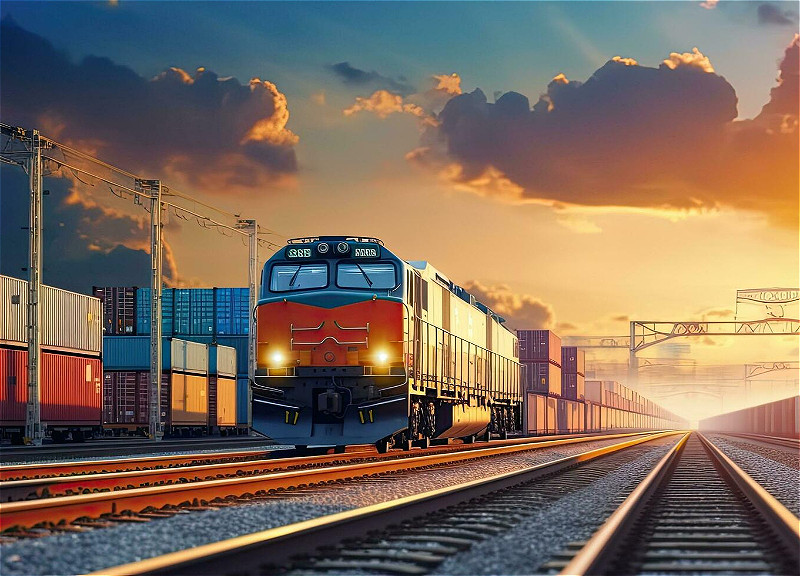
The International North-South Transport Corridor has long ceased to be merely an infrastructure project.
Today, it is a geo-economic artery, the efficiency of which determines the redistribution of trade flows between Eurasia, the Middle East, and South Asia. And in this new reality, it is the Azerbaijani segment of the corridor that demonstrates not theoretical advantages, but practical indispensability.
The transportation of goods from Russia to Iran in recent years, especially against the backdrop of the war in the Middle East, has become a kind of stress test for all possible routes. The result of this test is clear: despite the existence of alternative directions, the route through Azerbaijan shows maximum resilience, predictability, and economic feasibility. This is no longer a matter of geography, but of systemic superiority.
Alternatives without a future: why other routes fall short
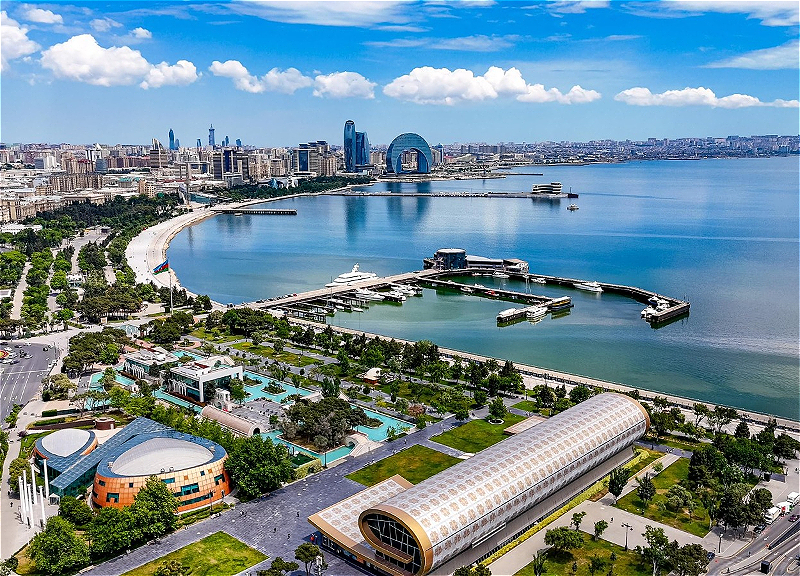
On the map of Eurasia, Azerbaijan occupies a position that is unique in itself. However, geography is only the starting point. The true value emerges when a country can turn its location into a tool of influence. This is precisely what has happened.
At first glance, the North-South corridor appears to have several alternative routes.
However, practice shows that most of these options face certain inconveniences, such as the need to pass through multiple jurisdictions, dependence on weather conditions, port capacity, and the necessity of transshipment, which reduces the efficiency of cargo transit.
As a result, they remain weaker alternatives rather than real competitors.
The route through Azerbaijan connects Russian transport networks to Iran via the shortest land route, minimizing costs and reducing delivery times.
The International North-South Transport Corridor is considered one of the most important elements of regional logistics, linking Russia and the Caspian Basin countries with Iran and further to the states of South and Southeast Asia, as well as the Persian Gulf. According to Azerbaijani data, the length of the railway section passing through Azerbaijan is approximately 511 kilometers. The delivery time for goods along the North-South route averages 20-25 days, while the traditional sea route through the Persian Gulf, Suez Canal, Mediterranean, and Baltic Seas takes 45-60 days. Thus, Azerbaijan, with its land borders with Russia and Iran, objectively serves as one of the strategic links in this corridor.
From an economic perspective, the project's potential is quite significant. According to analysts' estimates, Azerbaijan's annual revenue from transit along the North-South corridor could reach $250-300 million, including income from cargo flows originating in India and Southeast Asia through Iran and onward to Russia and Europe.
The declared design capacity of the corridor is estimated at around 15 million tons of cargo per year, and these parameters are enshrined in the roadmap of the participating countries. By 2030, the volume of transportation is projected to increase to 30 million tons, and in the long term, to 60-100 million tons.
The route through Azerbaijan appears not just preferable, but practically without alternative in conditions where businesses need stability, speed, and transparency. This is why cargo flows continue to shift in favor of this direction.
Moreover, it is not just about distance. In conditions of global turbulence, the stability of the route becomes a key factor. Azerbaijan, by pursuing a balanced foreign policy and avoiding involvement in destructive conflicts, has built an image as a reliable transit partner. This trust is now being converted into real cargo flows.
Thus, Baku's geographical position has ceased to be merely an advantage; it has become a strategic resource that works for the long term.
Infrastructure and management: the factor that decides everything
If geography sets the direction, infrastructure determines the speed and scale. Over the past years, Azerbaijan has consistently invested in the development of its transport and logistics system, creating not just roads and railways, but an integrated transit ecosystem.
This includes the modernization of the railway network, the expansion of highways, the digitalization of customs procedures, and the introduction of modern logistics solutions. Of particular importance is the synchronization of all system elements—from border control to paperwork. This minimizes delays and eliminates 'bottlenecks,' which often become critical on alternative routes.
Unlike some other segments of the North-South corridor, where infrastructure remains fragmented or dependent on numerous approvals, the Azerbaijani segment functions as a unified mechanism. This fundamentally changes the rules of the game: businesses receive not just a route, but a guaranteed service.
The management aspect is no less important. Azerbaijan has demonstrated the ability to quickly adapt to changing conditions, optimize processes, and implement new solutions without bureaucratic delays. In an environment where speed of response becomes a key competitive advantage, this factor takes on decisive importance.
Azerbaijan as a key node in Eurasian logistics
Today, it is becoming evident that Azerbaijan is effectively shaping a new architecture of Eurasian logistics, in which it occupies a central place.
This process has far-reaching positive consequences. Firstly, it strengthens the country's economic role as a transit hub, opening new opportunities for investment and development. Secondly, it enhances Baku's political influence, as control over key transport flows inevitably transforms into diplomatic advantages.
Finally, a new reality is emerging in which alternative routes are forced to adapt to the standards set by Azerbaijan. This means that competition will no longer be about the right to exist, but about meeting the efficiency criteria that the Azerbaijani segment of the North-South corridor demonstrates today.
Therefore, current cargo transportation is not just an economic process, but an indicator of a deeper transformation. In this transformation, Azerbaijan acts not as one of the participants, but as a system-forming element.
In conditions of global uncertainty, those who can offer not promises, but working solutions, come out on top. Azerbaijan has already proven that it is capable of doing so. While other routes remain at the level of discussions and projects, the Azerbaijani route continues to operate—quickly, reliably, and efficiently.
Thus, the question of choosing a route in the North-South corridor is gradually ceasing to be a matter of debate. It is becoming a matter of obviousness.
Author: Seba Agayeva