Ideologue of hatred: In memory of the victims of Zori Balayan
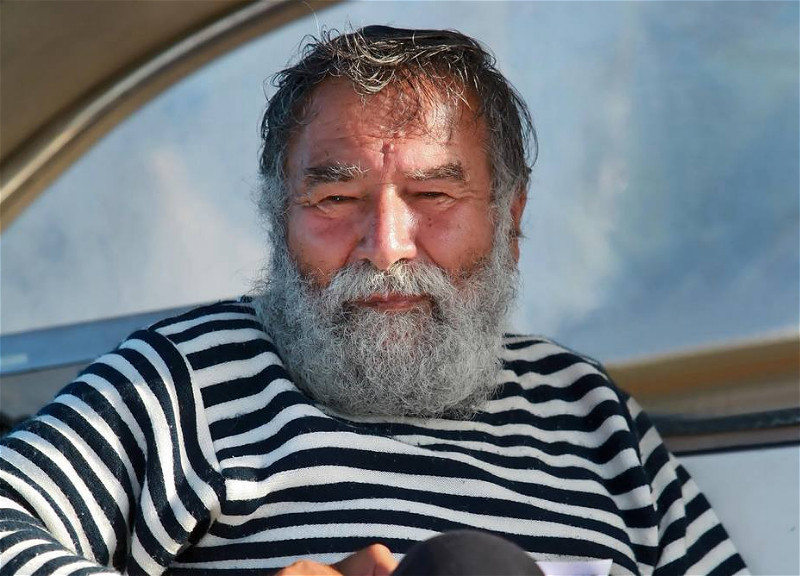
Zori Balayan is a figure whose name has become synonymous with the ideology of hatred and separatism, ethnic cleansing, cruelty, and the ideological justification of occupation for the Azerbaijani people.
His activities as a publicist and political figure laid the foundation for a decades-long conflict that brought immeasurable suffering to the civilian population.
Main accusations and crimes: A chronicle of ideological terror
Zori Balayan spent decades building a system of hatred that ultimately erupted into full-scale war and a humanitarian catastrophe. His role in the conflict went far beyond journalism, turning him into an architect of ethnic cleansing.
Balayan, together with Silva Kaputikyan, became the ideological foundation of separatism and ethnic cleansing. He was the "brain center" of the movement to detach Karabakh long before the first shots were fired.
His book "Hearth" and open appeals, including letters to Gorbachev (1988), became manifestos of Armenian expansionism. In them, he openly falsified the history of the region, denying the cultural heritage of the Azerbaijani people and portraying Azerbaijanis as "outsiders" on their own land.
The propaganda of Armenian exceptionalism stemmed from the Nazi teachings of Nzhde, serving as its continuation and development. Through the media, he instilled in the masses the idea of the impossibility of coexistence between the two peoples, effectively preparing the ground for the deportation of 250,000 Azerbaijanis from Armenia in 1987–1989. His rhetoric dehumanized the opponent, making subsequent atrocities possible.
Balayan’s role in the Khojaly Genocide (February 25-26, 1992) is well-known.
In Azerbaijan, Balayan is officially recognized as one of the main culprits of the Khojaly tragedy—the bloodiest episode of the First Karabakh War.
According to numerous testimonies, Balayan did not merely observe the events but was present in the headquarters of armed formations, providing field coordination and inspiring militants to "cleanse the land."
After the massacre, he acted as the main informational shield, attempting to conceal the scale of the crime from the international community or present it as a "military necessity," and later justifying the mass killings. He turned the tragedy of 613 murdered civilians, thousands wounded, and missing persons into an element of his triumphant propaganda.
The book "Revival of Our Spirit"
The most chilling evidence of Balayan’s misanthropy comes from fragments of his book "Revival of Our Spirit" (published in 1996). He elevated sadism to a "national duty." In the book, the author describes an act of extreme cruelty with shocking detail (a horrifying quote): in one of the captured houses in Khojaly, he, along with an accomplice, nailed a 13-year-old Azerbaijani child to a window and then skinned the child alive. He coldly recorded the time of the child’s death (after 7 minutes) and described it as an "act of retribution," stating that this act made him "feel pride in his soul."
Although the Armenian side later attempted to declare this book a hoax, for Azerbaijani society and many international researchers, these lines became a symbol of the true face of Balayan’s ideology—an ideology where the murder of a child is elevated to the rank of patriotism.
Organization of international terrorism
Balayan’s criminal activities extended beyond the combat zone, affecting civilians deep in the rear.
Zori Balayan was a participant in the terrorist attack on the Baku Metro (1994). The investigation established a direct connection between Balayan and the organizers of the explosions at the "20 January" and "Memar Ajami" stations, which resulted in dozens of deaths. He was accused of financing and ideologically preparing the perpetrators recruited from the "Sadval" organization.
Based on these grave accusations, the General Prosecutor’s Office of Azerbaijan succeeded in having Balayan included in Interpol’s wanted list. In 2005, he was detained in the port of Brindisi (Italy), but due to powerful Armenian lobbying and political pressure, he managed to avoid extradition and justice.
The outcome of "nearly a century of hatred"
Balayan lived to the age of 90, witnessing the collapse of the illusions he had created. His life, dedicated to destruction and enmity, ended against the backdrop of the restoration of Azerbaijan’s territorial integrity.
For the Armenian people: His ideas led to isolation, economic decline, and the deaths of thousands of young people in senseless wars.
For history: He remains an example of how intellectual resources can be directed toward inciting war and justifying the most heinous crimes against humanity.
These notes serve as a reminder that no ideology can justify the blood of the innocent and that historical justice, in the end, is inevitable.
Author: Namik Aliyev,
Doctor of Legal Sciences, Professor,
Ambassador Extraordinary and Plenipotentiary,
Head of Department at the Academy of Public Administration under the President of the Republic of Azerbaijan