
Digital integration: Azerbaijan and Armenia move to a new partnership
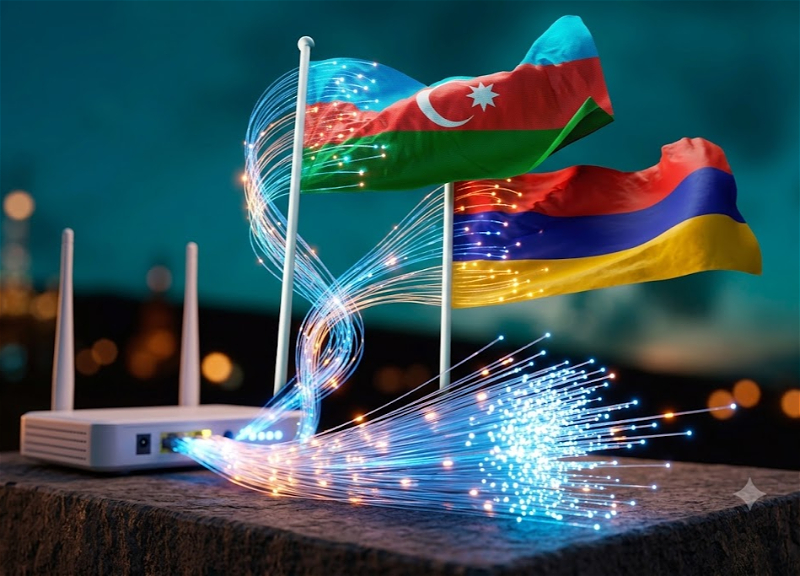
So, as previously reported, the Azerbaijani backbone operator AzerTelecom and the Armenian company Telecom Armenia signed bilateral agreements to provide international internet connectivity to Armenia through the territory of Azerbaijan.
This event has become a major precedent, clearly demonstrating the de facto onset of a new geoeconomic reality in the South Caucasus. The parties have officially agreed on the transit of international internet traffic to Armenia through the territory of Azerbaijan, shifting interstate relations from years of confrontation to pragmatic economic partnership. Under these arrangements, AzerTelecom, holding the status of the region’s leading backbone internet operator, is significantly expanding the geography of its data transmission services by using its own sovereign infrastructure to provide the neighboring republic with stable international internet connectivity. This step is of fundamental importance for Armenia, as it helps overcome partial telecommunications isolation, diversify cross-border communication routes, and critically improve the overall reliability and fault tolerance of national digital networks.
The credibility and significance of this event are reinforced by the weight of the participants on the Azerbaijani side. AzerTelecom is part of Azerconnect Group, which in turn belongs to the large international group of companies NEQSOL Holding, operating in various countries and key sectors of the economy. Today, the operator is implementing the large-scale transcontinental Digital Silk Way project aimed at creating a fundamentally new, shortest digital corridor between Europe and Asia. The fact that Telecom Armenia is connecting to this infrastructure de facto integrates the Armenian market into the single digital space being formed by Baku and makes Armenia a beneficiary of large-scale technological projects.
At the same time, the telecommunications breakthrough has become a logical continuation and organic part of a much larger process — the steadily growing multi-vector economic partnership between Azerbaijan and Armenia. The current dynamics of commercial interaction clearly show that pragmatism and mutual benefit can effectively transform the regional architecture. A major milestone on this path was Azerbaijan’s announcement in March of lifting barriers to cargo transit to Armenia, when the first freight train with Kazakh grain destined for Armenia passed through Baladjary station. This step marked a cardinal overcoming of Yerevan’s previous economic alienation and laid the foundation for long-term transport and logistics cooperation.
Since then, regular and uninterrupted deliveries of critically important civilian cargo to the Armenian market have been carried out via Azerbaijan’s railway arteries. In particular, the transit of Kazakh and Russian grain through Azerbaijani territory has been established, with volumes already exceeding 32 thousand tons, playing a key role in ensuring the food security of the neighboring republic. However, the logistics flow is not limited to food alone. The new geoeconomic reality has made it possible to diversify the range of transit goods. Thus, to date, more than 7 thousand tons of mineral fertilizers necessary for supporting the agricultural sector, 414 tons of high-quality anthracite for industrial needs, as well as large batches of aluminum and buckwheat have been successfully delivered to Armenia through Azerbaijan. The effective operation of transport services confirms that Baku guarantees full security and commercial transparency of these routes.
At the same time, Azerbaijan acts not merely as a passive provider of transit services for third countries but has itself actively engaged in trade and economic processes, beginning direct commercial supplies of its own in-demand products to Armenia. The most illustrative example here is the energy sector. The Azerbaijani side has initiated direct exports of high-quality petroleum products, supplying fuel to Armenian consumers. To date, Baku has already delivered more than 13 thousand tons of diesel fuel, 979 tons of AI-92 gasoline, and 2,955 tons of AI-95 gasoline to Armenia. The steady flow of tankers with Azerbaijani fuel has helped diversify sources and prevent price increases for gasoline in the Armenian domestic market, demonstrating the transition to a classic model of mutually beneficial trade.
In a broader diplomatic context, the conclusion of the contract between AzerTelecom and Telecom Armenia testifies to a real peace process. Such deep integration and the consistent expansion of the range of goods — from digital data to grain and energy resources — clearly demonstrate Azerbaijan’s absolute commitment to a peaceful agenda in the South Caucasus. Baku does not limit itself to declarative statements but is consistently and predictably moving toward full normalization of relations by creating a strong economic fabric of peace. Every practical step — whether it is allowing a transit train, shipping fuel, or connecting to a backbone internet cable — logically follows from the overall strategy of the Azerbaijani leadership aimed at turning the region into a space of stability, joint development, and prosperity.
This direct contact between businesses of the two countries confirms the mutual readiness of the parties to invest in joint regional security and stability. It also shows that the economic, logistical, and technological integration of Baku and Yerevan has already reached the level of specific commercial agreements and is yielding practical results. Thus, the commercial contract in the telecommunications sector becomes another real foundation for long-term peace in the region.
Ali Mamedov