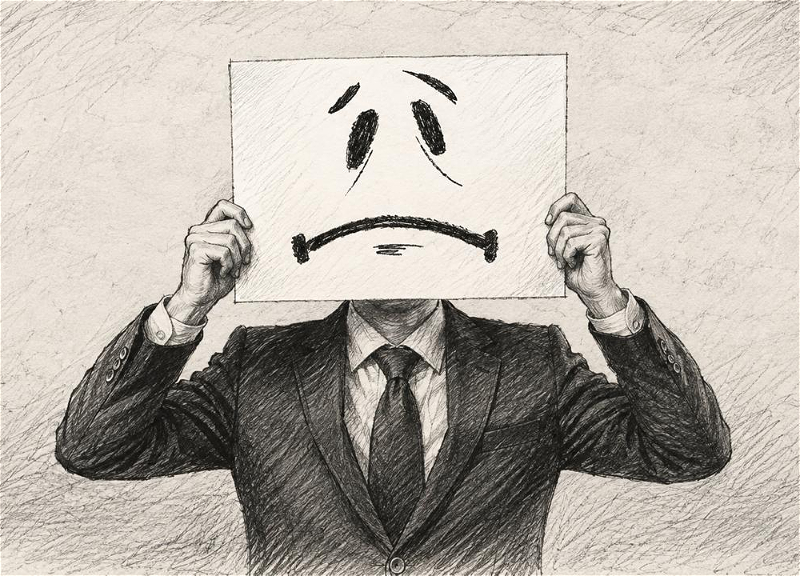
We are always online. But at what cost?
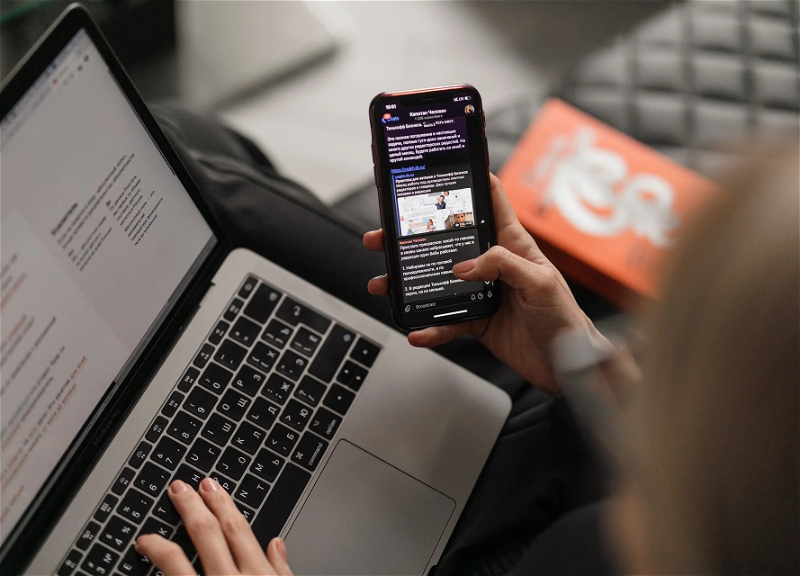
In the world, the digital wellbeing movement is actively gaining momentum. What is it? Another buzzword or a vital necessity?
Just ten years ago, the phone was a tool. Today it has become the environment in which we live: we work, communicate, fall in love, shop, study, compare ourselves to others, worry, calm down — and worry again. We no longer simply “use” digital technologies. We are constantly connected to them, and we are close to the point where they “use” us.
And the main question of digital wellbeing today is not how many hours we spend on the phone. That is too simple an explanation. The question is deeper: what exactly is happening to our psyche, attention, body, and relationships when we live in a state of constant digital availability?
Social networks are not just content. They are a system of expectations
When we say “social networks influence us,” it often seems that the discussion is only about bad news, beautiful pictures, or addiction to likes. But the influence is much subtler.
Social networks create a constant field of expectations around a person. You need to be reachable. You need to reply. You need to see what is happening. You need not to miss anything. You need to be interesting, successful, beautiful, productive, engaged. Even when we do not open the app, part of our attention is already as if “on duty” there.
Research on digital stress identifies several important components of this tension: (1) anxiety about others’ reactions; (2) stress of constant availability; (3) fear of missing out; (4) overload from the number of connections and messages; (5) constant internal vigilance toward the online space.
That is, the problem is not just the screen. The problem is that the digital environment begins to demand constant emotional, social, and cognitive readiness from us.
The phone steals attention even when we are not using it
One of the strongest findings in digital wellbeing research sounds almost unpleasant: the phone can reduce our cognitive resources even when it is simply lying nearby.
This is called the “brain drain” effect — a leakage of mental power. The mere presence of a smartphone nearby can occupy part of our attention because the brain has to suppress the automatic impulse to check the device. Even if there are no notifications. Even if the phone is lying screen down. Even if we “definitely decided not to look.”
That means that now, when we study, write, think, make decisions, or hold an important conversation, a phone nearby is not a neutral object but a small yet very persistent competitor for our attention.
We are not resting, we are switching
Many people say: “I will just scroll for five minutes to rest.” But often this is not rest. It is a shift from one type of load to another.
The brain gets tired not only from work. It gets tired from constant switching: a message, a story, an email, news, a notification, someone else’s life, an ad, an urgent task, a funny video, an alarming headline. Every switch requires energy. Every return to the task costs us concentration.
That is why after an hour on social media a person may feel not restored but even more tired. Formally they “did nothing.” But their attention worked the whole time in a mode of rupture.
Digital anxiety lives not only in the head but also in the body
Technological stress is not an abstract psychological topic. It has a biological dimension.
The body’s stress system evolved for short physical threats: to run away, defend oneself, survive. But a modern person can trigger the same system because of an email from a boss, unread messages, negative news, online comparison, or the feeling that they are falling behind everyone.
The body does not always distinguish: is there a real danger in front of us or a digital signal. If the nervous system perceives the situation as a threat, it mobilizes. The pulse quickens, tension rises, attention narrows, the body prepares to react.
In the short term this helps. In the long term it depletes.
The problem with constant connectivity is that it does not allow the nervous system to complete the stress cycle. We do not have time to exit the “need to react” mode. Even rest turns into another stream of stimuli.
Doomscrolling is not a character weakness
A separate topic is doomscrolling, when a person repeatedly reads bad news, alarming updates, and crisis forecasts. From the outside it looks like a strange habit: why watch something that makes you feel worse?
But inside, a different mechanism often operates. The person is trying to reduce uncertainty. It seems to them: “If I learn more, I will feel calmer.” In practice the opposite often happens. The more alarming information they consume, the stronger the sense of threat, the greater the desire to check again.
Social networks intensify comparison — and make it endless
Previously, a person compared themselves with neighbors, colleagues, and acquaintances. Today they compare themselves with thousands of people at once: someone is more successful, younger, richer, more beautiful, more productive, happier, calmer, more spiritual, more athletic.
And this comparison is almost always unfair. We compare our real inner life with someone else’s edited version.
Especially dangerous is that social networks mix all levels of life into one feed: personal achievements, motherhood, body, career, travel, relationships, expertise, money, style. A person can go there for two minutes and come out feeling that they have fallen behind in everything and from everyone at once.
This does not just spoil the mood. It can change our goals. We begin to want not what is truly important to us, but what is constantly shown as desirable.
From the attention economy to the intention economy
Previously, digital platforms fought for our attention. The longer we watch, the more data we leave, the more ads can be shown to us.
But now the next stage is beginning — the intention economy. With the development of AI, technologies can not only hold our attention but also predict and shape our decisions: what we will buy, where we will go, how we will study, who we will communicate with, what we will want.
This is a very important turn. If the attention economy sold our attention, the intention economy may begin to sell our future intentions even before we ourselves clearly realize them. That means a person now has to answer a new question: is this my desire or was it carefully constructed by the environment around me?
Work connectivity: when technologies become a form of control
At work, digital stress is often intensified by a culture of constant availability. If a manager writes in the evening, expects an instant reply, uses five different platforms, monitors online status and reaction speed, technologies cease to be a tool of efficiency. They become a system of pressure.
Especially alarming is digital surveillance: activity tracking, screenshots, keyboard monitoring, “productivity” metrics without trust in the person. This can create not motivation but a defensive reaction. The employee does not work better but more tensely. They begin to think not about the meaning of the task but about how to look busy.
Healthy leadership in the digital age means clear rules: when we are available, where we communicate, what is truly urgent, which channels are for what, when a person has the right to be offline. The question: what do we observe more around us?
What to do? Digital detox works only when there is a replacement
Many try to solve the problem radically: “That’s it, I am deleting apps, not taking the phone, starting a new life.” Sometimes this helps for a few days. But if the phone was the main way to cope with boredom, anxiety, loneliness, or fatigue, simply removing it is not enough.
Research on digital detox shows an important thing: limiting screen time works better when a person adds alternative ways of recovery — walks, breathing practices, live communication, reading, a journal, movement, normal sleep.
That is, the question is not only what we remove. The question is what we return to ourselves as life.
What can be done right now
Digital wellbeing does not require hating technology. That would be foolish. Technology gives us access to knowledge, people, opportunities, work, and creativity. The problem begins when we stop being masters of our own attention.
The simplest steps are often the most effective.
Remove the phone from view during deep work. Not just turn it screen down, but physically put it in another room.
Turn off unnecessary notifications. Not everything that blinks has the right to enter your nervous system.
Create “quiet windows” during the day — at least 30–60 minutes without messages, feeds, and switches.
Do not start the morning with the phone. The first minutes of the day set the tone for the nervous system.
Do not end the day with anxious scrolling. The brain needs a transition to a safety mode, not another dose of stimuli.
Check yourself with the question: “Am I using technology for my goal right now — or is it using my state?”
Main conclusion
Social networks and constant digital connectivity affect us not only through content. They affect us through the rhythm of life. Through the expectation of instant reaction. Through comparison. Through attention overload. Through the anxiety of availability. Through the body, which increasingly lives in a mode of micro-stress.
Digital wellbeing is the return of human scale to digital life.
We should not be available all the time. We should not react to everything. We should not turn our attention into a free resource for other people’s platforms.
Ask yourself: who controls my attention — me or the environment around me?
Leyla Seyidzadeh
Director, Women In Tech Azerbaijan