Peace or militarization: why does Armenia need new weapons amid the peace process?
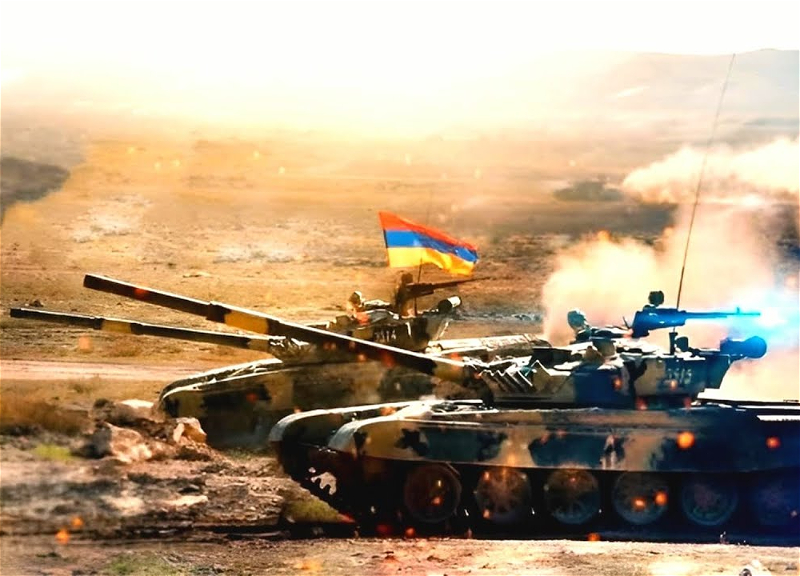
In a period when the South Caucasus stands before a historic chance to move toward sustainable peace, the ongoing militarization of Armenia inevitably raises questions about the readiness of certain political circles to accept new regional realities and abandon steps that could complicate the advancement of the peace process.
In this context, publications in foreign specialized outlets devoted to the pace of rearmament of the Armenian army and the expansion of its military-technical cooperation with foreign partners attract attention. These materials indicate that, despite the ongoing peace process, Yerevan is consistently building up its military potential, actively diversifying sources of arms supplies and expanding cooperation with external partners.
One such publication was an article titled “Armenia. Artillery is being strengthened,” published on June 16 on the official website of the French magazine “RAIDS,” which specializes in military and geopolitical topics.
It notes that the Armenian army has begun receiving its first CAESAR 6×6 self-propelled artillery units under a contract announced in June 2024 at the Eurosatory exhibition. The contract provides for the delivery of an unspecified number of these 155 mm artillery systems.
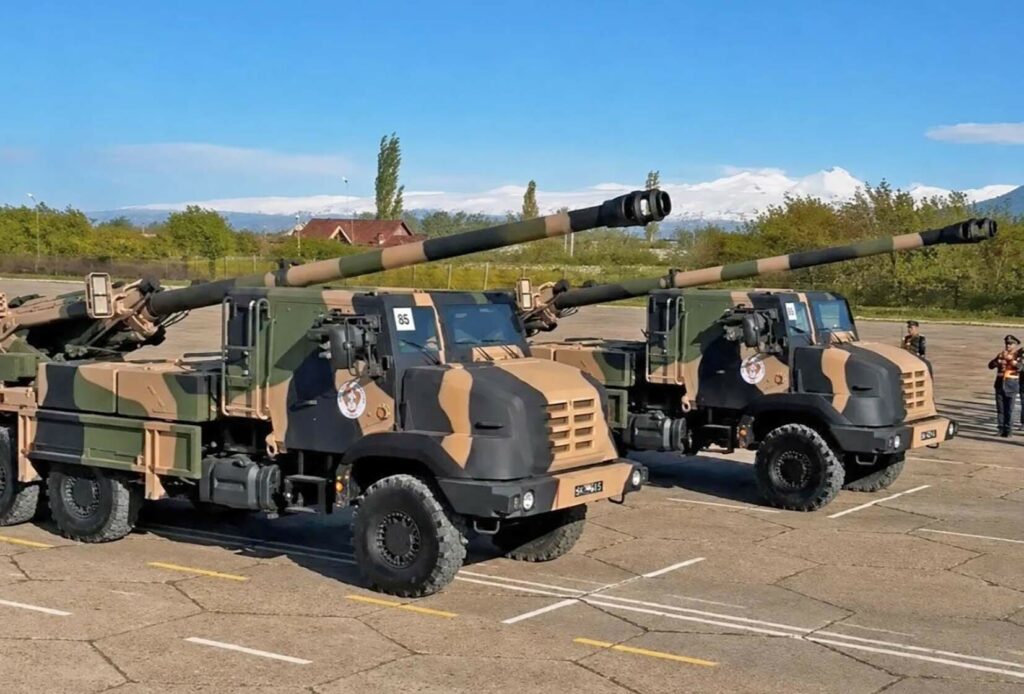
Although the exact number of systems being purchased has not been officially disclosed, Armenian media report that the order is for 36 units. The arrival of the first CAESAR systems was confirmed by Armenian Defense Minister Suren Papikyan.
It is noted that Armenia, which “faces serious military challenges” and whose “relations with Russia, which until now was one of its main partners, have cooled,” “can count on France’s support in matters of its defense.”
The publication writes that this support is based on cooperation agreements signed in October 2023 aimed at strengthening the capabilities of the Armenian armed forces: “These agreements led to the establishment of a partnership in the field of military personnel training, as well as an order for about 20 Bastion 4×4 armored vehicles, Mistral 3 anti-aircraft missiles and three GM200 radar stations. It also involves the supply of an unspecified number of PGM Précision sniper rifles (while the type of ordered weapon was also not specified: Ultima Ratio, Hécate 2, PGM 338 or Mini Hécate 2).”
At the same time, it is noted that “military cooperation between France and Armenia is expected to expand in the coming months.” “At least, this is provided for by the joint declaration on strategic partnership between the two countries, which President Macron signed during his visit to Yerevan in May this year,” the article says.
At the same time, the material notes, under agreements concluded in recent years worth $3 billion, India is becoming the main supplier of weapons and military equipment to Armenia.
As can be seen from the facts presented, the rearmament of the Armenian army with active support from external partners is comprehensive and consistent. Against the backdrop of the ongoing peace process between Azerbaijan and Armenia, as well as declarations on the need to establish long-term peace in the region, the further militarization of Armenia is difficult to reconcile with the logic of the peace process and the focus on achieving sustainable peace in the region.
The buildup of offensive weapons and the expansion of military-technical cooperation with foreign partners are more in line with the interests of forces holding revanchist views than with the task of building a strong and long-term peace.
In conditions when the South Caucasus needs to strengthen trust and consistent progress toward peace, diplomatic efforts and political responsibility, rather than an arms race, should remain the priority.