President of GenderCC organization: infrastructure deficits directly increase women's vulnerability
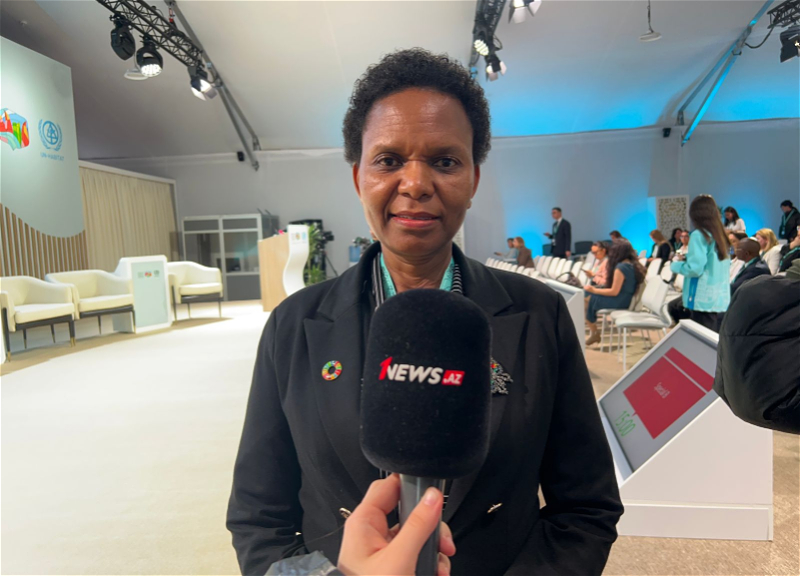
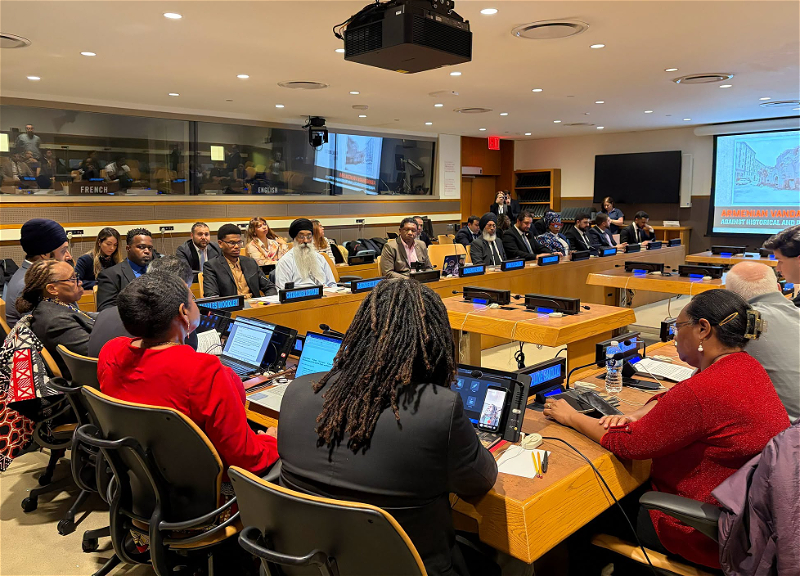
Within the framework of the 13th session of the World Urban Forum (WUF13) in Baku, on the sidelines of the Women's Assembly, President of the GenderCC organization — "Women for Climate Justice" (GenderCC – Women for Climate Justice) Dorah Marema answered questions from the correspondent of 1news.az.
Answering a question about the impact of the lack of safe housing on the level of violence against women, she emphasized the direct link between the urban environment and safety:
"Yes. When you are faced with a high share of the informal sector, a large number of spontaneous settlements, security problems arise. The fact is that in such settlements there is often no security. Due to poor passability, there is no visibility, no normal roads, access routes, and also no proper lighting," she noted.
She added that infrastructure deficits directly increase the vulnerability of women:
"In addition, there is a lack of sanitary facilities, which is why women have to go out at night to reach these public toilets. As a result, they become extremely vulnerable, as they may be attacked."
Answering a question about the most vulnerable groups in conditions of the housing crisis, Marema highlighted women with disabilities and elderly women:
"Women with special needs will obviously be in first place in terms of vulnerability, but also elderly women," she said.
She also explained this using the example of working with risks of natural disasters:
"Speaking of elderly women, you can often notice that they are not able to run away quickly. Their level of mobility is reduced, and they cannot run if a hurricane, flood or something similar begins."