Bahrain minister of housing and urban planning: 'women's support issues should be at the center of sustainable urbanism'
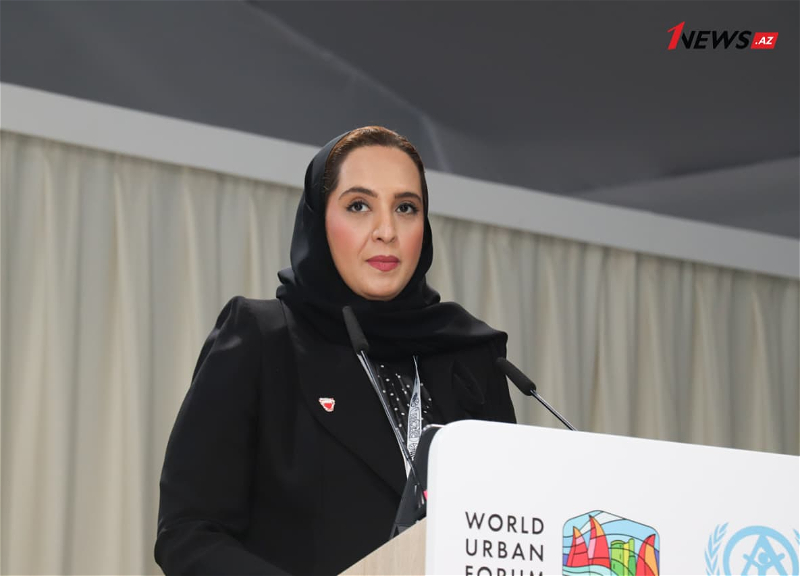
"Issues of supporting women should be at the center of sustainable urbanism."
As 1news.az reports, this was stated in Baku at the 13th session of the World Urban Forum by Bahrain Minister of Housing and Urban Planning Amna bint Ahmed Al-Rumaihi.
Expressing gratitude to UN-Habitat for organizing the platform, the minister emphasized that housing provision today is closely linked to human dignity and quality of life, so inclusive housing policy must take into account the needs of women and girls from the outset rather than responding to them after the fact.
According to the head of the agency, the empowerment of women in Bahrain is the foundation of sustainable development, and today they have become full partners in the country's progress. She noted that five women ministers head key sectors, including health, tourism, sustainable development, housing, and urban planning. By 2025, more than 655 women in the kingdom, including widows, divorcees, and heads of households, had benefited from housing services, and special programs with expanded income and age criteria have been created for the most vulnerable categories, including orphans and guardians.
The minister also drew attention to human resources potential, noting that 74 women engineers and urban planners work in specialized teams, many of whom hold leadership positions. In addition, women made up 90 percent of graduates who successfully designed 65 new districts with a total area of 84 million square meters to create an inclusive urban environment. This experience confirms that women's participation in decision-making leads to innovation, as they bring perspectives closely tied to family life, care, and everyday living—the elements necessary for building equitable cities, the minister concluded.