Baku Shapes the Energy Agenda, Rather Than Following It
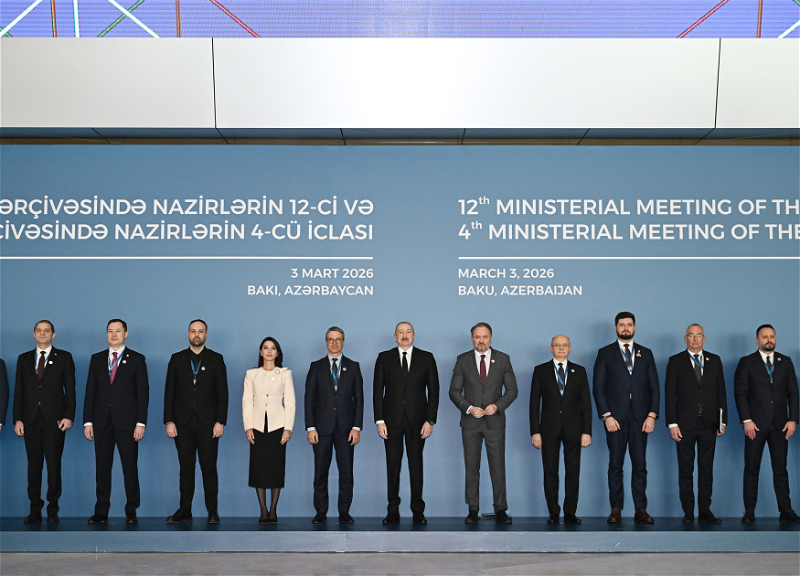
Baku has once again confirmed its status not merely as a regional platform for dialogue, but as one of the key decision-making centers in the energy sector.
The 12th meeting of the Ministerial Advisory Council on the Southern Gas Corridor and the 4th meeting of the Advisory Council on Green Energy have become working formats that, for over a decade, have ensured the coordination of interests among producers, transit countries, and energy consumers. Amid persistent instability in global energy markets, the significance of such mechanisms transcends diplomatic declarations and takes on a practical, applied nature.
The composition of participants and the nature of discussions demonstrated that energy cooperation between Azerbaijan and its partners is gradually shifting from discussing individual projects to forming a sustainable system of long-term collaboration. In this system, predictability, economic feasibility, and mutual benefit emerge as key priorities. The framework for discussion set by President Ilham Aliyev—pragmatism over illusions, responsibility over declarations, and reliance on real infrastructure—reflects an approach where energy is viewed not as a tool of pressure, but as a factor of stability and strategic calculation.
The President’s speech was largely focused on concrete results and mid-term goals of the country’s energy policy. Central to the discussions were the expansion of natural gas export geography, the capacity utilization of the Southern Gas Corridor infrastructure, prospects for increasing production, and the need for further development of transport and energy links with Europe and neighboring regions.
Southern Gas Corridor: From a Geopolitical Idea to a Foundation of European Stability
The story of the Southern Gas Corridor is one of overcoming challenges. A project that, over a decade ago, was seen as risky and overly ambitious, today stands as one of the few truly functioning elements of Europe’s energy security.
Over the years, the world has changed dramatically: conflicts, sanctions, disrupted logistics chains, and energy crises. Yet, against this backdrop, Azerbaijan has managed to maintain its most important asset—its reputation as a reliable supplier, fulfilling its obligations regardless of foreign policy circumstances.
The figures cited by the President speak for themselves. While Azerbaijani gas was previously supplied to 12 countries, today it reaches 16. This is an absolute world record for the number of countries receiving pipeline gas. Moreover, these are not symbolic volumes but systemic supplies integrated into the energy balances of recipient states.
Crucially, the expansion of supply geography is not happening spontaneously but within a clearly defined strategy. The start of gas exports to Germany and Austria marks a qualitatively new stage of interaction with the European Union.
Today, ten EU countries receive gas from Azerbaijan—and this is not a temporary measure but a long-term architecture of cooperation.
At the same time, Baku openly addresses an issue that many prefer to ignore: the existing infrastructure of the Southern Gas Corridor is operating at its limit. This is not a crisis but a consequence of success. For this reason, Azerbaijan is raising the issue of expanding the gas transportation system, inter-network connections, and new routes—not for political reasons, but based on market logic and demand.
Diversification as a Sign of Maturity, Not Weakness
A special focus in the President’s speech was on the issue of supply diversification. Importantly, diversification was presented not as a unilateral demand from consumers, but as a deliberate strategy of the producer.
The start of Azerbaijani gas supplies to Syria became an important precedent. For the first time, Baku’s energy diplomacy extended beyond traditional routes and took on a distinctly humanitarian dimension. Supplies of 1.5 billion cubic meters contributed not only to Syria’s energy balance but also to economic recovery and the provision of basic conditions for life and business.
“… by supplying 1.5 billion cubic meters of Azerbaijani gas to Syria, we helped the population feel more secure and have greater opportunities for conducting business and operating enterprises, because it is well known that without electricity, no development can be achieved. This was important for Syria, for the region, and for Azerbaijan, because diversification of gas supplies is very important for us, as it is for any country,” stated Ilham Aliyev.
This step clearly demonstrates that Azerbaijan uses energy not as a tool of pressure, but as a stabilizing factor. In a context where many countries turn resources into levers of political coercion, Baku offers an alternative model—responsible leadership.
Meanwhile, the country’s resource base continues to strengthen. In the coming years, production is expected to begin at deep-water sections of Azeri-Chirag-Gunashli, full-scale development of the Absheron field, the second phase of Umid, and a new stage of Shah Deniz exploration. The combined additional potential—ranging from 10 to 15 billion cubic meters of gas—requires not only new markets but also strategic planning for decades ahead.
Green Energy: A Course for the Future Without Abandoning Reality
The green agenda, which Azerbaijan promotes without ideological radicalism but with cold economic calculation, deserves separate analysis. President Ilham Aliyev articulated a key idea with utmost clarity: ignoring fossil fuels is a path to a world of illusions. A real energy transition is only possible through balance.
In a short period, Azerbaijan has become one of the regional leaders in the practical implementation of renewable energy projects. The commissioning of the region’s largest wind power plant with a capacity of 240 MW, built by ACWA Power, and a 230 MW solar power plant by Masdar, are not symbolic gestures but elements of a new energy system.
A key point is that all projects are based on contracts, not memoranda. This means legal obligations, investment discipline, and clear timelines. By 2032, Azerbaijan plans to generate 6 to 8 gigawatts of electricity from renewable sources—an amount comparable to the energy systems of entire countries.
“Undoubtedly, this is a significant asset. Therefore, we need to export this electricity and use it for domestic needs to replace the natural gas we currently use for power generation, creating conditions for economic growth and industrial development, including our plans for the communications sector, artificial intelligence, and data centers—all of which are projects already in development. Especially after last month, here in Baku, when I and the Vice President of the United States signed the Charter on Strategic Partnership between the United States and Azerbaijan, which covers many areas, including artificial intelligence, energy, connectivity, and many others. Thus, the implementation of our plans, with the most powerful country—the United States—as a strategic partner, seems absolutely realistic,” stated the head of state.
Parallel to this, hydropower projects are being developed in territories liberated from Armenian occupation. These projects have dual significance—economic and political—turning regional recovery into an element of sustainable development rather than a one-off restoration.
The head of state also noted that Azerbaijan plays an important role as a reliable energy transit hub: “We provide critical oil transit for Kazakhstan and Turkmenistan, and year by year, the volume of oil transported through our system grows. We are capable and have the infrastructure to receive more oil from the eastern coast of the Caspian Sea.”
New-Generation Energy Corridors
The future of energy lies not only in generation but also in transmission. This is why Azerbaijan is focusing on creating new energy corridors. Projects to lay a cable along the bottom of the Black Sea to Europe and a route from Central Asia to Azerbaijan have moved beyond the conceptual stage: agreements have been signed, and feasibility studies are in their final phase.
This is about shaping a new energy geography, where Baku becomes a key node between East and West, North and South. In the long term, these corridors could prove no less significant than the Southern Gas Corridor itself.
European Recognition and Strategic Partnership
Symbolically, during the meetings, the President of Azerbaijan received a delegation led by the European Commission’s Commissioner for Energy and Housing, Dan Jørgensen. His high praise for the head of state’s speech and interest in expanding cooperation confirmed the obvious: Brussels recognizes the real scale of Azerbaijan’s role.
Active contacts with European structures, visits by high-ranking EU representatives, and concrete projects in energy and connectivity indicate that Azerbaijan is seen as a long-term strategic partner, not a temporary solution.
The outcomes of the Baku meetings extend far beyond energy topics. They concern a sovereign model of development where resources are used not as a source of dependency, but as a tool to strengthen the state.
Gas, renewables, transit, processing, and international investments are all elements of a unified strategy built on pragmatism and national interests. In a world where many countries are losing stability, Azerbaijan demonstrates a rare combination of flexibility and consistency.
Baku does not merely adapt to global changes; it shapes their trajectory. This is why Azerbaijan’s current energy agenda is not just a matter of the present moment, but a bid for decades ahead.