Energy Without Illusions: Betting on Gas in an Era of Crises
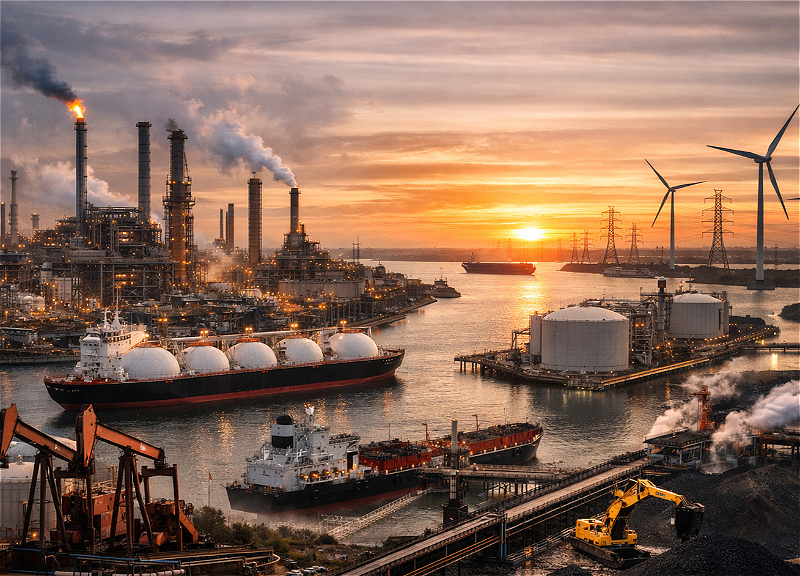
Baku has once again, for the twelfth time, become the venue for one of the most significant international events, drawing the attention of politicians, experts, and representatives of the energy sector to the issues of shaping a new architecture for Europe's energy security.
The focus is on the traditional meetings of the Advisory Councils on the Southern Gas Corridor and green energy, which over recent years have evolved into a key platform for discussing the future of energy supplies to the European continent.
Hosting these meetings in Baku reflects Azerbaijan's growing role as one of the key suppliers of energy resources and, simultaneously, as a vital transit hub connecting the energy markets of the Caspian region and Europe. The Southern Gas Corridor, comprising a system of major gas pipelines, has become a central element of the strategy to diversify gas supplies to Europe, especially amid ongoing instability in traditional import routes.
The Southern Gas Corridor as a Strategic Factor in European Energy Security
As in previous years, the centerpiece of the meetings was the speech by President of Azerbaijan Ilham Aliyev. However, this time his address came at a moment when the European energy system is once again under pressure from multiple factors—tightening EU sanctions against Russia, military escalation around Iran, and risks related to the security of transit through the Strait of Hormuz—lending his words particular significance.
It is no coincidence that, almost from the very first minutes of his speech, President Ilham Aliyev made it clear that despite the volatile international situation, the partnership between Azerbaijan and European institutions has remained stable throughout this period, and cooperation has been constructive.
The head of state emphasized that the Southern Gas Corridor initiative, over its twelve years of development, has weathered various political and economic crises, yet has not only retained its relevance but also proven its practical viability. A project that in its early stages was often met with skepticism and seen merely as one of several alternative transport schemes—a kind of backup in case of disruptions in traditional supply routes—has ultimately become a stable component of the energy infrastructure linking the Caspian region with European markets.
In an environment where energy security is increasingly determined not only by economic calculations but also by geopolitical factors, such an assessment effectively elevates the Southern Gas Corridor from a mere infrastructure project to a systemic element of Europe’s energy architecture.
In other words, this is no longer just about delivering specific volumes of natural gas but about creating a long-term mechanism for diversifying Europe’s energy sources. This is why President Ilham Aliyev highlighted that the number of European countries participating in the Southern Gas Corridor project and receiving Azerbaijani gas has significantly increased over just a few years—from three to ten, with eight of them being EU member states.
A key part of his speech focused on production prospects, sending a clear signal to European partners: Azerbaijan has the resource base to increase exports, but scaling up supplies is possible only with long-term contracts and joint investments in infrastructure.
Why Europe Wants Azerbaijani Gas but Hesitates to Invest in Supply Infrastructure
This framing of the issue is not accidental. Over recent years, the European Commission has maintained a cautious stance on funding new gas infrastructure, driven by priorities of energy transition and a desire to reduce investments in fossil fuel-related projects. Within this logic, the development of gas transport capacities has been viewed in Brussels more as a temporary measure than a long-term element of energy strategy.
Nevertheless, Baku continues to insist on the need to expand the capacity of the Southern Gas Corridor. Clearly, the expectation is that, against the backdrop of the ongoing energy crisis, sanctions pressure on Russia, and persistent instability in the Middle East, European institutions will be forced to reconsider their initially cautious approach.
In this context, Azerbaijan is effectively offering Europe a pragmatic compromise: providing additional guaranteed volumes of gas in exchange for participation in financing the infrastructure that will ensure short- and medium-term stability of energy supplies to the EU.
From Azerbaijan’s perspective, this position appears entirely rational. Had European structures previously supported the initiative to increase the throughput capacity of the Southern Gas Corridor, the current energy crisis—triggered by global upheavals and geopolitical instability—might have been less painful for the European economy.
At the same time, the Azerbaijani side is effectively pointing out a contradiction between Europe’s strategic declarations and the practical needs of its energy sector. On one hand, Brussels remains focused on accelerating the “green” transition; on the other, real-world conditions in global energy markets and recurring crises repeatedly confirm that natural gas remains a critical element of ensuring Europe’s energy security during the transition period.
Green Energy as a Complement to Gas Strategy
Nevertheless, Brussels’ rhetoric continues to emphasize the need to balance energy security objectives with long-term climate commitments. It is stressed that the development of partnership with Azerbaijan should be accompanied by investments in renewable energy, energy efficiency, and decarbonization, signaling that while the EU acknowledges the importance of Azerbaijani gas, it does not intend to deviate from its “green” transition course.
At the same time, Azerbaijan does not oppose this agenda and is actively proposing projects in the field of green energy. However, Baku hopes for a more pragmatic approach from European partners, based on the current realities of the energy market. Affordable and relatively inexpensive gas is needed by Europe today as an element of short- and medium-term energy stability. This is why cooperation with the EU in this area continues, and the growing number of European countries consuming Azerbaijani gas through the Southern Gas Corridor system confirms that this dialogue remains effective and will continue to be so for the foreseeable future.
Ilgar Velizade