Relevance of Official Baku's Messages Amid Global Energy Collapse
The world continues to stand at a crossroads. At this moment, no clear paths out of the powerful geopolitical crisis engulfing all continents are yet visible.
Analysts of all kinds limit themselves to mere assumptions about the timeline for the end of the war between Israel and the United States against Iran, attempting to vaguely outline what might await us the next day.
However, the point is that, overall, such a development of events—perhaps not in this exact format—was anticipated. Yet, the world, by and large, turned out to be unprepared for it, much like it was in the case of COVID-19.
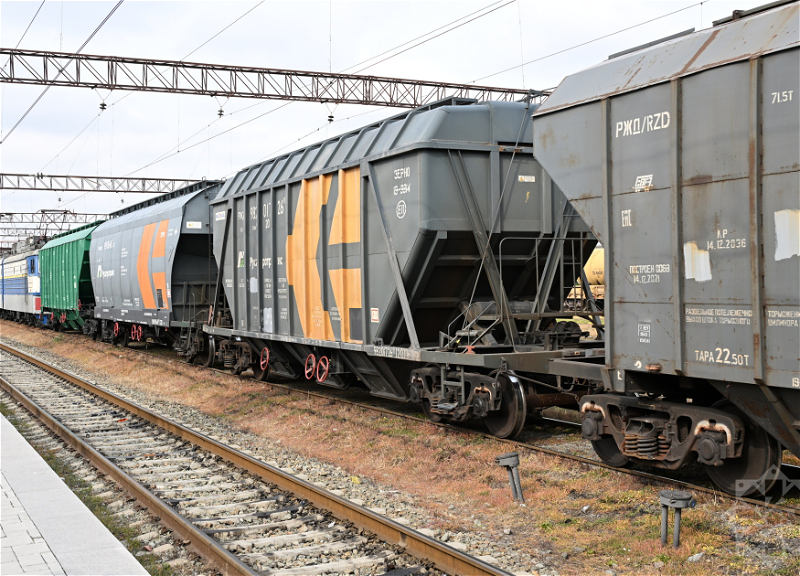
But the fact remains—the planet is cracking. And at an accelerating pace. Moreover, this is happening across various dimensions. One of the most critical accompanying factors has become the issue of logistics. Yes, logistics indeed. As paradoxical as it may seem at first glance, the discussion is far less about problems with gas or oil and much more about their delivery to the end consumer. Undoubtedly, the availability of energy resources is of utmost importance. But let’s delve a bit deeper. Isn’t one of the main imprints (if not causes) of the ongoing collapse in the Middle East precisely the logistical paradigm?
In other words, the world’s reserves of 'black and blue gold' are present, storage facilities are full, and in volumes sufficient to sustain life across the planet. Yet, it is logistical challenges that have become the foundation for reduced production and the inability to deliver, leading to declarations of force majeure of various kinds—something the world hasn’t faced in a very long time. It doesn’t matter whether this is due to shelling or mine threats; what matters more is the reality itself, which is causing a lightning-fast surge in prices for these products. The situation has reached such a scale that some media outlets have reported on plans by the White House to consider suspending the Jones Act. This has always been regarded as an extraordinary step, taken by Washington during major national catastrophes such as hurricanes or severe disruptions in the supply of essential goods. As a reminder, the Jones Act, enacted in the 1920s, mandates that all goods transported between American ports be carried on ships built in the U.S., flying the American flag, and predominantly owned by the U.S. This is rooted in maintaining national security, including the promotion of the American shipbuilding industry and the preservation of the U.S. merchant fleet. Today, according to published data, the Trump administration is exploring the possibility of waiving this law for a month. In the context of significant fuel price increases due to the war in the Middle East, caused by disruptions to global shipping routes, this would allow foreign tankers to transport oil, gasoline, diesel fuel, liquefied natural gas, and fertilizers between U.S. ports.
Meanwhile, in Europe, the possibility of tapping into strategic oil reserves is being seriously discussed.
Such developments once again bring to the forefront the calculated stance of official Baku in this direction—through the lens of undeniable geopolitical truths. On one hand, for any country situated in a significant, if one may say so, geographical space, it is crucial not only to possess natural resources or make substantial investments. Similarly, for any purchasing country of strategically important products, it is not just financial capability that matters, but also diversification.
It is quite telling that just last February, during his speech at the Munich Security Conference in a panel discussion addressing the significant issue of 'Open Corridor Policies,' President Ilham Aliyev focused precisely on this delicate aspect. Highlighting Azerbaijan’s geographical position, 'located between Europe and Asia, which is an advantage,' the head of state emphasized: 'Without physical infrastructure, it doesn’t mean much.' He then pointed out the investments made in various projects in this direction. However, most notably, President Aliyev drew attention to this context: 'To become a regional transport hub, it is necessary to maintain good neighborly relations with surrounding countries—and in this regard, Azerbaijan demonstrates successful practices both in the western and eastern directions.'
Just two days ago, during his speech at the XIII Global Baku Forum, the country’s leader expanded on this topic, stating the significant obviousness of the fact that at the top of any state’s agenda should be 'issues of security, stability, and protection,' without which 'everything else is absolutely meaningless.' As the head of state specified, countries that have invested in their development for decades are now facing risks at this historical juncture.
Let’s agree that in the context of President Ilham Aliyev’s statements, Baku’s peace-oriented steps, both on a regional scale and in a broader arena, are highlighted from a particular angle. It is no coincidence that Ismail Serageldin, co-chair of the Nizami Ganjavi International Center, in his welcoming address to the participants of the Baku Forum, noted the disruption of the structure of international relations and the multilateral system on a global scale, defining one of the tasks as leveraging 'your experience and wisdom to rethink what the world can and should be.'
Perhaps no special commentary is needed on what was said, except to state the fact that President Ilham Aliyev has актуализировал these critical nuances in relation to the Organization of Turkic States as well, particularly in his November (2025) address to the participants of the international conference held in Khankendi titled 'The Role of Special Services in Ensuring the Security of International Transport Routes.' Emphasizing that the confrontations observed recently in various regions of the world are exacerbating various challenges posing serious threats to international and regional security, he identified a key task as strengthening cooperation between special services and security agencies to 'protect the extensive transport network passing through the territories of our countries, connecting Europe and Asia.'
Thus, it would be wise for the global community to listen more often to the messages from official Baku!
Teymur Atayev