Hasan Hasanov: Azerbaijani Novruz Bayram Has No Connection to Zoroastrianism and Is a Purely Turkic Holiday
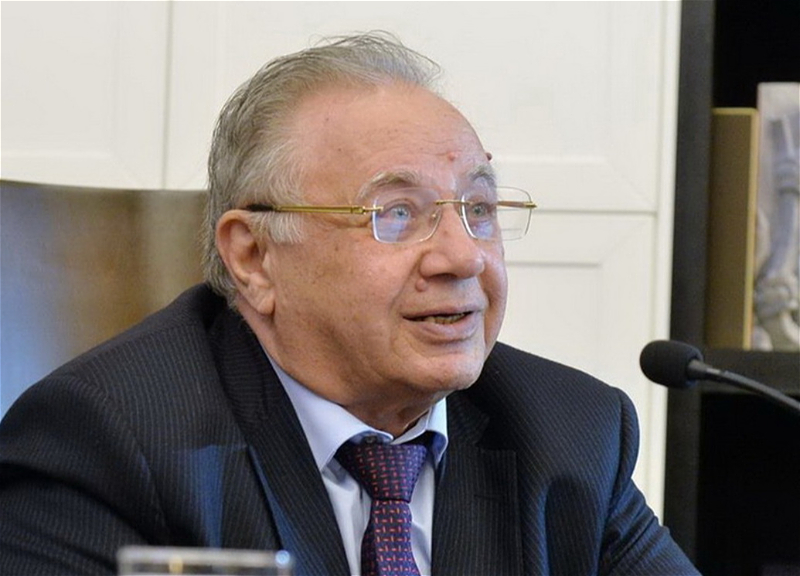
1news.az presents an interview with the prominent scholar, diplomat, and Ambassador of Azerbaijan to Poland, Hasan Hasanov, dedicated to Novruz Bayram.
- Dear Hasan Muallim, there is a widespread idea that Novruz Bayram has Zoroastrian roots. What is your opinion?
- There are no grounds for such claims! Information about Zoroastrian holidays is provided in the Avesta and other Zoroastrian texts such as Bundahishn and Visperad. In Bundahishn, it is stated on behalf of Ahura Mazda: "The creations of the world were fully created by me in three hundred and sixty-five days," that is, over six periods called gahanbars, which make up one year (Bundahishn, Chapter XXV On Matters of Faith). Thus, according to Zoroastrian tradition, the year is divided into six gahanbar periods, which are recognized as holidays. There are six in total, classified as follows: mid-spring; mid-summer; harvest festival; the return of cattle from summer pastures; mid-winter; and a ritual in honor of Fravartish. Among these holidays, there is no celebration called Novruz. There is also no holiday in honor of the Spring Equinox, but there is a holiday called "Maidyo-zarem," celebrated "in mid-spring" and, according to Visperad, meaning "milky." As you can see, Novruz Bayram, with the meaning of a holiday welcoming the new year on the day of the Spring Equinox, is absent from the listed Zoroastrian holidays.
- What about our famous Novruz Bayram bonfire and jumping over it? Does it also have no connection to Zoroastrianism?
- You are referring to one of the main attributes of Novruz Bayram, "Tuesday of Honoring Fire/Od çərşənbəsi." This tradition not only has no connection to Zoroastrianism but also contradicts Zoroastrian customs and is considered a sin by them. Such a ritual is not recorded in any form in Zoroastrian texts. Zoroastrians not only do not jump over fire but consider it a great sin. In the Zoroastrian book about the righteous Viraz, where the Zoroastrian hell is described, it speaks of a woman "whose body was devoured by harmful creatures": "What sin did this body commit?" The one inspecting hell asks, and the guides through hell reply: "This is the soul of a sinner who on earth 'placed fire beneath herself and held her body over the fire.'" Judging by this purely Zoroastrian text, "holding fire beneath oneself is sinful" and can lead to hell. Yet many proponents of the Zoroastrian origin of Novruz Bayram, either fancifully (or naively, or due to complete ignorance), without any basis, claim that jumping over fire is a Zoroastrian tradition.
- You mentioned that Zoroastrians were forbidden to jump over fire. Did they have a tradition of lighting a festive bonfire?
- As for the tradition of lighting a festive bonfire, it existed in ancient times among both the Turanian Turks and the Iranian Zoroastrians. However, this tradition occurred at different times and for different reasons among these two peoples. Turks lit bonfires in honor of the arrival of Spring and the Spring Equinox, while Zoroastrians did so in honor of the arrival of Winter and the Winter Solstice. The Zoroastrian tradition of lighting bonfires is recorded in Bundahishn: "In the month of Dey, bonfires are lit everywhere. This signifies that winter has arrived." I repeat, Zoroastrians light bonfires in honor of the arrival of winter, not spring. The month of Dey, according to the Zoroastrian calendar, covers the period from December 22 to January 22.
- When, in that case, was Novruz, the New Year, celebrated according to the Zoroastrian calendar?
- There is no information in primary sources about a purely Zoroastrian calendar. Therefore, the ancient Persian calendar is conditionally taken as the basis for the Zoroastrian calendar. I must tell you that the concept of "Novruz" categorically does not mean specifically the day of the Spring Equinox, as is now commonly believed in Azerbaijan. Firstly, according to the ancient Persian calendar, Novruz, meaning "new day," could occur in any of the calendar months, but not necessarily as the first day of the new year. Secondly, Biruni (973-1050) and Omar Khayyam (1048-1131) note that the mythical Persian king Jamshid established the Novruz holiday as the beginning of the new year on June 22, the day of the Summer Solstice. During the entire period when Zoroastrianism was the state religion of the Persians, the New Year, i.e., Novruz, was celebrated on June 22. Persians only began celebrating Novruz as the New Year in March in the early 11th century, during the Islamic period, when they were part of the Seljuk Empire, by the decision of the Turkic Sultan Melik Shah. And the Zoroastrians themselves, as Zoroastrian scholar M. Boyce claims, adopted the decision to celebrate the New Year in March only at the beginning of the 20th century.
- When, in that case, was Novruz, the New Year, celebrated according to the Turkic calendar?
- The tradition of solemnly welcoming the Spring Equinox among Turkic peoples has been continuous from ancient times to the present day. Throughout the known period of history, Turks have welcomed and continue to welcome the New Year on the day of the Spring Equinox in March. Biruni specifically calls the month of March in the Turkic tradition "birinchi ay/first month." This is confirmed by Nasreddin Tusi and Ulugh Beg.
- But nowadays, this holiday is celebrated in Azerbaijan, Kazakhstan, Uzbekistan, Turkmenistan, Kyrgyzstan, Turkey, as well as in Iran, Tajikistan, and other countries.
- Indeed, at present, both Iranian and Turkic peoples simultaneously celebrate the Novruz holiday on the day of the Spring Equinox. Omar Khayyam describes in detail the Persian tradition of welcoming Novruz. His description provides grounds to recognize that there is nothing in common between the Persian tradition of celebrating Novruz and the well-known Azerbaijani version of welcoming Novruz Bayram.
- There is a widespread opinion that the word Novruz has Persian origins.
- Novruz, in the Persian language, does not mean "New Day, New Year," although in 10th-century sources, it is already used in this sense. New Year or New Day in Persian would be "Ruzinou." The word Novruz has a mixed Persian-Turkic origin. Lexically, it is Persian, but grammatically, it is Turkic. The holiday of the Spring Equinox we call not just Novruz, but Novruz Bayram. The word Bayram consists of two components, "Bay" and "Ram." Here, "Bayat," according to Mahmud of Kashgar, is a theonym of a Turkic pagan deity. "Ram" comes from the word "Aram," which to this day is the name of the first month, March, in the Uyghur calendar. According to the ancient Turkic dictionary, "ara" means "interval," which in this case refers to the interval between the old and new year. Alongside this, the word "aram," "yrim/irim" in Chuvash, Kyrgyz, Kazakh, Karakalpak, Turkmen, Uzbek, Tuvan, Bashkir, and Tatar means magical, miraculous, "superstitious rituals," "superstitious omen"; "belief in omens and portents"; "premonition"; "portent." Thus, the word "Bayram" has a purely Turkic origin and means "Month of the deity Bayat, in the interval between the old and new year," as well as "Month conveying omens and portents of the goddess Bayat."
- What would you like to say in conclusion?
- Firstly, we can assert that the March Novruz, i.e., the Spring Equinox, has no connection to Zoroastrianism, and secondly, the Persian Novruz and the Turkic, including Azerbaijani, Novruz Bayram, have completely different ritual content. These are two entirely different holidays in terms of their ritual composition; the concept and attributes of the holiday are completely different. At the same time, these two holidays are united by the occasion of their celebration, the Spring Equinox. As they say, everyone has their own New Year holiday, or rather, everyone has their own Novruz.
Note: This interview was first published on the website 1news.az on March 18, 2020.
1news.az