Trump plans to make final decision on Iran deal today
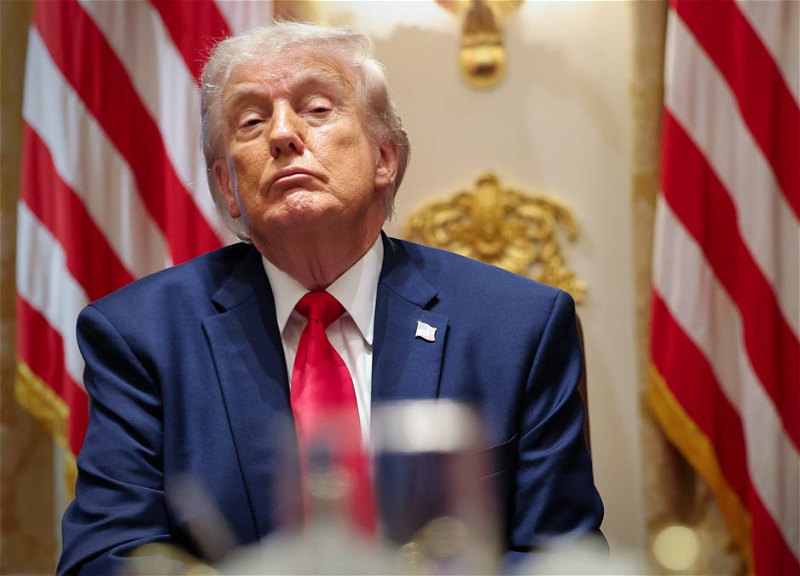
U.S. President Donald Trump plans to deliver a final verdict on May 29 during a meeting with his advisers regarding the approval of a preliminary agreement with Iran.
The White House leader wrote about this on his page on the Truth Social social network.
"I am now going to hold a meeting in the Situation Room [of the White House] to make a final decision," he noted, commenting on the agreement worked out by Tehran and Washington.
The American president emphasized that a significant part of the provisions of the deal with Iran have already been agreed upon by the parties. In addition, Trump stated that, according to the terms of the agreement, Iran is obligated to permanently renounce possession of nuclear weapons.
At the same time, according to Trump, the potential agreement with Iran includes the immediate opening of the Strait of Hormuz, and no fee will be charged for transit through it.
"The Strait of Hormuz must be opened immediately, with no fee for the free passage of vessels in both directions," Trump clarified. The agreement also implies the lifting of the naval blockade and the conduct of demining of the Strait of Hormuz.
Earlier, the Iranian agency Tasnim presented details of a possible agreement between Iran and the United States.
Recall that on February 28, the United States and Israel launched a military operation against Iran, striking a number of cities. In response, Iran launched missile strikes on Israeli territory and attacked U.S. military bases in the Persian Gulf countries.
On the night of April 8, 2026, Iran, the United States, and their allies agreed to a two-week truce. Later, White House leader Donald Trump extended the ceasefire indefinitely. On April 11–12 in Islamabad, with Pakistan's mediation, talks were held between Iran and the United States. The discussions ended without result.
As a measure of pressure on Tehran, the United States announced a blockade of Iranian ports and passage through the Strait of Hormuz. In turn, Iran announced the closure of Hormuz to vessels heading to the Persian Gulf countries. The situation in the region led to a global energy crisis.