Course toward the premier league: Baku aims to transform the Organization of Turkic States into a global center of power
In a rapidly changing world where traditional international mechanisms are losing stability, Azerbaijan is increasingly articulating a new agenda for the Turkic space: moving from a cultural-historical community to a politically and economically coordinated bloc.
Baku is not merely hosting another meeting of the Organization of Turkic States (OTS) these days—it is setting the tone: the Turkic world must act as a single organism, concentrating resources and efforts toward a unified goal.
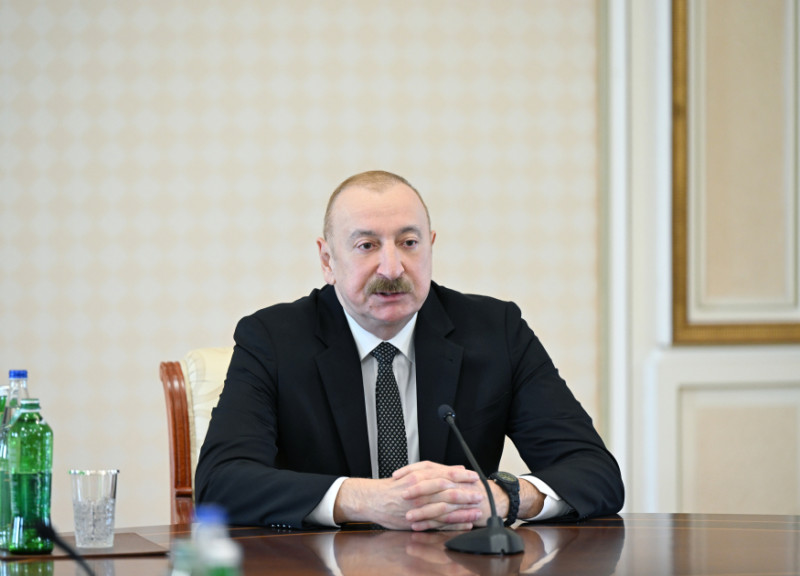
Azerbaijani President Ilham Aliyev, while receiving participants of the OTS heads of government meeting on April 2, outlined this direction with utmost clarity. The discussion is no longer just about the symbolism of brotherhood but about building an influential geopolitical and economic center capable of actively shaping the agenda—from transport corridors to energy security.
Amid global turbulence, Baku consistently promotes the idea that strengthening coordination and unity is a key factor in the future influence of Turkic states and their role in the new world architecture.
In his speech, Ilham Aliyev effectively marked the transition of Turkic cooperation to a higher level—from symbolic community to more structured and pragmatic interaction. A key emphasis was placed on the fact that the unity of Turkic world countries is no longer limited to declarations: it is reflected in coordinated positions on the international stage and mutual support in both stable and crisis periods.
“Relations with the member states of the Organization of Turkic States are a priority in our foreign policy. Our historical, cultural, and ethnic roots with these countries form a wonderful foundation, and today, as independent states, we stand united, supporting each other in all international organizations. We are by each other’s side in both good and difficult times,” stated the head of the Azerbaijani state.
Today, Turkic countries already operate as a strong, consolidated group, demonstrating solidarity, supporting each other on the international stage, and maintaining cohesion in both favorable and crisis times.
The formula of the Azerbaijani leader—“the Turkic world is our family”—is being established as a strong political stance. Viewing cooperation within the OTS as one of the priorities of its foreign policy, Baku consistently advocates for deeper integration.
“Overall, Azerbaijan has made, is making, and will continue to make a significant contribution to the development of the Organization of Turkic States. This is one of the priority issues of our foreign policy. We have repeatedly stated from various platforms that the Turkic world is our family, and we have no other family. To lead this family into the future, joint efforts are, of course, very important,” noted Ilham Aliyev.
Against this backdrop, Baku positions itself not just as a participant but as an active driver of the organization’s development, effectively establishing another important principle: it is about both maintaining the current momentum of cooperation and consistently increasing the international weight of the bloc.
The President of Azerbaijan directly points to the need to convert internal cohesion into more visible foreign policy and economic influence for the OTS—both regionally and globally. It is in this context that his assessment of the current stage of the organization’s development resonates: “Naturally, further steps will be taken related to the continued development of our organization. Today, the Organization of Turkic States has gained great authority on a global scale, and our international positions are strengthening. Our ability to influence processes occurring in the region is growing, while the role of our organization on the global stage is also increasing, and we must jointly strengthen our positions.”
The goal is clearly stated—to transform the OTS into one of the leading international structures, with an emphasis on practical tools: enhancing unity, implementing joint projects, and expanding opportunities for partners. “Today, our organization must become one of the leading international organizations in the world. This depends on us. The more effort we put in, the more unity we demonstrate, the more successfully we implement important projects and simultaneously create significant opportunities for our partners, the more our international authority, capabilities, and positions will grow,” the Azerbaijani leader is convinced.
A separate focus by Ilham Aliyev is placed on the uniqueness of the OTS format itself, drawing attention to the fact that, unlike many other international structures, the organization relies not only on pragmatic interests but also on deep-rooted commonalities—ethnic, cultural, and historical. Combined with geographical connectivity and largely aligned strategic priorities, this forms a unique competitive advantage for the bloc, enabling interaction on a more stable and trust-based foundation. It is this multilayered connection—of identity and interests—that creates the preconditions for closer coordination and long-term integration. “There are many international organizations in the world, but there are not so many created on the basis of ethnic roots. This is a very significant advantage for us. Our ethnic affiliation unites us. That is the first factor. Then there is our geography, the very good and warm relations between our countries, and common goals. Therefore, considering all these factors, we must elevate our organization to an even higher level,” emphasizes Ilham Aliyev.
Special attention is given to the institutional strengthening of the organization. Regular summits and informal meetings help maintain constant dialogue and respond more quickly to changes in the global agenda. Amid growing turbulence, this format essentially becomes a tool for оперативная coordination between states. The head of state considers summits an important factor for the organization’s development: “These meetings are held regularly, and, as you know, at Azerbaijan’s initiative, informal meetings of heads of state have also begun. The first such informal summit took place in Karabakh, in Shusha. This has already become a tradition, and I believe it is a wonderful indicator. Heads of state now meet at least twice a year. Because there are many issues to discuss, and processes in the world are moving so rapidly that we must constantly hold consultations, learn each other’s opinions, and take joint steps to make the right decisions.”
At the same time, the focus today is not only on political coordination but also on building a sustainable economic base: growth in mutual trade, investment projects, and the creation of joint funds are steadily strengthening the foundation of sustainable partnership. “In the economic sphere—which will be the main content of your meeting—things are going well. As for Azerbaijan, our trade turnover with all member states is growing, and the volume of mutual investments is increasing. We have invested over 20 billion dollars in the economies of the organization’s member states. True, the majority of this has been invested in Turkey. However, the process of mutual investment is also underway with other member states. We have established joint investment funds with Uzbekistan, Kazakhstan, and Kyrgyzstan. Through these funds, many projects are already being implemented, or preparatory work is being conducted for their realization.”
The solidarity of Turkic states has taken on a practical dimension, also manifesting in mutual support on sensitive issues for the countries. The participation of Turkic world countries in the restoration of Karabakh, as well as the support provided by Azerbaijan to Turkey after the devastating earthquake, are clear examples that mutual assistance goes beyond political statements and takes on concrete economic and humanitarian dimensions, becoming an important signal of unity. President Ilham Aliyev notes in this context: “Today, in our most important issue—that is, the restoration of Karabakh and East Zangezur—our brotherly countries are again by our side. We, in turn, are always ready to provide necessary support and do so.”
“This is both practical assistance to each other and an indicator of our intentions. At the same time, it once again shows our peoples the path—that we must stand by each other. And to the whole world, it demonstrates that the Turkic world, the Organization of Turkic States, at any time—in good and difficult times—both at the level of member states and as an organization, does everything to achieve common goals,” stated the Azerbaijani leader.
Another key strategic priority for the Organization of Turkic States is the development of international transport and logistics corridors. The Trans-Caspian International Transport Route and the Zangezur Corridor not only form new routes for international trade, connecting major markets in Asia and Europe, but also enhance the region’s role in the global economy. It is the coordinated implementation of these projects that allows OTS regions to act as a unified geo-economic center, opening opportunities for joint development and strengthening positions on the world stage. Here is what the head of the Azerbaijani state has to say on this matter: “Of course, alongside economic and investment issues, one of the main challenges facing all of us today is the expansion of our transport, logistics, and transit capabilities. In principle, there is always a need for this. Because the Middle Corridor, passing through our countries, serves the interests of each of us. Especially in the current geopolitical situation, the Middle Corridor, the Trans-Caspian Corridor, the Zangezur Corridor, and other projects in this direction are gaining even greater importance.”
For its part, Azerbaijan is actively turning strategic plans into concrete results, preparing infrastructure that will become the heart of a new international transport corridor.
“A significant part of the work on Azerbaijani territory has already been completed,” notes Ilham Aliyev. “Both railways and the Baku Trade Port, our highways, airports—all transport infrastructure has been brought to a state of readiness. As for the implementation of the Zangezur Corridor, the automobile road is almost 90 percent ready, and the railway is about 70 percent complete. I hope that in the near future, this project will be fully realized. We know and are very glad that construction of the Kars-Nakhchivan railway has begun in Turkey. Thus, the integration and coordinated implementation of these projects will open a new important international corridor. This will become one of the branches of the Middle Corridor, and the railway infrastructure we are building is initially designed to transport 15 million tons of cargo. But in the future, this figure may increase, and it likely will. However, in any case, the opening of a new corridor with a capacity of 15 million tons is of tremendous importance for both our countries and a broader geography.”
Such practical steps create new transport potential for the region, turning it into a strategic hub of global trade. “And here again, we demonstrate a very serious and responsible position—ensuring our own interests while also opening new transport routes to the world. This once again shows that the goal of our countries and our organization is peace, cooperation, security, mutual respect, and common interests,” the head of state says on this matter.
Azerbaijan’s practical steps—from the development of transport corridors to investments in the economies of brotherly countries—demonstrate that the unity of the Turkic world is realized not only at the level of declarations but also through concrete projects that create regional and global impact.
Thus, strengthening the role of the Organization of Turkic States is built on a unique combination of cultural identity and strategic pragmatism. Shared historical, ethnic, and cultural roots form a solid foundation of trust, while economic cooperation and coordinated infrastructure policy turn these shared values into real advantages. It is this combination—of cultural closeness, aligned economic interests, and strategic infrastructure integration—that forms a strong platform for the OTS to not only strengthen its positions on the regional stage but also gradually become a noticeable player in global geopolitics.