A new link: how Azerbaijan and Uzbekistan are transforming the space from Beijing to Lisbon

Rahman Hajiyev
Chairman of the Board, Karabakh Revival Fund
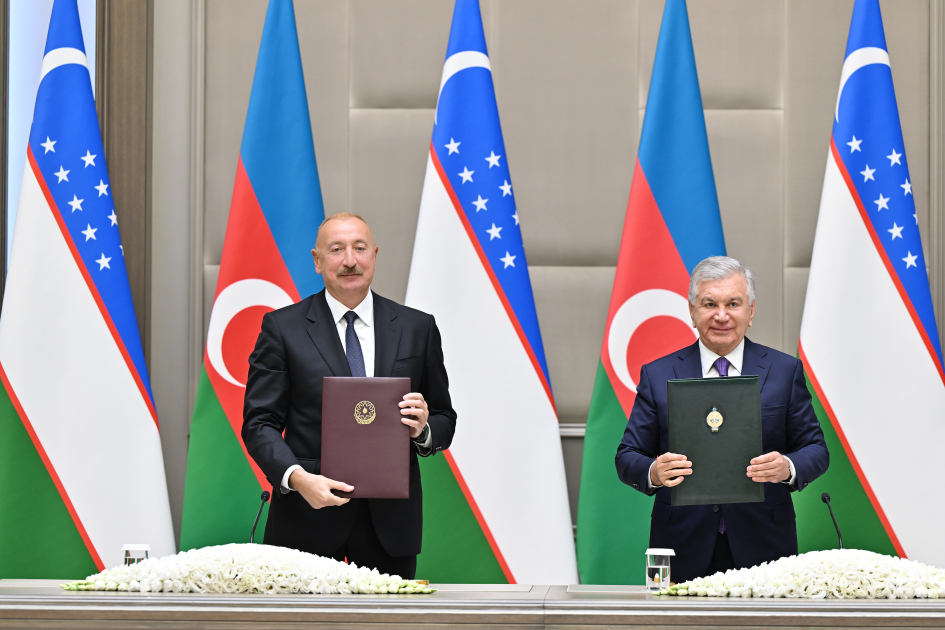
On August 23rd, in the halls of the Kuksaroy residence in Tashkent, Presidents Ilham Aliyev and Shavkat Mirziyoyev signed a document with an unusual word in its title.
The treaty is not about mere “co-operation” or “partnership” (both of which Baku and Tashkent had already set down on paper in earlier years) but about “eternal friendship”.
The Treaty on Eternal Friendship, signed alongside the third meeting of the two countries’ Supreme Interstate Council, is the kind of instrument diplomats reach for when they want to say that a relationship has passed beyond the reach of its signatories and their governments and now belongs to the peoples themselves.
The choice of a forward-looking word was deliberate. So was the timing.
I write as someone whose career has run along the seam between these two subjects. As an undergraduate and then a master’s student at the international-relations faculty of Baku State University, where the region’s dynamics were the backbone of our studies, I learned to watch closely how Azerbaijan’s relations with the former Soviet states, and with Central Asia above all, took shape.
For many years afterwards I ran one of Azerbaijan’s largest media organisations, a vantage point from which one watches the region’s tectonic plates shift in real time.
My acquaintance with the new Uzbekistan is more recent but no less absorbing. It came through my work as a consultant on a book about the country now being written by a longstanding friend of Azerbaijan, Graeme Wilson, who is also the author of a biography of President Ilham Aliyev and of several other works on our country’s recent history, including a book on the revival of Karabakh.
Over several months of that work I was able not only to immerse myself in the country’s history and economy but to talk with scholars, political analysts, senior figures in the state apparatus and ordinary Uzbeks.
What follows are the observations that such a double vantage point allows, the view of someone who has looked hard at the realities of both countries.
From expediency to architecture
The Treaty on Eternal Friendship did not appear from nowhere. It caps a staircase the two capitals have been climbing, step by deliberate step, for the better part of a decade. President Aliyev’s state visit to Uzbekistan in 2022 ended with the signing of a declaration on deepening strategic partnership.
Mr Mirziyoyev’s visit to Baku in 2023 produced the agreement to create the Supreme Interstate Council, a standing mechanism that now convenes the two presidents and their governments as a single decision-making body.
In 2024, during President Ilham Aliyev’s visit to Tashkent, the two sides signed both a fresh declaration on deepening partnership and the Treaty on Allied Relations, which lifted ties to the highest rung the diplomatic lexicon offers. In 2025 President Mirziyoyev paid a return state visit to Baku.
The two countries’ intergovernmental commission has, meanwhile, met fifteen times.
The economics have kept pace with the protocol. Bilateral trade more than tripled in 2025, to about $795m, and rose by roughly a third again in the opening months of 2026. In Tashkent the two sides signed a programme to lift turnover to $1bn by 2030, together with a practical road map for the investment projects meant to get them there. Figures of this size are modest beside Europe’s trading giants. But the trajectory matters more than the absolute number.
The substance behind the figures is already visible. SOCAR, Azerbaijan’s state energy company, is moving into Uzbekistan’s retail fuel market. ABB (the International Bank of Azerbaijan), the country’s largest lender, is entering the Uzbek market by acquiring a controlling stake in Davr Bank, a local bank. On joint oil-and-gas exploration the two sides say they are close to the drilling stage, with the first wells expected next year.
Azerbaijan’s carmakers draw on Uzbek experience, and a joint investment fund set up a few years ago is already committed, in part, to specific projects. This is no longer a relationship of communiqués but, increasingly, one of balance-sheets.
The two cornerstones of the Caspian and Central Asia
Why should any of this matter beyond the two countries directly involved? Chiefly because Azerbaijan and Uzbekistan are not ordinary bilateral partners. Each is the load-bearing state of its own region, and the two regions meet on the Caspian.
Azerbaijan is the political and economic engine of the South Caucasus and an indispensable transit hub between the Caspian and the Black Sea; total transit through the country reached 114.5m tonnes in 2024.
Uzbekistan is the demographic and economic core of Central Asia, its most populous state, sitting at the region’s geographic centre and bordering every other Central Asian republic.
Neither is a periphery that has attached itself to a larger patron. Each is a regional pillar in its own right.
When two pillars of this weight bind themselves together with treaties of eternal friendship and hard economic projects, the effect is structural rather than merely additive. The Caspian, long seen as the edge of two different worlds, the Caucasus on one shore and Central Asia on the other, is being turned by Presidents Aliyev and Mirziyoyev into the link that joins them.
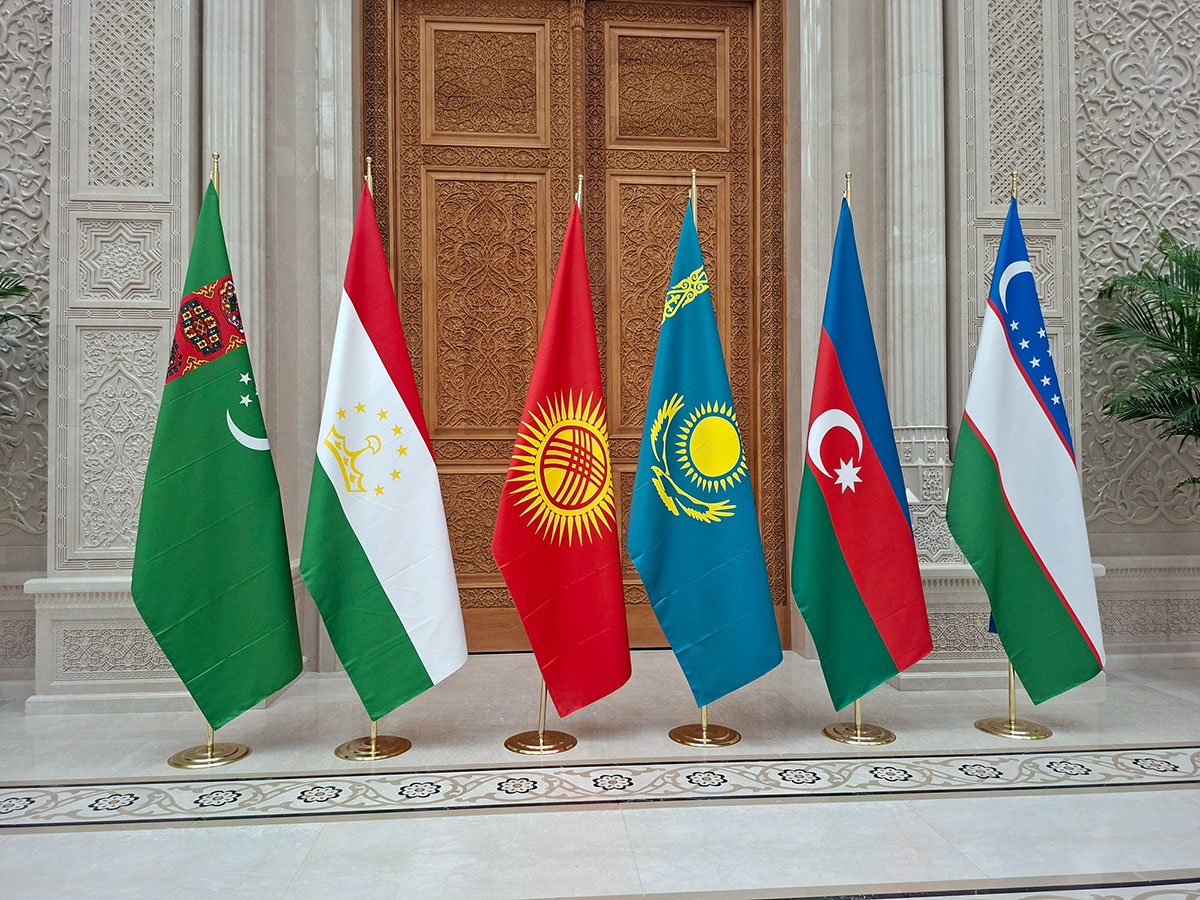
C5 becomes C6
The clearest sign that this is a regional project, and not merely a bilateral one, came in November 2025. At the seventh Consultative Meeting of the Heads of State of Central Asia, held in Tashkent, Azerbaijan was admitted as a full member of a format that had until then been the exclusive preserve of the five Central Asian republics. What had been “C5” became, in the shorthand of the region’s diplomats, “C6”. The decision was taken under Uzbek chairmanship, and Mr Mirziyoyev had pressed for it for some time.
The significance is easy to understate and worth spelling out. A South Caucasus state now sits, as an equal, at the table where Central Asia’s leaders settle their common affairs, a table at which, tellingly, no outside great power holds a chair. This is less the enlargement of a club than the fusing of two regional systems into one.
The corridor as spine
If treaties and formats are the nervous system of the emerging axis, the Trans-Caspian International Transport Route, or Middle Corridor, is its spine. The route runs from western China across Central Asia, over the Caspian by sea, through Azerbaijan and Georgia and on to Turkey and Europe.
Its growth in recent years has been brisk. Freight along the corridor rose from under a million tonnes a few years ago to about 4.5m in 2024, a jump of some 62% in a single year; operators expect around 5.2m tonnes in 2025 and a design capacity of ten million by 2027. The route is roughly 2,000km shorter than the northern corridor through Russia and can move goods from China to Europe in about twelve days, against nineteen.
Its rise is inseparable from geopolitics. When war between Russia and Ukraine, and later turmoil in the Middle East, disrupted the familiar northern and southern routes, shippers and governments began looking for a path that crossed neither Russian nor Iranian territory.
Yet it would be a mistake to read the Middle Corridor merely as a by-product of others’ misfortunes.
For Baku, Tashkent and the other Central Asian republics it is a sovereign choice: a way to turn geography that was long a handicap, the very condition of being cut off from the open sea, into leverage.
Here the two countries’ roles are complementary rather than competing. Azerbaijan is the Caspian crossing itself: the Port of Baku, with a design capacity of about 15m tonnes and plans to expand to 25m, and the largest shipyard on the sea, now building the roll-on/roll-off vessels the route needs. Uzbekistan feeds the corridor from the east and has backed the China–Kyrgyzstan–Uzbekistan railway, under construction since 2025, which will shorten the run to Chinese markets.
In Tashkent the two presidents went further, floating a dedicated Uzbek-Azerbaijani corridor across the Caspian under joint management, and a joint Caspian fleet to serve it.
A close country on a far shore
For an Azerbaijani reader one part of this story deserves particular attention: the transformation of the partner across the Caspian. The Uzbekistan that now signs treaties of eternal friendship and joins regional formats is not the Uzbekistan of a decade ago.
Under Mr Mirziyoyev, in power since 2016, the country has moved from one of the most closed economies in the post-Soviet space towards openness. It floated its currency in 2017, ended the forced labour in the cotton harvest and, most consequential for the region, reversed a foreign policy that had long kept Tashkent aloof from its own neighbourhood. The Central Asian consultative format that Azerbaijan has just joined was itself an Uzbek initiative.
President Ilham Aliyev has been candid about what made this possible. When Mr Mirziyoyev took charge, the Azerbaijani president said during the visit, the economic foundations had to be built almost from scratch; without that foundation none of the joint projects now on the table would exist, and before it, he added, there had been no joint projects between the two countries at all.
It is an unusually frank acknowledgement that the axis rests on one country’s internal remaking as much as on any treaty.
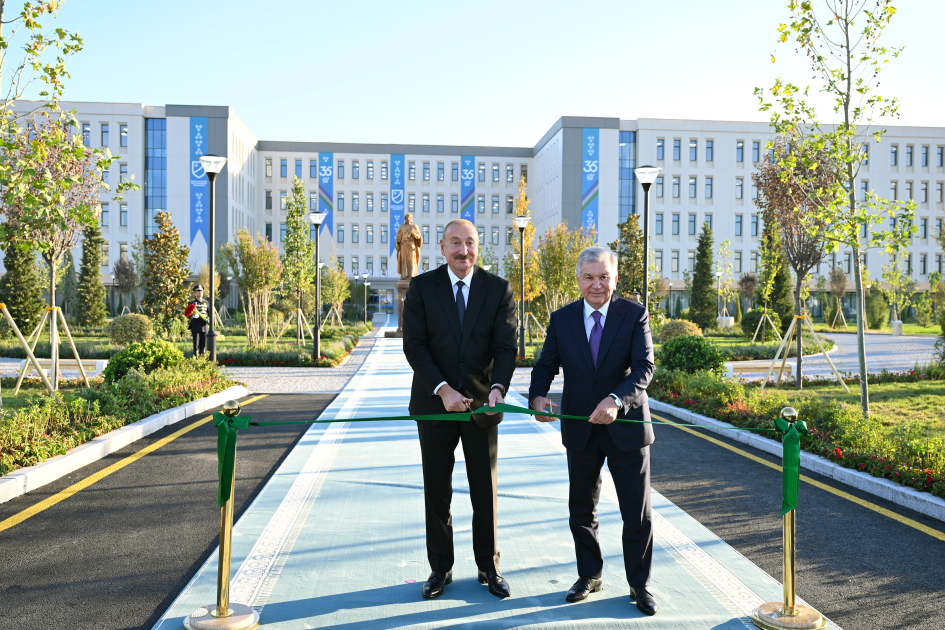
A humanitarian bridge
The axis is not, though, only a matter of freight and treaties. During the visit the two presidents opened the rebuilt Nizami Ganjavi National Pedagogical University in Tashkent, named after the 12th-century Azerbaijani poet especially treasured in Baku, and broke ground on an “Azerbaijan” park in the new district on the capital’s edge (a matching “Uzbekistan” park, I might add, is planned for the Azerbaijani capital). They agreed to co-produce a feature film about Nizami and Alisher Navoi, the towering figure of Uzbek letters: two national poets woven into a single story. And next year the two countries will jointly host the FIFA youth World Cup.
Symbolism of this sort is not decoration. It is how states teach their publics to see one another as kin rather than mere neighbours, and it is the layer on which treaties ultimately rest.
Karabakh as a test of trust
Nowhere is the depth of that trust plainer than in Karabakh. Of all the foreign states that took part in reviving the territories Azerbaijan has recovered, it was Uzbekistan that moved first, financing a 960-place school in Fuzuli named after the ruler-astronomer Mirzo Ulugbek. Nor did it stop there: sister-city ties were later established between Khankendi and Urgench, Nakhchivan and Urgench, and Lachin and Bukhara.
To invest early in a sensitive, recently recovered region is to make a political statement, not merely a friendly gesture. Tashkent made it, confirming its standing as a brotherly state.
From Beijing to Lisbon
Assemble the pieces and a larger shape emerges: a treaty built to outlast not just its authors but the readers of this article; a South Caucasus state seated at Central Asia’s table; a trade corridor growing at double-digit rates; a shared shipyard; joint management of the Caspian crossing under discussion.
It is no longer quite accurate to speak of Azerbaijan and Uzbekistan as two countries enjoying warm bilateral relations. They have become two of the most important links in a chain that runs from Beijing to Lisbon, joined at the point where the chain was weakest: the Caspian crossing between them.
What gives the project its particular character is that both capitals practise a deliberate multi-vector diplomacy, keeping lines open to Moscow, Beijing, Brussels and Washington and beholden to none of them.
The axis taking shape on the Caspian is not a bloc assembled by a great power for its own ends. It is the work of two sovereign states, and of two far-sighted leaders who have judged their regions stronger together than apart and have chosen, at their own pace and on their own terms, to build it.