The Persian Gulf and the new reality: how the protracted crisis around Iran is hitting the region's economy
By the end of summer, the countries of the Persian Gulf need an agreement between the US and Iran more than ever. Otherwise, the temporary downturn risks turning into something much more serious, and a new balance of power is clearly emerging in this picture.
The truce between the US and Israel on one side and Iran on the other, announced on April 8, has now lasted almost as long as the fighting that preceded it.
By the start of the sixth week, the sides had not moved closer to a framework agreement — on the contrary, they had moved further apart. On May 10, Iran transmitted its version of a peace proposal through Pakistani intermediaries. The next day, Donald Trump, according to NPR, called the document “absolutely unacceptable” and “a piece of garbage” that he “didn’t even finish reading” in the Oval Office. The truce, he said, is on “massive artificial life support.” The US president also announced a new round of sanctions against Iranian oil operations, including supplies to China, and declared the truce extended indefinitely “until negotiations are concluded — one way or another.”
According to the AP news agency, the key differences between the sides remain the same: the duration of the moratorium on uranium enrichment, the fate of Iran’s stockpiles of highly enriched uranium, the dismantling of some nuclear facilities, and the conditions for opening the Strait of Hormuz. Tehran insists on the lifting of sanctions and an end to the US naval blockade of its ports as conditions for opening the strait.
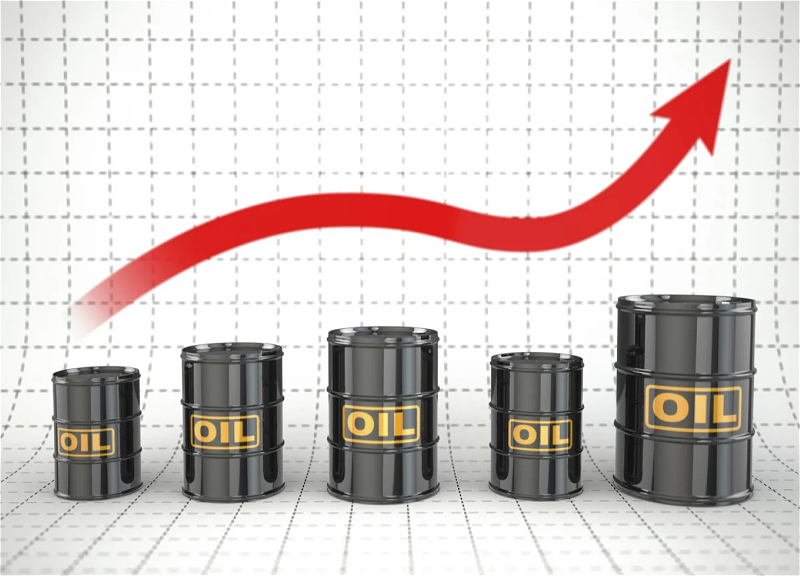
Markets reacted immediately. According to ABC News, by Monday morning, US oil WTI was trading around $98 per barrel (+2.5%), while Brent was near $104 (+3%). The average price of gasoline in the US rose to $4.48 per gallon — $1.54 higher than before the war began. In Iran, according to estimates from one official cited by The Economist, more than a million people have lost their jobs.
For the Persian Gulf states, the costs look different — and are harder to measure, because, as The Economist notes, the region’s monarchies are “desperately trying to project an image of normality.” Yet behind this facade the scale of the problem is already visible.
Energy: different degrees of damage
The oil and gas sector accounts for about a quarter of the region’s GDP and the bulk of export revenues. Since the start of the war, Saudi Arabia’s oil exports have fallen by roughly a third, the UAE’s by half, while Bahrain, Kuwait, and Qatar are exporting almost nothing. Combined output from Kuwait, Iraq, Saudi Arabia, and the UAE had fallen by at least 10 million barrels per day by March 12. Before the conflict, around 3,000 vessels passed through the Strait of Hormuz each month; now, according to an analytical note from the UK House of Commons, the number is about 5% of the previous level.
“If trade and shipping remain restricted for more than a few weeks from today, we expect supply disruptions to persist and the market to normalize only in 2027,” Saudi Aramco president and CEO Amin Nasser said on May 10.
Over the past weekend, the first Qatari LNG tanker since the start of the war managed to pass through the strait. The vessel headed to Pakistan via a northern route through Iranian territorial waters, where, The Economist reports, the Islamic Revolutionary Guard Corps had previously tried to collect passage fees. A source familiar with the arrangements denies this version: “Pakistan negotiated with Iran to allow a limited number of LNG tankers through the strait because Islamabad urgently needs to address its gas shortage.”
Pakistan, acting as the main intermediary between Washington and Tehran, is essentially trading its mediation for access to energy resources. However, Iran will not allow mass transits, according to diplomats interviewed by The Economist.
Tourism, aviation, and the service sector: a quiet collapse
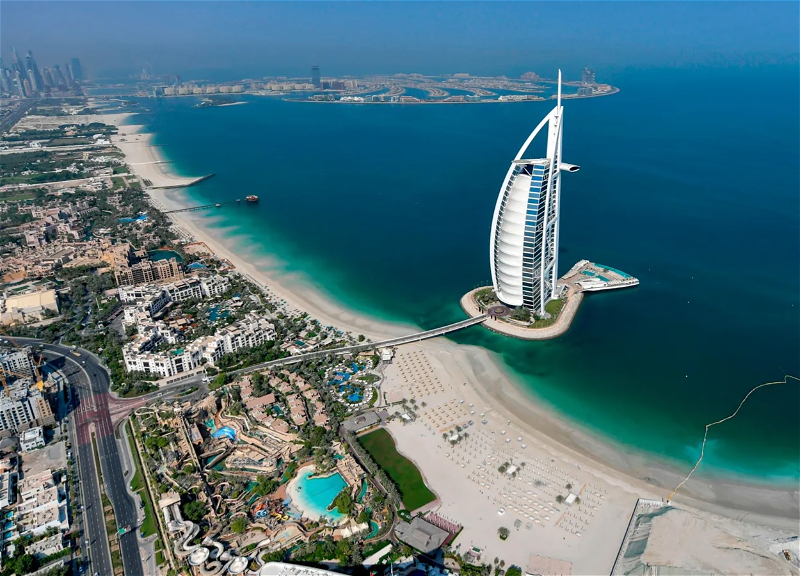
Before the war, tourism and related services accounted for more than 11% of Gulf GDP, and significantly more in the UAE. Transit passenger traffic helped regional airlines stay afloat: according to The Economist, Emirates carried 4.7 million passengers in March and April — about half its normal load, which is considered an acceptable result for an airline whose hub has been repeatedly bombed.
Outside the airports, the picture is substantially darker. According to data from CoStar cited by The Jerusalem Post, hotel occupancy in Dubai fell to 20–30% in some periods and as low as 5% in certain properties — levels not seen since the pandemic.
Moody’s, as reported by The Economist, estimates Dubai’s quarterly hotel occupancy at 10% compared with 80% in February. In March, passenger traffic at the emirate’s airports dropped more than 65% year-on-year. In Bahrain, card spending at hotels in March was 64% below February levels.
The social consequences lie behind the statistics. Dubai’s hotel sector, according to The Jerusalem Post, employs around 240,000 foreigners out of a total tourism workforce of roughly 800,000; in luxury hotels, 95% of service staff are migrants. By April, tens of thousands of employees had been placed on unpaid “standby” with no set return date. According to industry sources cited by The Jerusalem Post, in some hotels only 3–4 out of a staff of 30 remain active. Workers remain in company housing but must pay for their own food with no income; those who continue working have seen wages cut by 20–50%.
In some cases, according to reports from the regional outlet tovima.com, employees are being sent home at their own expense.
Who is holding on with what
The states of the region are entering the crisis with different margins of safety. Qatar, according to officials interviewed by The Economist, can hold out “for several more months” even with an almost complete loss of export revenue from LNG, helium, and other commodities.
Banks in the UAE remain well capitalized: they have deferred loan payments and waived fees for thousands of businesses as part of an aid package worth more than 6 billion dirhams ($1.6 billion). Dubai separately approved a 1 billion dirham ($272 million) support package for the tourism sector, deferring fees and providing benefits to hotels.
Bahrain has already signed a $5.4 billion currency swap with the UAE and, according to The Economist estimates, may need new aid packages if the crisis drags on. US Treasury Secretary Scott Bessent, as reported by CNBC, said last week that Washington could provide the UAE with a financial “lifeline”; damage to the emirates’ energy infrastructure alone is estimated at nearly $60 billion.
The Saudi paradox
Amid the region-wide downturn, one clear exception has emerged. Saudi Aramco, the world’s largest oil company, reported quarterly net profit of $32.5 billion, 25% higher than the same period in 2025.
This occurred even though the kingdom’s physical oil exports, according to The Economist, fell by about a third: the rise in prices — Brent holding near $104 per barrel versus $70 before the war — more than compensated for the drop in volumes.
The East-West pipeline, running across the kingdom from eastern oil fields to the Red Sea port of Yanbu and bypassing the Strait of Hormuz, played a decisive role. According to Nasser, it operated at its maximum design capacity of 7 million barrels per day in the first quarter. Originally, industry analysts note, the pipeline was designed not as a commercial solution but as a strategic reserve in case the Persian Gulf became completely inaccessible — a plan conceived a decade ago that was realized precisely in the first quarter of 2026.
Unlike Saudi Arabia, neither Kuwait, Iraq, nor Qatar has comparable pipeline infrastructure capable of bypassing the Strait of Hormuz in meaningful volumes. Their export revenues remain directly tied to the strait — which is why the near-zero exports of Bahrain, Kuwait, and Qatar look especially stark against Saudi results.
Energy independence has been joined by logistics. Store shelves across the region, as The Economist describes, are still stocked — largely because Saudi Arabia has become a “lifeline”: goods arrive by sea at its Red Sea ports and are then transported by land to neighboring countries. “We were told to spend whatever it takes to keep shelves from going empty,” one retailer told the publication.
The combined effect is a strategic elevation of the kingdom within the Gulf Cooperation Council. While the UAE negotiates possible US assistance and Bahrain resorts to currency swaps, Riyadh is simultaneously profiting from prices, bypassing the strait through its own pipeline, and supplying neighbors with food. This is a shift that is unlikely to disappear after de-escalation.
Deadline — end of summer
Officials and company executives in the region call the end of summer a key turning point. The coming months would be a dead season even in a normal year — the scorching heat deters both tourists and residents. By September, expatriates are expected to return from vacations, and preparations begin for millions of tourists and conference participants. If by then the US and Iran have not reached an agreement that opens the strait and removes the specter of renewed war, the temporary downturn has every chance of becoming systemic.
What this means for Azerbaijan
For Azerbaijan, the picture is mixed. In the short term, high global oil and gas prices work in favor of the budget: even with reduced physical volumes, the price effect partially offsets losses (following the same logic that allowed Saudi Aramco to increase profits). This supports SOCAR revenues and state finances.
However, Azerbaijan is a net importer across a wide range of categories: food, equipment, consumer goods, and many intermediate products.
A global surge in energy prices could potentially translate into imported inflation, while higher shipping and marine insurance costs add their own contribution. Against the backdrop of recession risks among key trading partners (including the EU, Turkey, and Russia), this puts pressure on the entire economy.
In other words, the budget’s gain from high hydrocarbon prices is one side of the equation; the costs to consumers and the economy as a whole are the other.
The final balance will depend on whether the scenario in which the crisis extends beyond summer materializes.
The longer the pause without peace lasts, the more noticeably the costs will begin to outweigh the benefits.