Why Does Azerbaijan Need the Repeal of Section 907?
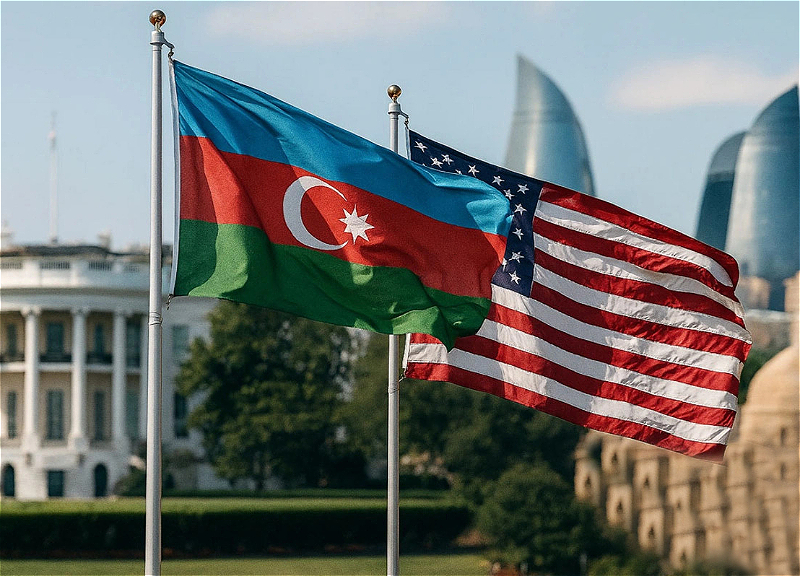
In politics, symbols sometimes carry as much weight as concrete decisions. Section 907 of the Freedom Support Act, passed by the U.S. Congress in 1992, became just such a symbol—a symbol of distrust, a one-sided approach, and the influence of U.S. domestic political factors on foreign policy toward the South Caucasus.
Decades have passed. The South Caucasus has changed. Azerbaijan’s role has evolved. The world has transformed. Yet, Section 907—formally restricting direct U.S. government aid to Azerbaijan—remained a political relic of the post-Soviet era.
President Trump suspended its enforcement, and a proposal for its repeal is currently under consideration in Congress.
Why is its repeal of fundamental importance to Baku today?
Historical Context: A Product of Its Time
The amendment was adopted during the height of the first Karabakh war. It prohibited the U.S. government from providing direct aid to Azerbaijan until, as stated in the document, it “takes steps to cease blockades and the use of force” against Armenia and Nagorno-Karabakh.
In reality, this was a decision driven by the active efforts of the Armenian lobby in the U.S. and the emotional perception of the conflict in the early 1990s. Meanwhile, Armenia faced no such restrictions.
From the perspective of international law, the situation seemed paradoxical: Azerbaijan, a state whose territorial integrity was recognized by the UN Security Council and the international community, was subjected to sanctions-like restrictions.
The Amendment as a Political Tool of Pressure
After the events of September 11, 2001, the U.S. began annually suspending the amendment in the interest of national security. This allowed Washington to cooperate with Baku on issues of security, counterterrorism, and transit to Afghanistan.
Azerbaijan became a key participant in the Northern Distribution Network, facilitating cargo transit and deploying peacekeepers to Afghanistan. Azerbaijani military personnel guarded Kabul’s airport and were among the last to leave the country.
Nevertheless, the annual “temporary waiver” process appeared as a political compromise: cooperation was necessary, but the formal ban persisted. This turned the amendment into a tool of pressure and a symbol of inequality.
A New Geopolitical Reality
After 2020, the region entered a qualitatively new phase. The restoration of Azerbaijan’s territorial integrity fundamentally altered the balance of power. The South Caucasus ceased to be an arena of “frozen conflict” and became a space for reconfiguring transport and energy routes.
Today, Azerbaijan is:
- a key supplier of gas to Europe amid energy transformation;
- a vital transit hub between East and West;
- a factor of stability in the Caspian region;
- a participant in major infrastructure projects.
In these conditions, maintaining Section 907 would seem an anachronism, inconsistent with Azerbaijan’s actual role or the interests of the U.S. itself.
Strategic Partnership Charter: A Qualitative Shift
The signing of the Strategic Partnership Charter between the U.S. and Azerbaijan signaled a transition to a new format of relations—from forced pragmatism to institutionalized partnership.
Of particular importance is the section on security and defense cooperation. It reflects the readiness of both sides to expand collaboration, including the supply of defense products and the development of joint projects.
This does not imply militarization of the region. It means: 1) the removal of artificial restrictions; 2) the transition of relations to a predictable legal framework; 3) the elimination of historical asymmetry.
Why Is the Repeal of the Amendment Beneficial for Azerbaijan?
First, from the perspective of restoring political justice. Azerbaijan is no longer seen as a party requiring “conditional trust.” The repeal of the amendment is an acknowledgment of the changed reality and the country’s role in regional security.
Second, from the perspective of strengthening defense capabilities. Azerbaijan already collaborates with leading arms manufacturers. The opportunity to engage with American companies broadens options—from procurement to technology transfer and joint production.
Third, in the interest of balancing foreign policy. Baku traditionally pursues a multi-vector approach. Expanding cooperation with the U.S. is not directed against third countries but enhances Azerbaijan’s strategic autonomy.
Finally, fourth, from the standpoint of increasing investment attractiveness. The removal of restrictions mitigates political risks for American businesses and facilitates participation in infrastructure and energy projects.
Reaction and Reality
The nervous reaction from radical circles in Armenia and the diaspora is understandable: for many years, Section 907 was viewed as a diplomatic success of the Armenian lobby.
However, modern international politics is determined not by symbols of the past but by the interests of the present. The U.S. is interested in a stable, predictable partner in the South Caucasus. Azerbaijan seeks equal cooperation without political caveats.
In Conclusion…
The impending repeal of Section 907 is not merely an adjustment to a single provision of American legislation. It marks the end of an era of post-Soviet stereotypes in U.S.-Azerbaijan relations.
For Azerbaijan, this means: 1) the elimination of historical injustice; 2) the expansion of strategic opportunities; 3) the strengthening of defense capabilities; 4) recognition of its new regional role.
For the U.S., it is an adaptation of policy to reality.
The South Caucasus is entering a new phase. And if partnership is built on mutual interests rather than the legacy of the past, all parties stand to gain.
Namik Aliyev
Doctor of Law, Professor, Ambassador Extraordinary and Plenipotentiary, Head of Department at the Academy of Public Administration under the President of the Republic of Azerbaijan