10 Days of 'Operation Epic Fury': What Washington Promised and What Actually Happened
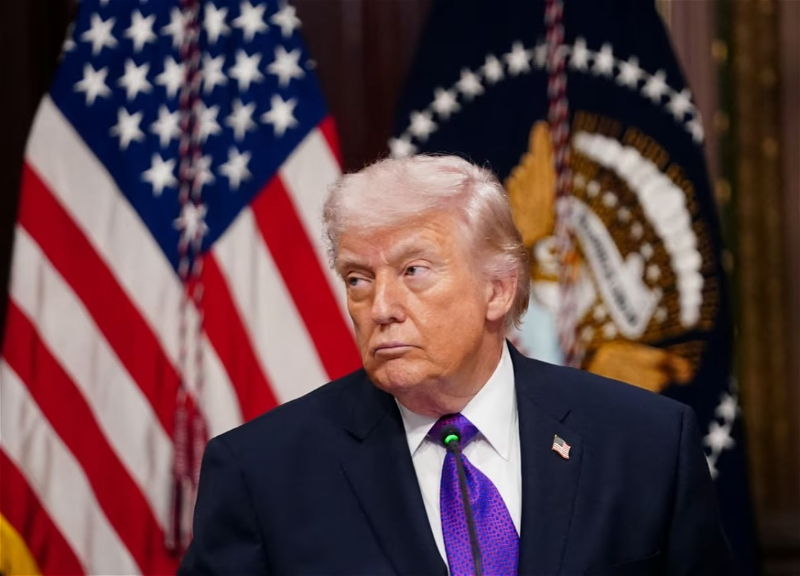
On March 9, in an interview with CBS News, U.S. President Donald Trump declared that the war with Iran is "practically over."
"They have no navy, no communications, no air force. Their missiles are down to a minimum," he said, speaking from his golf club in Doral, Florida.
Notably, earlier that same day, the Pentagon posted on social media: "We’ve only just begun to fight" and "No mercy."
Below is a chronology of statements and facts over the 10 days of the operation, along with conclusions about what can be understood from all of this.
Negotiations: From 'Historic Agreement' to Indefinite Pause
On February 26, the third round of indirect negotiations between the U.S. and Iran, mediated by Oman, concluded in Geneva. Oman’s Foreign Minister Badr Al-Busaidi spoke of "significant progress." Iran’s Foreign Minister Abbas Araghchi called a potential agreement "historic" and announced that technical consultations were scheduled for the following week in Vienna.
On February 27, according to Al-Busaidi, a "breakthrough" was achieved: Iran, as stated by the mediator, agreed not to stockpile enriched uranium and to allow full verification by the IAEA.
On February 28, the U.S. and Israel launched massive strikes on Iran. During the first wave of attacks, Iran’s Supreme Leader Ayatollah Ali Khamenei, Defense Minister Aziz Nasirzadeh, and IRGC commander Mohammad Pakpour were killed.
Following the strikes, Al-Busaidi stated that "active and serious negotiations" had been undermined. Iran suspended nuclear talks indefinitely.
The fourth round, planned for the following week in Vienna, did not take place.
Regime Change: Stated Goal and Its Outcome
As is known, in January 2026, U.S. special forces captured Venezuelan President Nicolás Maduro in Caracas during Operation "Absolute Resolve." Maduro was taken to New York and faced trial on charges of narco-terrorism. Power transitioned to Vice President Delcy Rodríguez.
In Iran, such a scenario could not be replicated.
Khamenei was killed on February 28, but by the evening of Sunday, March 1, Iranian state media announced that his son, Ayatollah Mojtaba Khamenei, had become the new Supreme Leader. When asked by CBS News about the new leader, Trump responded: "I have no message for him. None," adding that he had someone else in mind for the country’s leadership role.
Notably, even before the strikes began, Iran’s Foreign Minister Araghchi warned in an interview that even if Khamenei were killed, Iran’s theocratic system would continue to function, as it has procedures for appointing a successor. President Pezeshkian had stated: "They can eliminate me, eliminate anyone. For one, hundreds will come."
Military Superiority: Two Versions of One War
According to CBS News, by March 9, U.S. armed forces had struck over 3,000 targets in Iran. U.S. Central Command (CENTCOM) reported that the intensity of Iranian missile launches had decreased by approximately 90% compared to the first days of the operation, which, according to the command, was due to the destruction of launchers and ammunition depots.
On March 9, Trump told CBS: "If you look, they have nothing left. Militarily—nothing." Earlier, speaking to Republican congressmen, he called the operation a "little excursion" that would not last long.
That same day, the Pentagon posted: "We’ve only just begun to fight" and "No mercy."
A week earlier, on March 4, Defense Secretary Pete Hegseth stated at a briefing: "We’re accelerating, not slowing down. New bombers and fighters are arriving today." According to him, the operation could last from four to eight weeks. On CBS on March 9, Hegseth emphasized: "We’re not hanging a Mission Accomplished banner."
The Iranian perspective paints a different picture. According to IRGC spokesperson Brigadier General Ali Mohammad Naini, as reported by Fars News, Iranian forces have intercepted and destroyed over 80 enemy drones since the conflict began. According to the IRGC, Iran has launched more than 500 ballistic and naval missiles and deployed around 2,000 drones. The IRGC claims that Iranian armed forces are capable of conducting intense combat operations for at least six months.
According to Iranian command, at the initial stage, first- and second-generation missile systems, produced between 2012 and 2014, were used. More modern systems developed over the past decade, the IRGC asserts, have not yet been deployed.
Iran’s President Pezeshkian called the U.S. demand for unconditional surrender "a dream they should take to their graves."
Strait of Hormuz: Promise and Reality
Before the operation began, one of the stated objectives was to prevent disruptions to energy supplies through the Strait of Hormuz, through which about 20% of the world’s oil supply passes.
As of March 9, commercial shipping through the strait, according to CBS News, has effectively ceased. Trump, in the same interview, acknowledged this fact but said he was "thinking about taking control of the strait." He also warned Iran: "They’ve already fired everything they could, and they’d better not try anything tricky, or it will be the end of that country."
According to CNN, within the administration, the situation in the strait is described as a "Valley of Death." The USS Abraham Lincoln carrier strike group is on standby, but the tactical situation on the water is extremely dangerous: according to military assessments, the IRGC has deployed a system of minefields, suicide boats, and coastal missile batteries in the strait area. Intelligence suggests that Iran will target not incoming but outgoing vessels from the Gulf—when tankers are fully loaded. Analysts identify liquefied natural gas tankers as priority targets, capable, in their words, of "exploding like a Beirut bomb."
Iran’s National Security Council head Ali Larijani wrote on social media: "It is unlikely that any security will be achieved in the Strait of Hormuz amid the fire of war ignited by the United States and Israel in the region."
Meanwhile, the closure of the strait is creating a cascading effect: according to CNN, Kuwait, Iraq, and the UAE have begun shutting down oil wells due to overflowing storage facilities. Shut-down wells cannot be quickly restarted, posing a risk of prolonged supply shortages even if the strait reopens.
In search of a way out of the oil crisis, the administration is considering emergency measures. Treasury Secretary Scott Bessent, according to CNN, signaled readiness to lift sanctions on hundreds of millions of barrels of Russian oil stranded at sea to provide immediate liquidity to the market. Energy Secretary Chris Wright told CBS: "At worst, this is a matter of weeks, not months." The administration also points to increased production in Venezuela following the January regime change—bringing us back to that very "Venezuelan scenario."
The Cost of Ten Days
According to media reports, by March 9, seven American service members had been killed. Among them were four soldiers killed in an Iranian drone attack in Kuwait on February 28, and Sergeant Benjamin Pennington, who died of injuries sustained in an attack on Prince Sultan Air Base in Saudi Arabia on March 1. Vice President J.D. Vance conducted the repatriation ceremony.
According to Iran’s Tasnim agency, by March 4, Iran’s losses amounted to over 1,045 people. According to Al Jazeera, 11 people were killed in Israel as a result of Iranian retaliatory strikes.
Analysts highlight the cost asymmetry of the conflict. According to IBTimes, intercepting a single Iranian Shahed drone, costing about $35,000, requires a Patriot missile costing around $4 million. If the conflict continues at its current pace, such an imbalance could have long-term consequences for the U.S. military budget.
Iranian retaliatory strikes affected the UAE, Saudi Arabia, Kuwait, Qatar, Iraq, Bahrain, Oman, and Jordan. Airspace over the region was paralyzed. The price of Brent crude oil soared to $119 on Monday, March 9—the highest since 2022—before crashing to $89.63 after Trump’s statements (about the operation nearing its end) and a signal from the G7 about readiness to tap strategic oil reserves.
The average price of a gallon of gasoline in the U.S. reached $3.48—a 16% increase in a week, according to AAA. For comparison, in his February address to Congress, Trump boasted of a price of $2.30 and, during his campaign, promised to bring it below $2. When asked about the rising gas prices, Trump called it a "little glitch" and a "very small price for national security."
Economists assess the consequences less optimistically. According to calculations by Gregory Daco, chief economist at EY-Parthenon, a protracted conflict could push U.S. inflation above 4%, while GDP growth could slow from a projected 2.4% to 1.6%. Tim Mahedy, a former economist at the San Francisco Fed, told The New York Times: "I’m very concerned that this could push us into a recession if the situation persists." According to his assessment, the energy shock compounds two other "supply shocks"—tariff policies and mass deportations. Bernard Yaros of Oxford Economics warns that the hardest hit will be low-income Americans, for whom energy costs represent a disproportionately large share of their budgets.
Who Benefits
According to Foreign Policy, the only clear economic beneficiary of the conflict at this point is Russia. Russian Urals oil, previously traded at a discount to global prices due to sanctions, is now selling at a premium—because it is oil that can physically be delivered to buyers. India, which previously faced 50% tariffs from the Trump administration for purchasing Russian crude, has now received permission from the same administration to import stranded Russian oil at sea. The New York Times notes that lifting sanctions on Russian oil marks a dramatic reversal for Trump, who had recently threatened harsh tariffs on any country buying Russian energy.
As Foreign Policy points out, high global oil prices are effectively funding Moscow, providing a currency inflow to sustain operations in Eastern Europe. Against this backdrop, Putin has offered energy-dependent Europe oil and gas supplies—while some European politicians are already discussing the possibility of resuming energy trade with Russia.
Facts by Day 10
Over the ten days of Operation "Epic Fury," Iran’s Supreme Leader and several top military officials were killed. More than 3,000 targets were struck. The U.S. claims near-total air superiority and significant suppression of Iran’s missile capabilities.
However, the negotiation process, mediated by Oman, has been interrupted indefinitely. Power in Iran has passed to a successor from the same family. Tehran, by its own statements, has not deployed its most modern weaponry and declares readiness for a months-long conflict. The Strait of Hormuz is de facto closed to commercial shipping. The Middle East region has suffered damage from Iranian retaliatory strikes. The U.S. has lost seven service members.
The question of the operation’s ultimate goals and criteria for its conclusion remains open: according to Trump, the decision to end the war is "entirely in my head, no one else’s."
Sources: CBS News, CNN, Financial Times, Foreign Policy, IBTimes UK, The New York Times, Al Jazeera, PBS, Fox News, The Washington Times, NBC News, NPR, Wikipedia