Drone over Nakhchivan: How Iran's Attack Turned into International Support for Azerbaijan
The events of recent days have once again demonstrated how rapidly the strategic situation around the South Caucasus can change and how conditional traditional notions of regional security can sometimes be.
Not long ago, a significant portion of the expert community preferred to view developments through the lens of cautious diplomacy, a balance of interests, and restrained rhetoric. However, the reality of international politics, as history has repeatedly shown, often proves far harsher and more straightforward than theoretical frameworks.
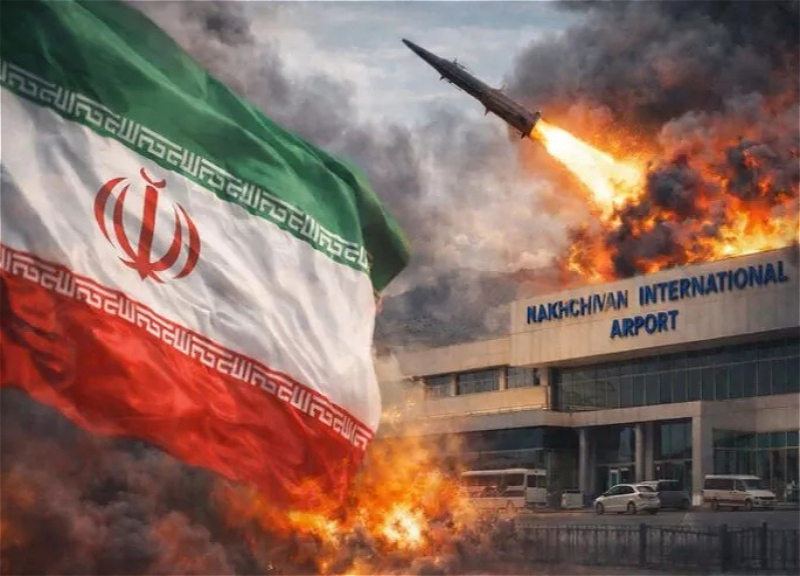
The situation shifted dramatically after unmanned aerial vehicles launched from Iran attacked the Nakhchivan Autonomous Republic of Azerbaijan yesterday. One drone crashed into the terminal building of Nakhchivan International Airport, while the second fell near a school in the village of Shekerabad in the Babek district. As a result of the attack, civilian infrastructure was damaged, and four people were injured.
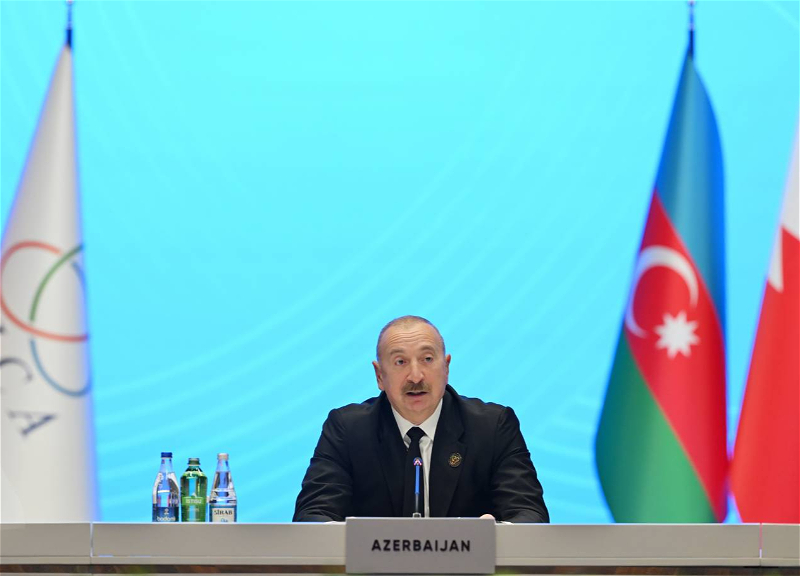
The incident immediately received a harsh political assessment from the country's leadership. President of Azerbaijan Ilham Aliyev convened an emergency meeting of the Security Council and labeled the event a terrorist act. The head of state emphasized that Azerbaijan demands explanations and apologies from official Tehran, and those responsible must be held accountable. At the same time, he announced his directive to place the country's Armed Forces on full combat readiness and prepare retaliatory measures.
Within the first hours after the incident, it became clear that the event held significance far beyond bilateral relations between Baku and Tehran. The international community's reaction followed almost immediately. Within a short time, calls, statements, and diplomatic signals of support for Azerbaijan came from various states and international organizations, accompanied by strong condemnation of the treacherous act committed by the Iranian regime. The international response was quite broad, demonstrating that many countries perceive the incident as a potentially dangerous precedent capable of expanding the geography of military confrontation around Iran.
Particular attention in this situation was drawn to the stance of Middle Eastern and Persian Gulf countries. For them, the development of conflict around Iran has long been a matter of their own security. Since the start of the American-Israeli war against Iran, regional states have regularly faced missile and drone attacks from the Islamic Republic.
Against this backdrop, support for Azerbaijan from several Middle Eastern states seemed natural. Diplomatic contacts emphasized that strikes on civilian infrastructure and attempts to expand the geography of military actions can only increase regional instability.
However, the main diplomatic event of the day was the conversation between the President of Azerbaijan and Pakistan's Prime Minister Shehbaz Sharif. These contacts were particularly telling, as relations between the two countries have long transcended ordinary interstate interaction.
During the phone call, the head of the Pakistani government stated that he strongly condemns the attack on Azerbaijan and expresses support for the Azerbaijani state and its armed forces. Shehbaz Sharif stressed that in this difficult moment, Pakistan stands with Azerbaijan and that the Azerbaijani people can count on Islamabad's support.
Such words carry special weight in this context. Relations between Azerbaijan and Pakistan have traditionally been built on political mutual understanding and close cooperation in the field of security. On the Armenian-Azerbaijani conflict, Islamabad has always openly supported Baku's position. Pakistan remains one of the few countries in the world that has not established diplomatic relations with Armenia to this day. This stance was formulated back in the 1990s and is directly linked to support for Azerbaijan's territorial integrity. Pakistani diplomacy has repeatedly emphasized that the issue of establishing relations with Yerevan can only be considered in the context of Baku's position and with regard to Azerbaijan's interests.
This approach has fostered a special level of trust between the two states, which is also evident in military cooperation. Pakistani military personnel participated in a ceremonial military parade in Baku dedicated to the 5th anniversary of Azerbaijan's victory in the Second Karabakh War. The participation of foreign military units in such events is always regarded in international practice as a symbol of allied relations and political solidarity.
Another significant factor is Pakistan's status as a nuclear power. In the Islamic world, it is this country that possesses nuclear capabilities, which objectively enhances its political influence on the international stage. Support from such a state is inevitably taken into account by all regional players, as it affects strategic calculations and the overall balance of power.
In recent days, Iran has escalated its relations into a phase of direct military confrontation with Pakistan as well, becoming part of a broader regional chaos. Amid the war with Israel and the United States, the Iranian regime, attempting to demonstrate strength and accusing neighbors of aiding 'external enemies,' launched missile strikes on Pakistani territory. Tehran claimed the targets were bases of the terrorist group 'Jaish al-Adl,' but Pakistan viewed this as unprovoked aggression against its sovereignty and responded in kind. Unlike past incidents, this time Islamabad reacted instantly and with extreme firmness. Pakistani Air Forces carried out a series of precision strikes on targets inside Iran (in the Sistan and Baluchestan province). By doing so, Islamabad made it clear that as a nuclear power, it will not tolerate violations of its borders and is ready to fight.
The situation escalated simultaneously with Israel's strikes on Tehran. Iran attempted to launch missiles toward Pakistan again but once more received a 'worthy response.' Pakistan's air defense system intercepted some of the targets, and retaliatory fire from Pakistani artillery and aviation forced Iranian forces on this front to reduce their activity.
A similar logic emerged on the Azerbaijani front. Following the attack by Iranian drones, Baku took a decisively clear stance. The country's Armed Forces were placed on full combat readiness, and official statements from Azerbaijani leadership made it clear that any provocations would have consequences.
This reaction proved quite convincing. Within a short time, reports emerged that Iranian military units began withdrawing some forces from the Azerbaijani border. Thus, loud declarations of demonstrating strength on the banks of the Aras River ultimately resulted in Tehran opting to reduce tensions.
Azerbaijan's technological capabilities also played a crucial role. In recent years, the country has significantly strengthened its surveillance and reconnaissance systems. Modern technical means allow tracking potential enemy activity deep within their territory. In the context of modern warfare, this is of fundamental importance. Any preparation for aggressive actions is detected in advance, enabling prompt responses and necessary security measures.
For this reason, any attempts to exert military pressure on Azerbaijan are extremely risky. The country's potential, technical capabilities, and experience gained from recent military campaigns create a completely different strategic reality than what many observers imagined just a few years ago.
At the moment, the situation appears quite telling. The Iranian regime finds itself in an extremely difficult position. On one hand, it continues to face pressure from the United States and Israel, who are conducting military operations against Iranian infrastructure. On the other hand, regional states, including Pakistan, Azerbaijan, and Persian Gulf countries, have taken a firm stance.
Simultaneously, signs of political instability are growing within Iran itself. Economic pressure, military losses, and rising public discontent create a highly challenging situation for the authorities.
Together, these factors paint a picture that many analysts are already calling a strategic crisis of the Iranian system.
Under these circumstances, the attack on Nakhchivan appeared more as a gesture of desperation than a well-thought-out military operation intended to demonstrate Iran's strength. It did not alter the balance of power but instead produced the opposite effect, with Azerbaijan receiving strong international support, while Tehran's actions became the subject of serious diplomatic condemnation. Moreover, it showed that Azerbaijan possesses the capabilities, allies, and political will to defend its own security.