Expert: 'Level of Trust Between Baku and Tehran Seriously Undermined'

The war in the Middle East is gradually encroaching on the South Caucasus. While it was once a distant geopolitical conflict for Azerbaijan, the events of the past day have significantly altered the situation: for the first time, the territory of the country has been directly affected.
On March 5, drones launched from Iranian territory attacked the Nakhchivan Autonomous Republic. As a result of the incident, four civilians were injured and received medical assistance.
One of the drones damaged a building at Nakhchivan International Airport, while another device crashed near a school in the village of Shakerabad.
The Azerbaijani government has interpreted the incident not as an accident, but as a serious provocation. In Baku, it was stated that the drones targeted civilian infrastructure, including an educational institution. In other words, this is not merely a border violation, but a direct threat to the civilian population.
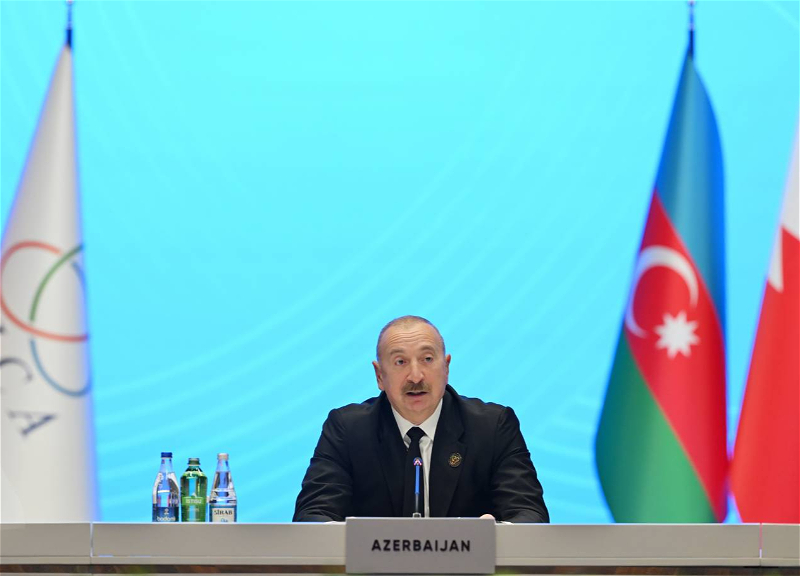
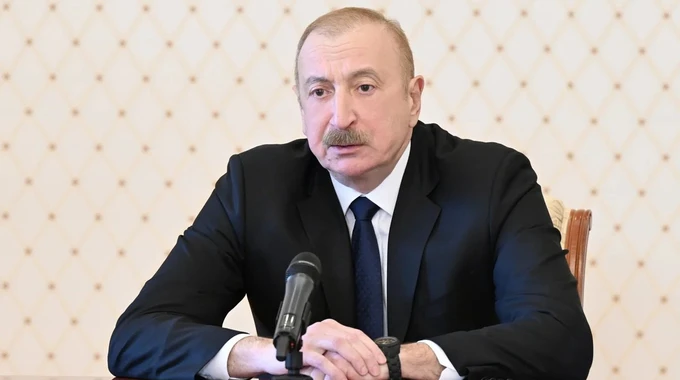
Against the backdrop of these events, President of Azerbaijan Ilham Aliyev spoke at a meeting of the Security Council, where he made harsh statements regarding Tehran. According to him, the incident cannot be interpreted as anything other than an act of aggression. The head of state demanded that Iran 'provide clarifications on this matter, offer explanations, and take urgent necessary measures to prevent the recurrence of such incidents in the future.'
I. Aliyev made it clear that Baku does not intend to let the incident go unanswered and will seek full clarity regarding who is behind the launch of the drones and for what purpose they were directed toward Azerbaijani territory.
Egana Hajiyeva, a member of the Press Council Board, in a comment to 1news.az, stated that the strike on Azerbaijan's autonomous territory could be seen as a demonstration of strength, heightening Baku's concerns about the long-term stability and reliability of partnership relations with Tehran.
According to her, this incident also sets a dangerous precedent in terms of the security of civilian infrastructure.
'Any successful strike on civilian infrastructure objects—such as airports, schools, or transport hubs—creates a behavioral model that can be repeated if strategic benefits are perceived,' she said.
The expert noted that under such conditions, the possibility of repeated attacks cannot be entirely ruled out, especially concerning strategically important facilities in Nakhchivan and border areas.
E. Hajiyeva emphasized that the incident could lead to broader security implications.
'The erosion of trust could result in an increased military presence of Azerbaijan in Nakhchivan and along the entire border with Iran. Moreover, such incidents may stimulate an increase in foreign policy and military support from allies, which, in turn, raises the risk of a regional arms race,' she noted.
In the expert's opinion, attacks on infrastructure also negatively impact economic and humanitarian ties between the countries of the South Caucasus.
'Such actions undermine the foundations of regional cooperation and directly affect the stability of interaction between states in the region,' she said.
E. Hajiyeva believes that at this stage, the level of trust between Baku and Tehran has been seriously undermined.
'Diplomatic gestures of respect alone are currently unable to compensate for the emerging security threats,' she stressed.
According to her, the likelihood of repeated attacks on civilian infrastructure cannot be completely ruled out.
'Especially if such actions are seen as a tool of strategic pressure or a demonstration of strength,' concluded Egana Hajiyeva.