The fall of Bank BTB: How our analysis predicted the outcome 7 weeks before the Central Bank's decision
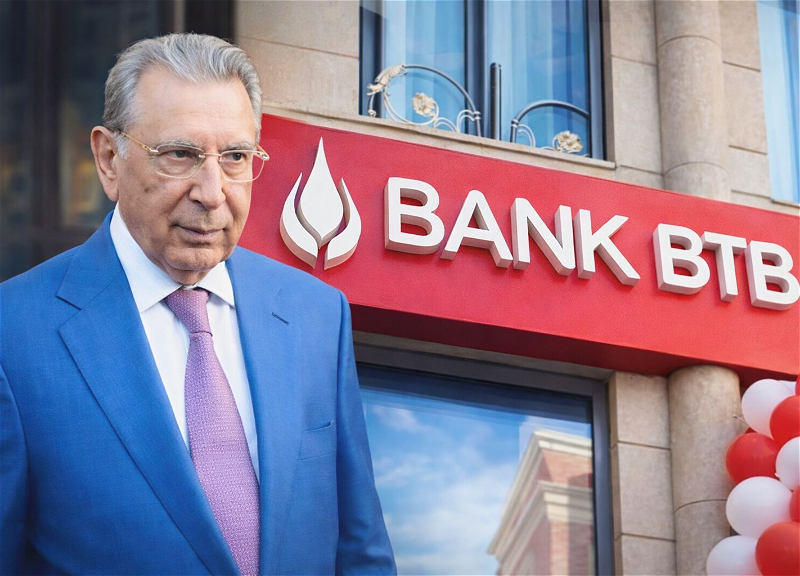
On March 6, 2026, the Central Bank of Azerbaijan approved the reorganisation of Bank BTB and its conversion into a non-banking credit organisation (NBCO).
According to the regulator's official statement, the decision was made on the basis of the bank's own application. Deposits of retail and corporate clients will be transferred to the International Bank of Azerbaijan (ABB) — the country's largest bank by assets — along with the rights of claim on loans and other client obligations.
The news arrived quietly. For those who read our January 19, 2026 analysis, it came as no surprise.
What we wrote in January
In the piece “The stagnation of Bank BTB: Concrete assets, liquid fears,” published seven weeks earlier, FNIU conducted a forensic analysis of the bank's audited financial statements for 2015–2024 and quarterly prudential reports through Q4 2025.
That analysis yielded two possible scenarios for the bank's trajectory.
Two scenarios present themselves. In the first, a larger banking group acquires BTB, liquidating or writing off the legacy loan portfolio.
In the second, the bank continues a slow contraction as long-term mortgages are gradually repaid, and ultimately surrenders its licence once the loan portfolio becomes too small to cover fixed costs.
What actually happened
Reality turned out to be a hybrid of both scenarios, with a distinctly regulatory character. There was no acquisition in the conventional sense — BTB was not purchased. Nor was there a voluntary licence surrender at the end of a long mortgage wind-down cycle.
Instead, the regulator deployed the reorganisation mechanism, effectively accelerating the logic of scenario two: the bank loses its full banking status, its liabilities and loan portfolio are transferred to ABB, and the institution itself continues in a reduced form as an NBCO.
In essence, this is a supervised contraction under Central Bank oversight — precisely what our analysis described as the inevitable direction of travel.
Why the forecast proved accurate
Our conclusion was built not on insider information, but on data openly published by the bank and the regulator. Three structural observations defined the analytical direction.
The first was the capital buffer.
As of Q4 2025, Bank BTB reported regulatory capital of 53.27 million manat against the statutory minimum of 50 million manat. The buffer stood at just 3.27 million manat — roughly 6% above the floor. We described this as a “razor-thin margin,” noting that “a single large corporate default or a regulatory review forcing a revaluation of investment property on the balance sheet could wipe out the buffer overnight.” That vulnerability made any delay in reorganisation regulatorily untenable.
The second was the liquidity trap.
The bank held approximately 216 million manat in loans with maturities exceeding five years, funded by short-term customer deposits. The cumulative liquidity gap for maturities under one year reached negative 123 million manat. This was not a bank experiencing temporary strain. It was a structurally unviable funding model.
The third was the cost of funding.
The bank was directing 58–60% of gross interest income to servicing deposits — a forced risk premium for attracting funds into a politically toxic institution with a damaged reputation. Achieving profitability under that cost structure was practically impossible.
The Mehdiyev variable: a final chapter
In the January piece, we documented the correlation between the bank's financial trajectory and the political career of Ramiz Mehdiyev, who headed the Presidential Administration from 1995 until October 2019. His daughter-in-law and relatives controlled 94% of the bank. Within months of Mehdiyev's departure in October 2019, the bank swung to losses.
Today's reorganisation closes that chapter. Bank BTB ceases to exist as a full-fledged banking institution exactly six years and five months after the resignation of the man whose political influence was, in all likelihood, its true operational asset.
A methodological note
This case illustrates the FNIU analytical approach. We have no sources inside the Central Bank. We receive no leaks from the regulator. Our toolkit is public financial reporting, prudential data, and forensic analysis — the kind that reveals what lies beneath aggregated headline figures.
Bank BTB accounted for a minor share of Azerbaijan's banking system assets. Its story is instructive nonetheless: it shows how an “administrative premium” embeds itself in financial metrics, and how its disappearance will inevitably surface in the balance sheet — long before the regulator formalises a decision.
The data always speaks first.
Author: First News Intelligence Unit
* * *
First News Intelligence Unit (FNIU) is the analytical division of 1news.az, specialising in research on Azerbaijan's financial sector and economy.
Read more:
The stagnation of Bank BTB: Concrete assets, liquid fears
🌐 Read in other languages:
Падение банка BTB: как наш анализ предсказал исход за 7 недель до решения Центробанка АР