Synchronized Attack: How the Armenian Lobby Attempts to Create an Illusion of Global Pressure
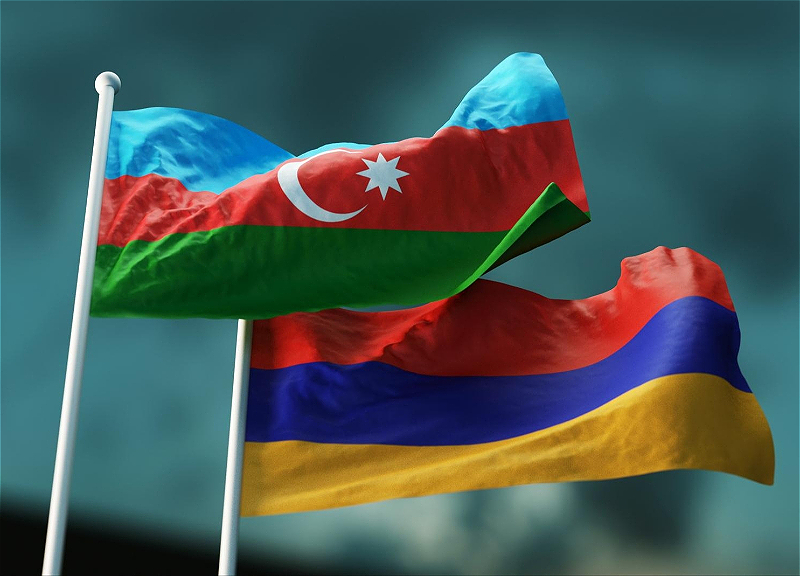
The first months of 2026 in the South Caucasus are shaping up into a rather paradoxical picture.
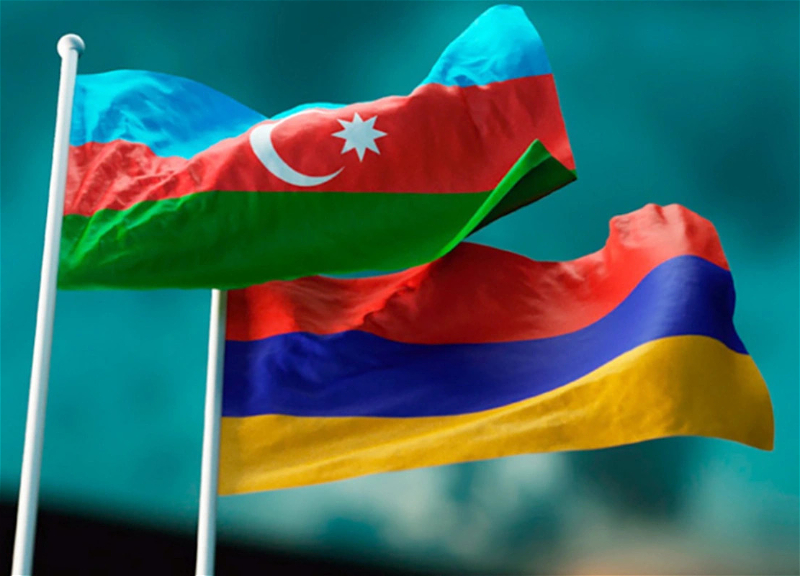
On one hand, after decades of conflict between Azerbaijan and Armenia, a practical agenda for peaceful coexistence is gradually taking shape. Work is underway on border delimitation, cargo transit has been opened, transport communications are being discussed, and contacts between the civil societies of the two countries are emerging at the expert and public levels. All of this is happening within the logic of consolidating a new post-conflict reality, with a gradual transition of relations into a normal framework of good neighborliness and mutual benefit.
Against this backdrop, it is particularly striking that activity by various groups and organizations, united by a common goal, is suddenly surging in international structures and media spaces. Their aim is to bring the issue of the so-called “people of Nagorno-Karabakh” back onto the global agenda and portray the situation around Azerbaijan’s Karabakh region as a large-scale humanitarian crisis. This is being done synchronously across multiple channels: through complaints to international corporate responsibility mechanisms, speeches at human rights platforms, social media campaigns, and attempts to initiate new legal proceedings. When such actions occur simultaneously across different institutions, often involving activists of the same orientation—and sometimes even the same individuals—it is hard to attribute them to coincidence. What we are witnessing is more likely another attempt to create an illusion of “international pressure,” intended to support Armenian revanchist circles while simultaneously hindering the peace process between Baku and Yerevan.
One episode of this campaign was the filing of a complaint in Switzerland against SOCAR Trading SA, the international trading arm of Azerbaijan’s State Oil Company. The complaint was submitted to Switzerland’s National Contact Point at the State Secretariat for Economic Affairs (SECO) under the framework of the OECD Guidelines for Multinational Enterprises. The authors of the appeal—the so-called Committee for the Protection of Fundamental Rights of the “People of Nagorno-Karabakh” together with the “Switzerland-Armenia” association—claim that SOCAR Trading’s activities allegedly contributed to financing Azerbaijan’s policies, which they characterize as “ethnic cleansing” of the Armenian population of Karabakh. The OECD mechanism itself, which they reference, is not a judicial procedure and does not entail legal sanctions, but it is often used by activists to create high-profile informational campaigns against companies and states.
This is precisely why the complaint’s text features familiar phrasing about “business responsibility for human rights” and the need for so-called “due diligence”—terminology that in recent years has become a convenient tool for political pressure within the framework of corporate reputational policies.
Simultaneously, representatives of the same activist circle are attempting to reinforce similar narratives on international human rights platforms. In Geneva, during a session of the UN Human Rights Council, representatives of the aforementioned committee made statements accusing Azerbaijan of illegally detaining Armenian “hostages,” destroying Armenian cultural monuments, and failing to comply with the International Court of Justice’s decision of November 17, 2023. These statements almost entirely replicate the arguments that have been circulating in Armenian political and media circles for years: claims of “forced displacement” of the population, the need for “the return of Armenians to Karabakh,” and the “deliberate destruction of cultural heritage.” Despite the fact that such claims have repeatedly been criticized by various international experts and have not been substantiated by any decisions of international judicial bodies, they continue to be regularly reiterated at UN platforms, where activists attempt to establish them as consistent political rhetoric.
Another channel for promoting these narratives is through the statements of various non-governmental organizations.
In particular, during the same session of the Human Rights Council, the issue of “forced displacement of the Armenian population” was raised by the organization Christian Solidarity International. Its representatives accused Azerbaijan of destroying cultural heritage and claimed there were allegedly “staged trials” of Armenians under investigation in Baku. Such statements are typically built on emotional rhetoric and rely on claims from activists representing structures linked to the so-called institutions of “Nagorno-Karabakh in exile.” From the perspective of international law, such structures have no recognized status, yet within the framework of human rights events, they are often given the opportunity to speak as “civil representatives,” which helps sustain informational activity around the issue.
Concurrently, a social media campaign was launched in the media space using hashtags calling for the “release of Armenian hostages” and the “protection of the people of Nagorno-Karabakh.” One of the most active participants in this campaign was Luis Moreno Ocampo, the former chief prosecutor of the International Criminal Court, who has previously made high-profile statements claiming that Azerbaijan’s actions could allegedly qualify as genocide. These assertions drew sharp criticism from several international lawyers, who pointed out the lack of evidentiary material in his submissions that meets the legal standards for such conclusions. Nevertheless, Ocampo continues to actively use his former position as a mark of authority, publishing statements and appeals aimed at drawing the attention of European politicians to the “Karabakh issue.”
When considering all these and other similar episodes collectively, it becomes evident that these are not isolated statements by individual activists. The complaint against SOCAR, speeches at the Human Rights Council, statements by non-governmental organizations, the informational campaign on social media, and the preparation of new lawsuits form a recognizable pattern. First, a loud accusation is made—typically using terms like “genocide,” “ethnic cleansing,” or “hostages.”
Then, these narratives begin to circulate in the media space and on the platforms of international organizations. After that, attempts are made to give them legal form through various procedures—from corporate complaints to appeals to international courts. Such tactics have long been used in international politics as a tool of pressure and even have a specific name—lawfare, meaning the use of legal mechanisms in political struggles.
The timing of this activity adds a particular peculiarity to it. The peace process between Azerbaijan and Armenia, despite all its challenges, is gradually gaining momentum. For the first time in many years, the parties are discussing practical mechanisms for peaceful coexistence.
The sensitivity of the moment is heightened by another circumstance: Armenia is preparing for parliamentary elections scheduled for June 7. Any international campaign related to accusations against Azerbaijan and the promotion of narratives about the “right of return” of Armenians to Karabakh inevitably becomes an element of internal political struggle within Armenia itself. Revanchist forces opposing a peace agreement traditionally use the “Karabakh issue” as their main argument against the current course of the authorities. In this context, the emergence of new international accusations and loud statements appears as direct support for these forces.
The promotion of such narratives on the international stage cannot fail to provoke irritation in Baku, as they attempt to question Azerbaijan’s sovereignty and effectively revive the rhetoric of Armenian separatism. Sustaining such rhetoric is inevitably capable of complicating the atmosphere of negotiations, slowing the pace of normalization of relations, and leading to new confrontation, the consequences of which would be particularly unpleasant for Armenia itself.
In the end, a very characteristic situation emerges. While the governments of the two countries are trying to build a pragmatic agenda and seek paths to long-term peace, a group of activists, former officials, and related organizations, along with their foreign instigators funded by the Armenian diaspora, are taking consistent steps to return relations to the previous phase of military-political confrontation. Their activities are accompanied by loud statements, legal initiatives, and media campaigns. The goal is to preserve the conflict as a tool of political pressure.
Thus, for thinking individuals, it is evident that the current campaign is not a fight for human rights but an attempt to revive a long-obsolete separatist project, using international platforms and human rights rhetoric as a convenient cover. At a time when the region needs calm diplomatic work and consistent strengthening of peace more than ever, such initiatives act in the exact opposite way—creating tension, fueling revanchism, and pushing the situation toward new confrontation. And if one carefully examines the list of people and organizations most actively fanning this issue today, it becomes clear that peace in the South Caucasus has always been far less interesting to them than the endless continuation of conflict.