Baku and Budapest: After Orban
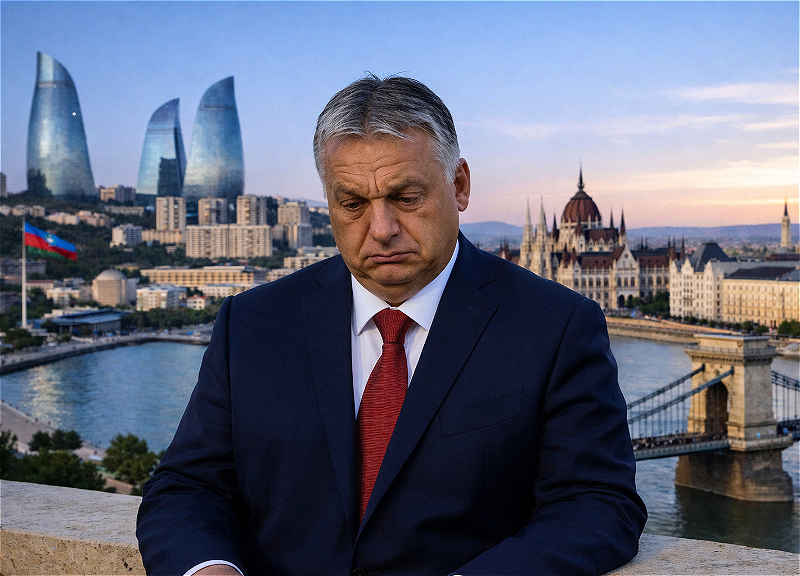
The defeat of the Fidesz party in the parliamentary elections in Hungary has become a landmark event not only on a national scale but also across the entire European continent.
For the past 16 years, Hungary's Prime Minister Viktor Orban has managed to build a system of relations with both close and distant partners that, regardless of who holds the position of prime minister, will continue to influence Budapest's foreign policy for a long time. This is not just about political rhetoric but about a robust institutional framework that the new Hungarian leader will have to take into account.
And that leader, in all likelihood, will be Peter Magyar, the head of the opposition Tisza party, who, based on the election results, has secured not just a majority in parliament but a constitutional majority. This gives him the opportunity to pursue a political course that most accurately reflects his vision of the priorities for a renewed Hungary. However, no matter how circumstances unfold, few doubt that this course will be based on calculation and pragmatism. In this context, the relationship between Budapest and Baku holds particular significance.
The fact is that Hungary and Azerbaijan are not only active participants in the format of cooperation among Turkic states but also develop strong bilateral contacts.
It is worth noting Azerbaijan's role in ensuring Europe's energy diversification through the Southern Gas Corridor, in which Hungary shows consistent interest, as well as the development of transport routes connecting the Caspian region with European markets. These areas are long-term in nature and are not dependent on the current political situation.
Under Viktor Orban, Azerbaijan was seen not only as an economic partner but also as part of a broader multivector strategy, with an emphasis on the Turkic direction, demonstrative independence within the EU, and diversification of external ties. Under Magyar, this logic is likely to give way to a more pro-Western and institutionally structured model, where relations with Baku will be integrated into the framework of pan-European policy. However, this does not mean that the priorities of interaction will undergo a fundamental revision.
Rather, it suggests that energy cooperation will persist and may even strengthen along EU lines. Azerbaijan remains a crucial element in diversifying gas supplies to Europe through the Southern Gas Corridor, and this factor objectively limits the scope for political fluctuations. The rhetoric may become less 'politicized' and more technocratic, focusing on contracts, infrastructure, and energy security rather than geopolitical symbols.
The point is that Hungary's participation in the development of Azerbaijan's oil and gas resources has, in recent years, taken on a systemic and institutionally entrenched character, elevating bilateral cooperation far beyond mere political rhetoric. A key role in this process is played by the Hungarian company MOL Group, which has entered one of Azerbaijan's largest oil projects—the Azeri-Chirag-Gunashli field block, acquiring a stake of about 9.6%. At the same time, the company holds around 8.9% in the Baku-Tbilisi-Ceyhan oil pipeline, effectively ensuring its involvement in the entire chain—from raw material extraction to its transportation to external markets. Today, production attributable to the Hungarian side amounts to approximately 15,000 barrels of oil equivalent per day, which speaks to the scale of Hungary's presence.
Equally telling is the participation of the Hungarian MVM Group in the development of the Shah Deniz gas field, with a stake of about 5%. This means direct access for Budapest to one of the key gas sources within the Southern Gas Corridor. Given the project's scale, valued at nearly $3 billion, and potential supply volumes reaching about 1.5 billion cubic meters of gas per year, this represents a long-term connection of Hungarian energy to Caspian resources.
In total, Hungarian investments in Azerbaijan exceed $1 billion, and the share of Hungarian capital in the structure of direct foreign investments reaches double-digit figures. This allows us to speak of an established model of interdependence, where Hungary acts as a vital partner for Azerbaijan. This factor largely explains the resilience of energy partnership. Regardless of political changes in Budapest, interaction with Azerbaijan remains embedded in the country's economic and energy architecture and is therefore unlikely to undergo radical revision.
In addition to this, Hungary is the endpoint for the implementation of the 'green energy corridor' project, linking the Caspian region with Europe. It should be noted that these projects tie Hungary's interests to the Organization of Turkic States (OTS), which, in turn, is an important factor for Brussels. This may even align more closely with Baku's interests, as cooperation in this sense will become more sustainable, relying not only on bilateral ties but also on the interests of the entire European Union in the fields of energy and transit.
Ultimately, the relations between Hungary and Azerbaijan, formed in the previous period, by all indications, will retain their appeal and significance, though they will transition to a new quality—from an element of multivector policy to a part of a broader European energy and logistical configuration. Well, new times change the conditions, but the rules and interests remain unchanged.
Ilgar Velizade