Stability beyond conjuncture: Results of Zelenskyy's visit to Azerbaijan
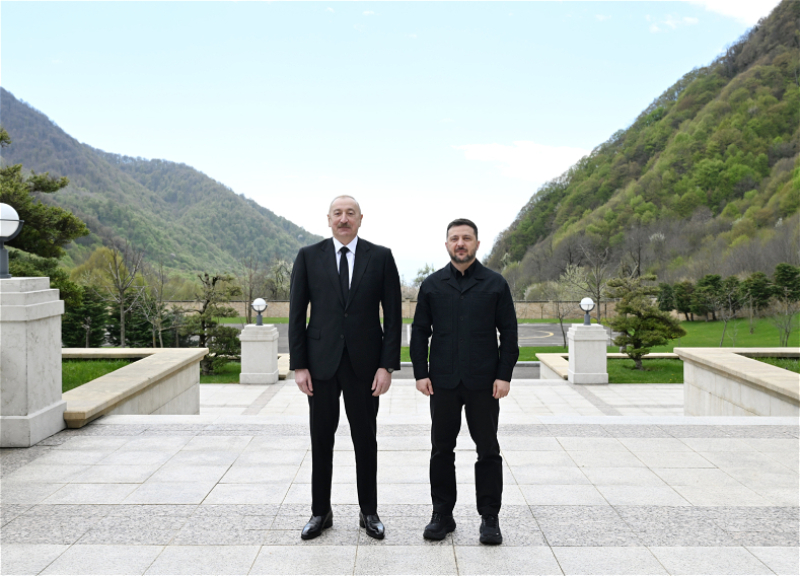
The visit of Ukrainian President Volodymyr Zelenskyy to Azerbaijan confirms that even amidst prolonged global upheavals, states find opportunities to maintain stable bilateral communication channels.
Today's context of Baku-Kyiv relations cannot be considered in isolation from the fact that Ukraine itself has been at the epicenter of one of the largest global crises of the 21st century for five years. Large-scale military operations, ongoing since 2022, have not only transformed the internal structure of the Ukrainian state but also forced its partners to seek new forms of interaction that combine pragmatism with adherence to international law.
In this complex environment, Azerbaijan demonstrates consistency, relying on the Declaration of Friendship and Strategic Partnership signed back in May 2008. This document, adopted almost two decades ago, today serves as a legal safeguard, allowing the parties to avoid ambiguity in their relations. It clearly establishes the principles of recognizing territorial integrity and the inviolability of borders, which are fundamental conditions for any constructive dialogue between Baku and Kyiv.
The fifth year of war on Ukrainian territory has shaped a unique experience of survival and technological adaptation in Kyiv, which, in the current realities, becomes a subject of significant professional interest. Ukraine's experience in countering a far more powerful adversary, surpassing it economically, resource-wise, and demographically, is in demand worldwide and is being studied in various parts of the globe.
Therefore, it is not surprising that the shift toward closer military-technical cooperation during Zelenskyy’s visit to Gabala appears as a logical step, driven by Azerbaijan’s national security needs. However, it is important to understand the specifics of this partnership: it is not based on the principles of purchasing ready-made batches of weapons for immediate use. On the contrary, the emphasis is on long-term localization of production within Azerbaijan. This approach allows Baku to develop its own defense-industrial complex, minimizing dependence on external supplies and mastering technologies tested in real modern conflicts. A special place in this cooperation is occupied by anti-drone systems and electronic warfare tools. Considering how deeply unmanned aerial vehicles are integrated into modern combat tactics, creating domestic capabilities to counter them becomes a matter of technological sovereignty for Azerbaijan.
At the same time, technological rapprochement with Ukraine occurs with strict adherence to Azerbaijan’s neutral status regarding the conflict itself. Official Baku emphasizes that the development of joint high-tech platforms in the defense sector is solely aimed at internal security and the modernization of national armed forces. Azerbaijan fundamentally does not participate in the military component of the Russian-Ukrainian conflict, does not supply weapons for use in combat operations, and does not act as a party to the confrontation. This position allows the republic to balance within a complex system of regional obligations, maintaining transparent relations with both Kyiv and Moscow. Projects to create anti-drone systems on Azerbaijani territory are preventive and defensive in nature, focused on protecting the country’s strategic infrastructure, which fully complies with international law.
The long-standing crisis in Ukraine has also highlighted an acute need for humanitarian coordination, which became the second important vector of Zelenskyy’s visit. While the military industry focuses on technological exchange, civilian agencies continue to implement aid programs aimed at supporting the population and restoring basic living conditions in Ukraine. Over the past years, Azerbaijan has sent significant amounts of energy equipment, medicines, and food, focusing on energy security and the rehabilitation of those affected. This division into 'technological defense' within the country and 'humanitarian assistance' beyond its borders allows Baku to implement its foreign policy as effectively as possible.
Thus, the strategic partnership established in 2008 has proven its resilience over the fifth year of the Ukrainian crisis, transforming from a formal agreement into a functioning model of interaction, where every step is carefully aligned with national interests. Ultimately, Zelenskyy’s current visit has only reinforced Azerbaijan’s status as a state capable of developing complex technological ties without becoming involved in others’ wars, based on pragmatic calculation and adherence to the letter of the law.