Future cities—what should they be like? WUF13 in Baku will set a new vector for global urban studies
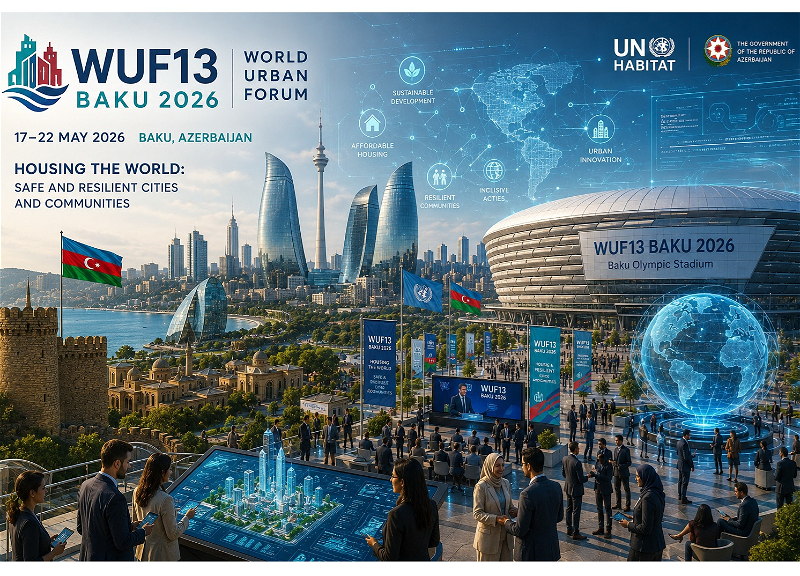
Baku is a city where traditions and modernity intertwine, where masterpieces of ancient architecture harmoniously coexist with magnificent examples of modern architecture, and in the evenings the Flame Towers illuminate the medieval walls of the Maiden Tower with their light.
It is no surprise that the Azerbaijani capital, which has managed to combine historical heritage with a modern urban appearance, was chosen as the venue for a global-scale event dedicated to the sustainable development of cities and human settlements. From May 17 to 22, Baku will host the 13th session of the World Urban Forum (WUF13).
The upcoming session of the World Urban Forum, themed “Housing for All: Safe and Sustainable Cities and Settlements,” is organized jointly by the Government of Azerbaijan and UN-Habitat, the global program on urbanization issues. Following COP29, this is another major international event that will draw the attention of the global community to Azerbaijan and bring together a worldwide audience to discuss key challenges of modern urban development. The relevance of the agenda is evidenced by the scale of interest in the event—32,225 people from 180 countries have already confirmed their participation.
Notably, WUF13 will take place against the backdrop of the ongoing reconstruction of territories liberated from occupation. For Azerbaijan, this is another opportunity to present to the international community its unique experience in reconstruction and modern urban planning being implemented in Karabakh and East Zangezur. The introduction of “smart city” and “smart village” concepts in the liberated lands and the transformation of these regions into a green energy zone are today regarded as some of the most advanced examples of sustainable urbanization and ecological restoration.
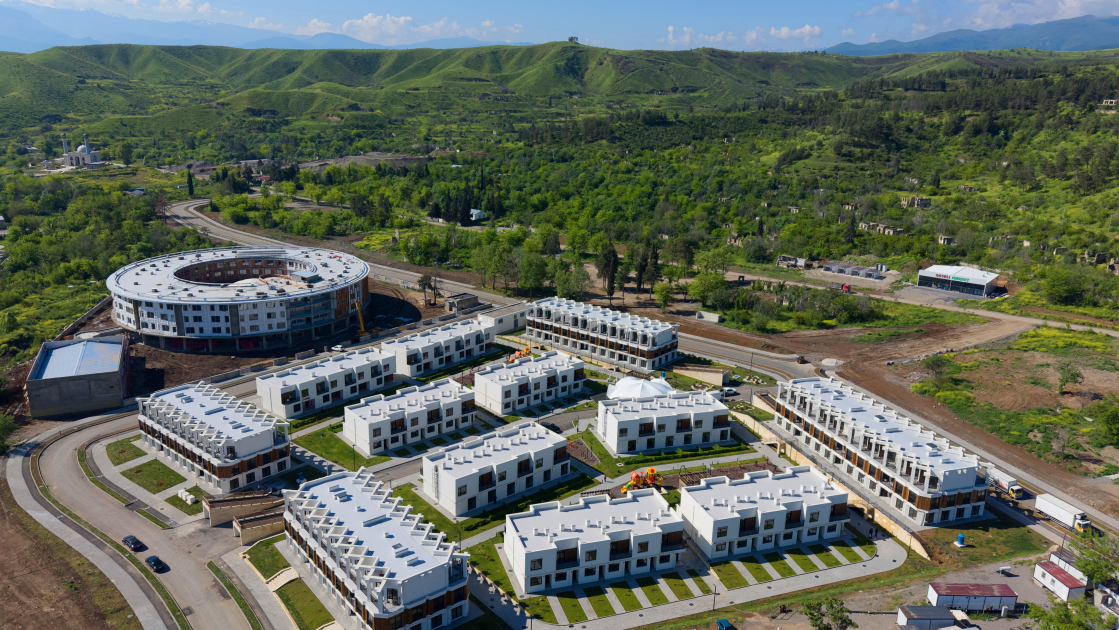
Azerbaijan’s approach to the revival of the liberated territories involves not merely the restoration of destroyed settlements but the creation of a new development model based on the principles of sustainable urbanization, technological advancement, and high quality of life. In other words, the effort encompasses not only large-scale infrastructure reconstruction but also the formation of a fully modern and comfortable environment for people’s lives and work. This is precisely what the head of state emphasizes.
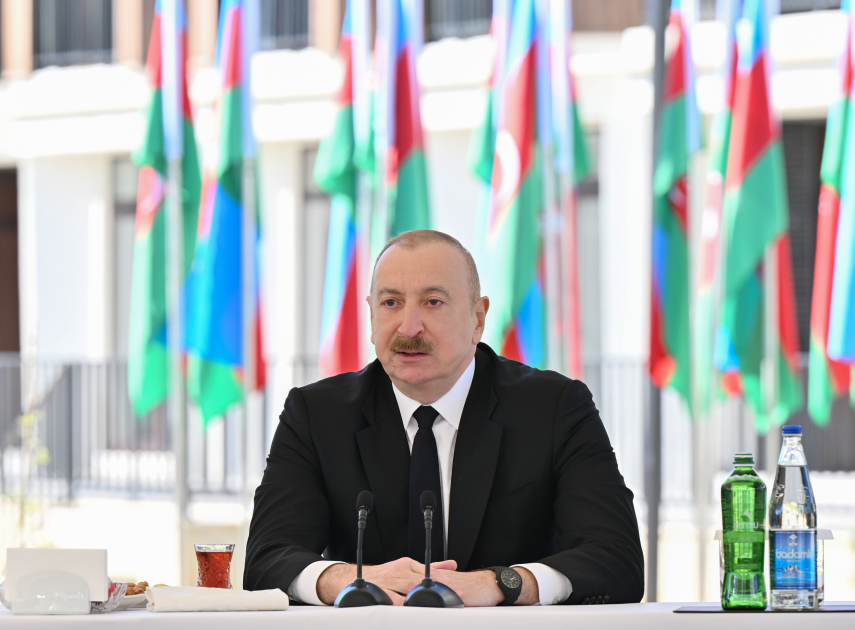
“As for the work carried out in the liberated lands, we both hurried and tried to do everything correctly. Systematically, on the basis of strategy, so that everything would be proper—for people’s lives, for their employment, education, and, at the same time, for the country’s economy,” President of Azerbaijan Ilham Aliyev said.
Speaking on May 10 at a meeting with residents of the Zangilan district, the head of state particularly stressed that all work is being carried out systematically and with a view to the long term.
“All of this is the strength of the country. I repeat, everything is being done systematically. We are trying to return former internally displaced persons to their native lands as soon as possible. But at the same time, everything must be built in such a way that the liberated territories become exemplary not only in Azerbaijan but throughout the world. And so it will be,” the president stated.
Against this background, holding WUF13 in Baku acquires special significance for Azerbaijan. The forum will not only provide an opportunity to demonstrate the country’s own experience in modern urban planning and territorial restoration to the international community but will also serve as a platform for Azerbaijan’s participation in shaping the global agenda on urbanization and sustainable development.
Of particular note is the fact that, for the first time in the forum’s history, a Leaders’ Summit has been included in its program, opening additional opportunities to address key issues of modern urban studies, housing policy, and sustainable urban development at the highest level.
In this context, special attention is being paid to organizational matters—the preparations are under the personal control of the head of state. On May 12, Ilham Aliyev reviewed the progress of preparations for WUF13. Footage of the president’s familiarization with the work being carried out at the Baku Olympic Stadium in connection with WUF13 has been published on the president’s social media pages. The post states: “President Ilham Aliyev’s familiarization with the work being carried out at the Baku Olympic Stadium in connection with WUF13.”
Prezident İlham Əliyevin Bakı Olimpiya Stadionunun ərazisində WUF13 ilə bağlı görülən işlərlə tanışlığı#WUF13 #WUF13Azerbaijan pic.twitter.com/8Zas8cIYhh — İlham Əliyev (@azpresident) May 12, 2026
According to the official website of the President of Azerbaijan, the venue for the events, including the Baku Olympic Stadium and the overall operational coverage zone formed around it, totals 53 hectares. Of these, 43 hectares are designated for the main events, and 10 hectares for the main transport terminal, parking, and transfer zone. Registration, sessions, exhibition, media, transport, technical support, volunteer, and territorial services have been organized as a single operational system.
Special zones have been allocated for high-ranking guests and delegations. These include dedicated areas for receiving representatives of states and governments, holding bilateral meetings, as well as rest and dining zones.
The events hall, where the opening and closing ceremonies will be held, can accommodate up to 6,000 participants. The current level of preparation allows for proper planning of the high flow of forum participants, numerous parallel events, and the reception of international delegations.
The zone for the main discussions and parallel events of the forum covers an area of 3.55 hectares and is intended for meeting halls, thematic sessions, UN events, parallel meetings, and bilateral negotiations. Conditions have been created for the simultaneous conduct of official and working meetings of various formats. During the forum, approximately 300 parallel sessions, meetings, and events are planned per day.
At the event, in addition to the six official UN languages—Arabic, Chinese, English, French, Russian, and Spanish—simultaneous interpretation into Azerbaijani and Turkish will be provided. International sign language interpretation services will be available for persons with disabilities.
More than 35 public catering points are planned throughout the event venue. Their placement both indoors and in open-air zones allows for the distribution of participant flows in different directions and ensures service accessibility across the entire site.
In the zone covering an area of two hectares, alongside the Media Center, there are halls for round tables, special sessions, and dialogues. The Media Center includes a working area, rooms for live broadcasts and interviews, a press conference hall, television studios, and a rest area for media representatives. The total capacity of the Media Center is 600 people, with up to 400 media representatives able to work simultaneously.
A rest zone has also been created on the territory. Overall, the visual and architectural approach to the design of the zone incorporates elements inspired by Icherisheher and ornaments related to Azerbaijani carpet weaving.
An open-air WUF13 Boulevard has been created for forum participants. This zone occupies an area of 2.5 hectares and is intended for free movement of participants, their rest, use of public catering services, and to allow them to feel the atmosphere of the urban environment at the event venue. The boulevard area serves as an open public space and a transition to the Expo zone.
The Urban Expo zone covers an area of 3.5 hectares. This territory hosts exhibition pavilions for country pavilions, international organizations, government agencies, local and regional authorities, the private sector, non-governmental organizations, foundations, and educational and research institutions. In total, 121 pavilions are planned, including 41 country pavilions.
In the overall planning of the forum venue, components of official ceremonies were given special consideration. The flag square has been prepared for official ceremonies and is surrounded by motifs of fortress walls to recreate an urban atmosphere.
An additional zone of 10 hectares, encompassing the functions of a transport terminal and parking-transfer, has been integrated into the overall operational territory. This area will manage bus services, taxis, parking, and the process of directing participants to the event venue. Urban transport interchange centers, electric buses, taxi services, and transfers to and from the airport have also been integrated into the overall transport plan of the event.
The registration zone can simultaneously serve 70 people—up to 1,000 people per hour. Separate accreditation and registration counters are provided for persons with disabilities. Registration procedures have been structured by the Azerbaijani operational team in accordance with the event’s requirements and adapted for phased management of participant flows.
To meet the event’s needs for uninterrupted internet, broadcasting, and digital operations, primary and backup data processing centers, extensive fiber-optic and internal network infrastructure, wireless communication equipment, and an operational center that will function without interruption have been established.
Preparations for the event are nearing completion. This was noted by Assistant to the President of Azerbaijan and Head of the Foreign Policy Department of the Presidential Administration Hikmet Hajiyev on his X social media page: “Behind the scenes: final preparations for WUF13 are actively continuing.”
Behind the scenes: final preparations intensify ahead of #WUF13 https://t.co/UklvYxYVMg — Hikmet Hajiyev (@HikmetHajiyev) May 12, 2026
As can be seen, holding the global urban planning forum in Baku has multifaceted significance. In recent years, Azerbaijan has firmly established itself as an important international platform for discussing and finding solutions to key issues on the global agenda—from combating pandemics and climate change to developing intercivilizational dialogue and strengthening mutual understanding between countries.
The organization of the UN Urban Forum in Baku confirms that Azerbaijan’s foreign policy course, focused on effective international cooperation and participation in solving global problems, is receiving support and recognition from leading international institutions.
At the same time, the forum opens broad opportunities for discussions among representatives of states and governments, international organizations, the private sector, and civil society, as well as for the participation of experts in the fields of urban studies, infrastructure development, and financial planning.
For Azerbaijan, this is also a chance to present to the international community a new philosophy of urban development—based on a combination of modern technologies, sustainability, and an integrated approach to shaping the urban environment.
Thus, holding WUF13 in Baku once again underscores the importance of Azerbaijan’s position and approaches in addressing issues on the global agenda, in this specific case—toward the urban solutions of the future.