Hakan Fidan: without Turkey, European security architecture will be incomplete
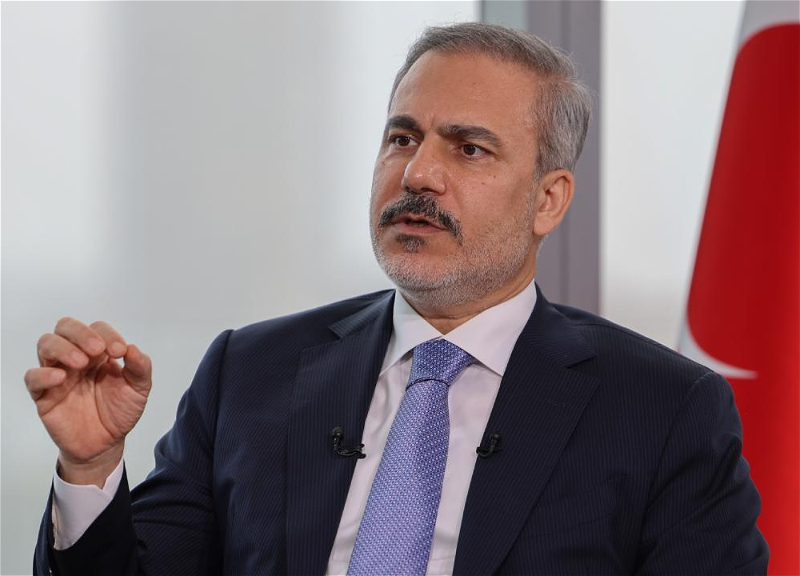
Without Turkey's participation, the European security architecture will be incomplete and unable to effectively confront crises.
Turkish Foreign Minister Hakan Fidan made this statement at a joint press conference with his Bulgarian counterpart Velislava Petrova-Chamova in Sofia.
"There is no doubt that the European security architecture in which Turkey does not occupy its rightful place will be incomplete, and its ability to cope with crises will weaken. The economic prospects of the EU depend on increasing the community's competitiveness, strengthening resilience, and restoring supply chains in the geographic zone immediately adjacent to it. In this regard, deepening economic integration with Turkey is a strategic necessity for the EU," the minister said in particular.
The diplomat noted that the complex crises shaking the region and the entire world have clearly demonstrated the strategic and indispensable nature of relations between Turkey and the European Union.
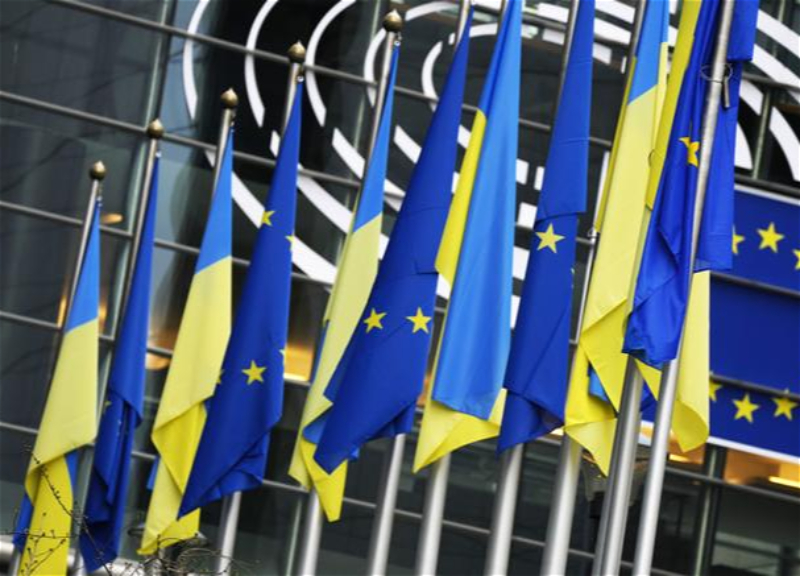
The foreign minister emphasized that European Union initiatives in the field of defense and security must be implemented on the basis of an inclusive approach that includes Turkey, a strong NATO ally contributing to Europe's security. "In this context, we welcome the valuable support provided by Bulgaria to Turkey's EU accession process," he said.
The minister stressed that the long-term guarantee of security in the Black Sea region is the resolution of the conflict between Russia and Ukraine. "We believe that establishing peace between Russia and Ukraine is of paramount importance for ensuring stability in our region. Turkey will continue to provide active assistance to the parties in this direction. We hope for the earliest achievement of a lasting and just peace based on the norms of international law," the head of Turkish diplomacy concluded.
Commenting on the renewed tensions between the United States and Iran, Hakan Fidan noted that prior to the latest escalation, expectations were widespread that negotiations would lead to an agreement.
"We recommend that the parties immediately cease mutual attacks, return to the negotiating table, and complete work on the text of the agreement they are close to. Our efforts are aimed at achieving this goal," he said.
The minister warned that further escalation and a return to full-scale conflict would not benefit either side. "No matter how complex and exhausting the negotiations may be, their successful completion must be the goal. The process must be completed," he added.
The head of the foreign ministry reported that Turkey and Bulgaria confirmed their commitment to building a new border crossing north of Kapikule.
"We confirmed our joint will to build a new border crossing north of Kapikule, the busiest border crossing in Europe. We also exchanged views on increasing the capacity of our border crossings, as well as on road and railway construction projects that will strengthen regional communications," he said.
He noted that Ankara and Sofia intend to jointly wage an uncompromising fight against common threats affecting border security, in particular illegal migration.
Emphasizing the strategic importance of transport infrastructure, he noted that strengthening communications would benefit not only both countries but also regional supply chains, the Middle Corridor, and Europe.
The Turkish foreign minister drew attention to the fact that energy ties between the two countries have expanded and diversified in recent years.
"This year, Türkiye Petrolleri will begin oil and natural gas exploration on the Bulgarian Han-Tervel block located in its exclusive economic zone," he said.
The diplomat noted that cooperation between Turkey and Bulgaria in the energy and transport spheres has directly contributed to the development of bilateral trade. He added that the volume of bilateral trade turnover in 2025 exceeded 8.4 billion euros.
According to him, during the talks the heads of diplomacy of the two countries also discussed issues of regional security, including developments in the Black Sea and the Middle East.
Hakan Fidan noted that the Working Group on Mine Countermeasures in the Black Sea, formed by Turkey, Bulgaria, and Romania, plays an important role in ensuring freedom and safety of navigation in the region. The minister confirmed Ankara's commitment to strengthening this initiative.
Source: Anadolu