Pace plays the old record against Baku. What's the point?
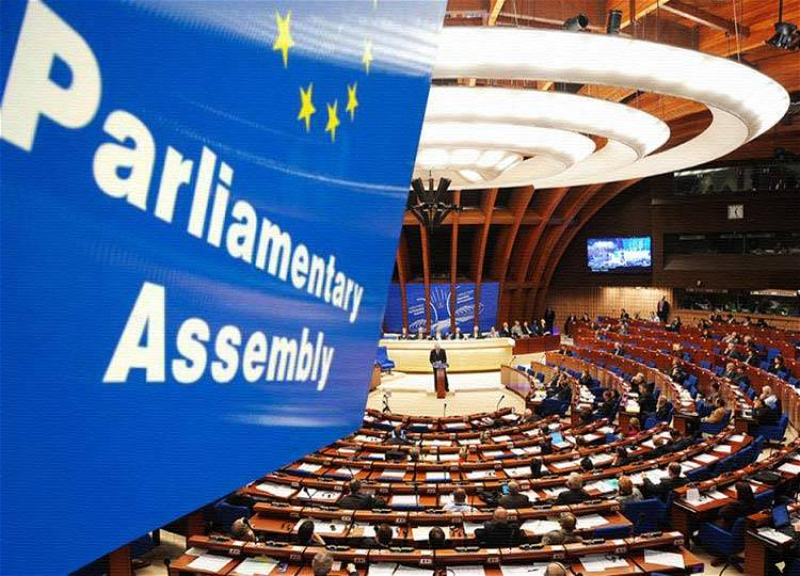
The latest attack from Strasbourg in the form of an anti-Azerbaijani resolution by PACE stated the obvious fact: for Baku, things remain unchanged on the western front (at least in terms of parliamentary institutions).
This decision by the Assembly clearly illustrates the protracted crisis of mutual trust and underscores that systemic contradictions between Azerbaijan and the West continue to grow cyclically, leaving virtually no space for constructive dialogue.
The resolution, which expresses the usual “deep concern” over the human rights situation, pressure on civil society and journalists, as well as restrictions on freedom of speech and the presence of so-called “political prisoners,” in reality, like all previous years, represents a classic example of bias and one-sidedness. Instead of an objective analysis of the complex regional realities, the authors of the text preferred to rely on unsubstantiated claims and template formulations. These clichés have been used for many years for coordinated political pressure on official Baku. Upon detailed examination of the structure of such documents, it becomes obvious that they are stamped not to protect the declared humanitarian values. All this is done to please specific geopolitical groups whose main goal is to weaken Azerbaijan’s positions on the international arena and slow down its sovereign development. The main driving motive of this campaign is the banal intolerance of certain European circles toward Baku’s independent foreign and domestic policy, especially after Azerbaijan fully restored its sovereignty and territorial integrity. In a word — stable to the point of yawning.
A vivid and most telling example of such a destructive line at the PACE platform is the activity of German deputy Frank Schwabe, who has long coordinated anti-Azerbaijani initiatives in Strasbourg. Credit must be given to his consistency in that, while slinging mud at Azerbaijan, he has not changed even this time. However, during the latest debates this politician went far beyond generally accepted parliamentary ethics. Schwabe did not limit himself to traditional attacks against the Azerbaijani state but unleashed aggressive rhetoric against those colleagues in the Assembly who tried to take a more balanced and objective position. When one of the European deputies spoke in support of Baku’s justified arguments, Schwabe subjected him to public obstruction, demonstrating absolute intolerance toward any alternative opinion. The paradox is obvious: some European parliamentarians who most loudly proclaim freedom of expression and position themselves as defenders of democracy turn out to be completely incapable of accepting dissent and immediately seek to silence opponents. Such behavior not only undermines the foundations of parliamentarism. It openly exposes the true intentions of part of the European establishment, which seeks to turn PACE from a platform for equal interstate dialogue into a rigid ideological tool serving narrow group interests and lobbyist circles, by the way, closely connected with the Armenian diaspora. Is there any need to note once again that representatives of the latter have for the most part still not come to terms with the establishment of a new status quo in the South Caucasus after the restoration of Azerbaijan’s territorial integrity and sovereignty. Hence come all their attempts to initiate an anti-Azerbaijani sabbath at any international platform, and PACE in this case is no exception.
Attempts by European structures to present criminal cases against certain journalists, bloggers, and activists in Azerbaijan as persecution for their professional activities completely contradict the facts. In Azerbaijan, as in any state governed by the rule of law, everyone is equal before the law, and the possession of a journalist’s ID or the status of a public figure does not provide immunity from responsibility for committing specific crimes. All the investigations and court proceedings mentioned in the reports are conducted strictly on the basis of national legislation and substantial evidence. We are talking about quite prosaic offenses: illegal financing from abroad, tax evasion, smuggling of large sums of foreign currency, and other financial machinations. Attempts to politicize these purely criminal cases and pass off violations of the law as restrictions on freedom of speech constitute gross interference in the activities of the independent judicial system of a sovereign state and are aimed solely at creating a false media background around Azerbaijan.
The actions of European institutions clearly show a policy of double standards that has become a systemic element of their foreign policy in recent years. Criticizing Azerbaijan on contrived grounds, PACE and other structures persistently ignore far more serious problems within Europe itself. In a number of European Union countries, harsh police violence during the dispersal of peaceful demonstrations, persecution of journalists for investigating the dirty dealings of those in power, systemic discrimination against migrants and minorities, cases of which tend to increase, as well as gross violations of citizens’ rights to freedom of religion are regularly recorded. However, Strasbourg and Brussels never apply harsh sanctions mechanisms or adopt devastating resolutions against these states, which clearly proves the selectivity of their approaches. However, here too everything is stable. Instead of donning the mantle of an infallible judge and preaching from the rostrum in the arrogant tone of an experienced mentor, it would not hurt PACE to dust off its own statute, recall why they once gathered at all, and try to master the forgotten skill of respectful dialogue on equal terms. In the end, this is the only working way to communicate in the European space, unless, of course, the goal is cooperation rather than an annual contest for the most pompous and useless lecture.
The current escalation on the part of PACE is not an isolated incident. An analysis of the chronology shows that anti-Azerbaijani documents have begun to be adopted in Strasbourg with astonishing regularity, which underscores their deeply thought-out and systematic character. Moreover, this campaign is being conducted simultaneously on several European platforms. In parallel with PACE, the European Parliament takes an extremely destructive position, which over the past five years has turned into the main conveyor of coordinated attacks on Baku with a pronounced pro-Armenian coloring. During this period, the European Parliament has stamped one negative resolution after another. A telling example was one of the latest documents, whose formal title declared “support for Armenia.” In reality, however, the lion’s share of this text was entirely devoted to accusations against Azerbaijan, demands for a revision of the results of the regional settlement, and attempts to revive the separatist enclave in the heart of the country. Such coordinated activity by the European Parliament and PACE clearly confirms that European political institutions still experience enormous difficulties in accepting the new geopolitical realities in the South Caucasus. Instead of promoting long-term peace, they continue to cling to outdated, one-sided, and counterproductive approaches, dealing a colossal blow to their own authority and image as reliable international partners.
Well, Azerbaijan is no stranger to such performances. Baku has long understood that reality in the South Caucasus is determined not by the stamped resolutions of Euro-bureaucrats but by concrete deeds and economic interests. And here Azerbaijan and Europe are doing just fine. And while Strasbourg and Brussels enthusiastically play political theater and compete in the epistolary genre, Baku simply does its job, restoring the region destroyed during the years of occupation and at the same time contributing to, by the way, European energy security. As the saying goes, the dog barks, but the caravan moves on. Azerbaijan today is quite self-sufficient not to look back at others’ whims, so European colleagues can only be wished creative success — after all, rewriting the same templates year after year must be interesting to someone, at least.
Ali Mamedov