Shadows of the past and ambitions of the future: why the Polish 'order fall' changed the nature of relations between Kyiv and Warsaw
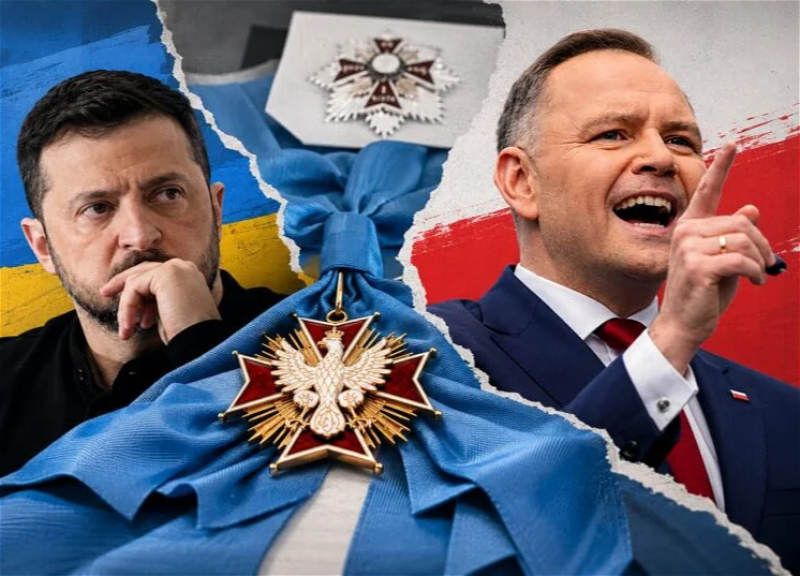
The political crisis in relations between Kyiv and Warsaw, linked to Polish President Karol Nawrocki’s decision to revoke the highest Polish state award—the Order of the White Eagle—from his Ukrainian counterpart Volodymyr Zelensky, has become a natural manifestation of long-standing and deep disagreements.
Behind the outwardly emotional and impulsive gesture by the Polish side regarding the naming of one of the Ukrainian military units after the heroes of the UPA (Ukrainian Insurgent Army, which operated during World War II) lies not merely a banal electoral game in light of the parliamentary elections scheduled in that country for 2027. It is a symbolic act that has exposed the real attitude of a significant part of the Polish establishment toward Ukraine—not as an equal partner, but as an object of condescending tutelage and geopolitical pressure.
In response to the Ukrainian president’s reproach that Polish authorities had not deprived Italian fascist leader Benito Mussolini, Russian Empress Catherine II, or pro-Russian former German Chancellor Gerhard Schröder of a similar award, while Zelensky himself was granted such an “honor,” Warsaw rushed to provide a hastily prepared reply. Minister of the Polish Presidential Chancellery Agnieszka Jędrych stated that the order is not revoked posthumously, so there can be no question of dictator Mussolini or Empress Catherine. As for Schröder, who is criticized for his long-standing ties with Russian President Vladimir Putin, Jędrych added that the former chancellor “never insulted Poland as openly as Zelensky.” In other words, the naming of a Ukrainian unit after Ukrainian heroes was regarded in Poland as an “insult.” Following this logic, does it mean that Ukraine should perceive as an insult the elevation in Poland to cult status of figures such as Józef Piłsudski—the architect of the brutal “pacification” of Western Ukraine in 1930—or Prince Jeremi Wiśniowiecki, who became for the Ukrainian people a symbol of pathological magnate terror and bloody massacres of the 17th century? And what about the commanders of the anti-communist underground revered in modern Poland, such as Romuald Rajs (“Bury”) and certain leaders of the Home Army, whose units carried out mass ethnic cleansings and the burning of peaceful Ukrainian villages in Podlasie and Chełm region already during and after World War II?
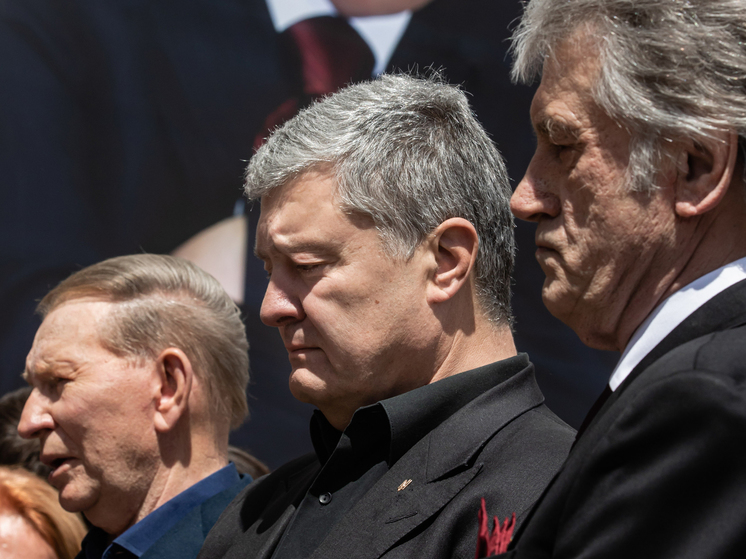
Be that as it may, Kyiv responded, and its reaction—expressed in an unprecedented “order fall,” the mass refusal of high Polish awards by both serving top officials, including Foreign Minister Andriy Sybiha and Head of the Presidential Office Kyrylo Budanov, and former Ukrainian leaders Leonid Kuchma, Viktor Yushchenko, and Petro Poroshenko—demonstrated that the era of one-sided concessions to Warsaw has passed. Kyiv has made it unequivocally clear that a sovereign country’s right to its own historical memory cannot be a subject of bargaining or held hostage to political expediency.
The cynical blow from Warsaw and the subsequent harsh démarche from Kyiv force a fresh look at the entire matrix of bilateral relations, where sparks of unprocessed grievances have always smoldered behind the screen of partnership in the security sphere. For a long time, Ukrainian society deliberately turned a blind eye to the mentoring tone of Polish colleagues, attributing it to the costs of domestic politics. However, the current incident has clearly shown that Polish nationalism toward Ukraine is increasingly sliding into diktat, demanding not merely solidarity but complete ideological subordination. Nawrocki’s attempt to use the highest distinction of the Polish-Lithuanian Commonwealth as an instrument of historical blackmail at a moment when Ukraine is waging the most difficult war appears not merely an unfriendly step but an action pursuing far-reaching domestic political and geopolitical goals.
Historical curvature of mirrors: from the Khmelnytsky Uprising to Volhynia
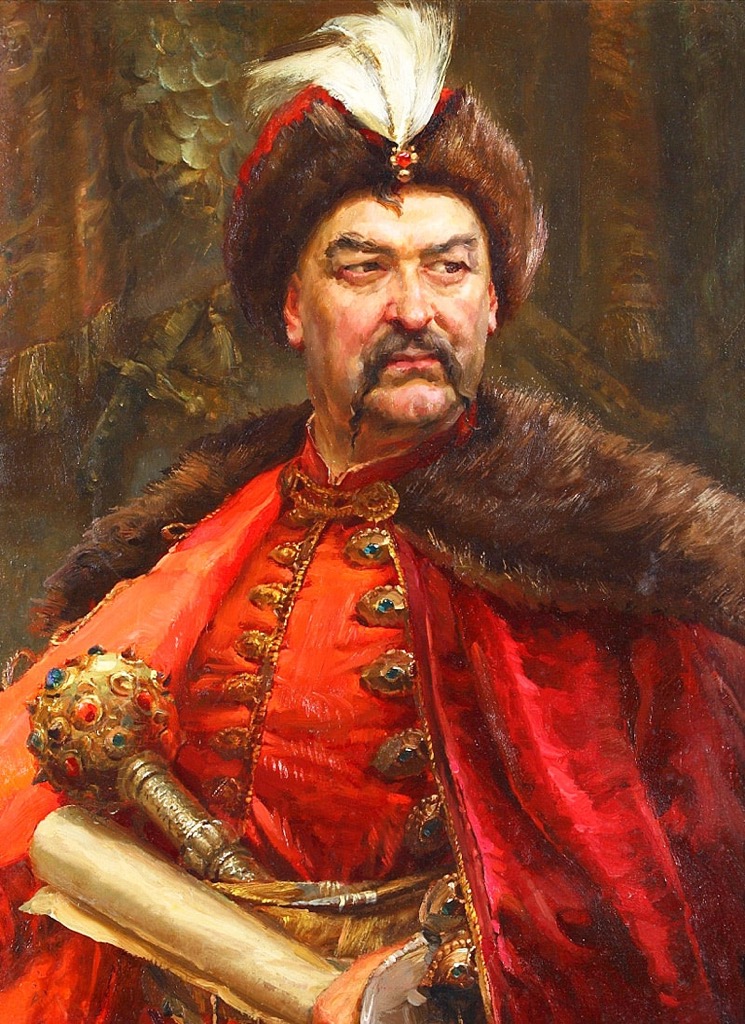
The fundamental contradiction between Ukrainian and Polish views of the shared past has deep roots, and the figure of Hetman Bohdan Khmelnytsky serves as the starting point here. In Polish national memory, the Khmelnytsky Uprising is traditionally interpreted exclusively as a catastrophe that destroyed the “golden age” of the Polish-Lithuanian Commonwealth, a revolt of the wild periphery against legitimate civilized authority, and a strategic mistake that opened Moscow’s path to the region through the Pereiaslav Council. Polish intellectuals, raised on romanticized images from Henryk Sienkiewicz’s trilogy, have for decades promoted the narrative that the Cossack uprising was an act of unmotivated and barbaric cruelty. They persistently emphasize the tragedy of the Polish population of those years while completely ignoring the context.
Ukrainian historical scholarship calls on Warsaw to face the truth and acknowledge that the root cause of that epochal explosion of the mid-17th century was the harshest colonial, economic, social, and religious discrimination that the Polish nobility inflicted for decades on Ukrainians, who were deprived of basic rights, subjected to Polonization and enserfment, and whose Orthodox faith was systematically displaced.
For Ukraine, the Khmelnytsky Uprising is a classic, just war of national liberation against the colonial oppression of the Polish-Lithuanian Commonwealth. Without Warsaw’s recognition of its responsibility for creating the conditions that led to the bloody uprising, any dialogue about the past turns into a monologue by former rulers demanding repentance from a once-subjugated people for daring to free itself.
A similar picture of one-sidedness is observed in the disputes over the Ukrainian Insurgent Army (UPA) and the Volhynia massacre of 1943 in which it participated. The Polish side has elevated Volhynia to an absolute in its historical memory, using this heavy episode of World War II as a constant instrument of moral superiority over Ukraine. At the same time, Warsaw at the official level stubbornly refuses to notice and investigate the large-scale punitive actions of the Polish Home Army against peaceful Ukrainians, as well as the preceding years-long repressive policy of pacification in interwar Poland, the closure and burning of Orthodox churches, and forced assimilation. Kyiv has never denied the tragedy of those events and has always been ready for the formula “we forgive and ask for forgiveness,” yet the official Polish discourse demands exclusively one-sided repentance from Ukraine, completely erasing the crimes of its own side from the annals of history.
Imperial phantoms: designs on Volhynia and Galicia
Behind Poland’s persistent desire to dictate to Ukraine which monuments to erect and whose names to assign to military units, old geopolitical appetites are clearly visible. The Polish elite has mentally never been able to come to terms with the loss of the “Eastern Kresy”—Western Ukraine and Volhynia—which for centuries were regarded by Warsaw as its natural civilizational and territorial possessions. Despite official declarations of respect for modern borders, a revanchist subtext constantly seeps through Polish socio-political discourse, expressed in cultural and humanitarian expansion in these territories.
The desire to control the Ukrainian historical narrative is nothing other than a soft form of asserting claims to these regions. By demonizing the UPA, which fought both Soviet and Polish occupation of western Ukrainian lands, Warsaw seeks to delegitimize the very aspiration of Ukrainians for sovereign control over these territories in that historical period.
Polish nationalism, nurtured on the myth of Poland “from sea to sea”—from the Baltic to the Black Sea (it seems the authors of this concept consulted the creators of the “Greater Armenia from sea to sea” myth)—subconsciously perceives an independent and strong Ukraine with its own unbroken identity as a threat to its historical claims. Hence the constant striving to keep Kyiv in the position of a “follower” that must be lectured, controlled, and punished by the deprivation of orders if it shows excessive independence in matters of national memory.
Economic egoism and agrarian blockades
The reverse side of Polish partnership was felt by Ukrainian society long before the current order scandal—during the prolonged blockades of the Ukrainian border by Polish farmers and carriers, which took place with the obvious connivance and sometimes tacit approval of official Warsaw. At one of the most difficult periods for Ukraine, the Polish side restricted the import and transit of Ukrainian agricultural products. These artificial barriers were erected to protect the domestic interests of Polish farmers.
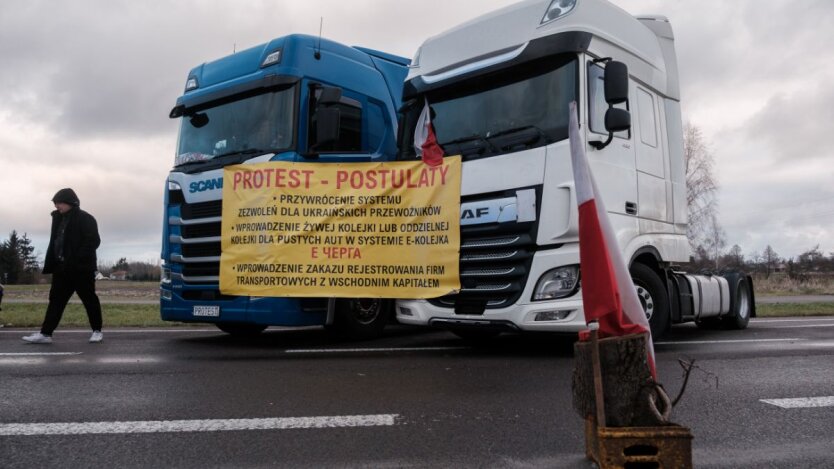
Warsaw effectively pushed European rules and principles of solidarity to the background by suspending the simplified import of Ukrainian grain and food, which caused serious damage to the Ukrainian economy amounting to billions of dollars. Such economic protectionism clearly showed that, in order to retain its own electorate, Polish politicians were ready to sacrifice the stability of a neighbor’s logistics, as a result of which even dual-use and defense cargoes were delayed at the border. This situation demonstrated that as soon as it comes to real market competition, Warsaw’s declared solidarity gives way to tough pragmatism and the defense of exclusively its own interests.
Competition for leadership in Europe: battle of potentials
The current exacerbation of relations also has a deep geopolitical basis connected with Warsaw’s ambitions to become the new undisputed leader of the European Union and the main spokesman for the interests of Central and Eastern Europe. Poland is actively using its growing economic influence and presidency of the EU Council to seize the reins from the aging locomotives of Europe in the persons of France and Germany. However, on this path Warsaw unexpectedly encountered an existential competitor—Ukraine.
Over the years of full-scale war, Ukraine has strengthened militarily, technologically, and geopolitically. Today the Ukrainian army is a combat-ready, experienced, and powerful force on the European continent, and Ukrainian defense enterprises possess advanced military technologies tested in the conditions of a real 21st-century conflict. Realizing that after victory and accession to the EU and NATO Ukraine will objectively become a serious military-political player in the region, Poland apparently begins to feel jealousy. Warsaw realizes that its claims to leadership can easily be displaced by Kyiv’s potential. Hence stems the desire of part of the Polish elite to use Kyiv’s integration processes as a lever of pressure—artificially conditioning Ukraine’s advancement into the EU and NATO on historical concessions and economic restrictions in order to retain Warsaw’s status as the undisputed regional leader.
Contours of a new partnership
The scandal initiated by President Nawrocki over the revocation of the Order of the White Eagle from Zelensky has become a point of no return, after which the old model of Polish-Ukrainian relations, based on mentorship and Ukrainian gratitude, has finally collapsed. The reciprocal gesture of the Ukrainian elite, which massively returned Polish awards, demonstrated to Warsaw the birth of a mature and self-sufficient Ukraine that will no longer allow itself to be spoken to in the language of ultimatums and claims. The Ukrainian state has proven that it is paying too high a price for its freedom to allow anyone—even nominal allies—to edit its history and insult its leaders.
Warsaw will have to accept the new reality that Ukraine no longer fits into the old patterns of unequal relations. The future of the region depends on the ability of both capitals to move toward genuine sovereign parity, free from the historical complexes of past centuries.
By turning the page of excessive patronage, Poland and Ukraine are capable of forming a fundamentally new axis of power in Europe.