Pashinyan called on EAEU to clearly answer whether this union exists or not
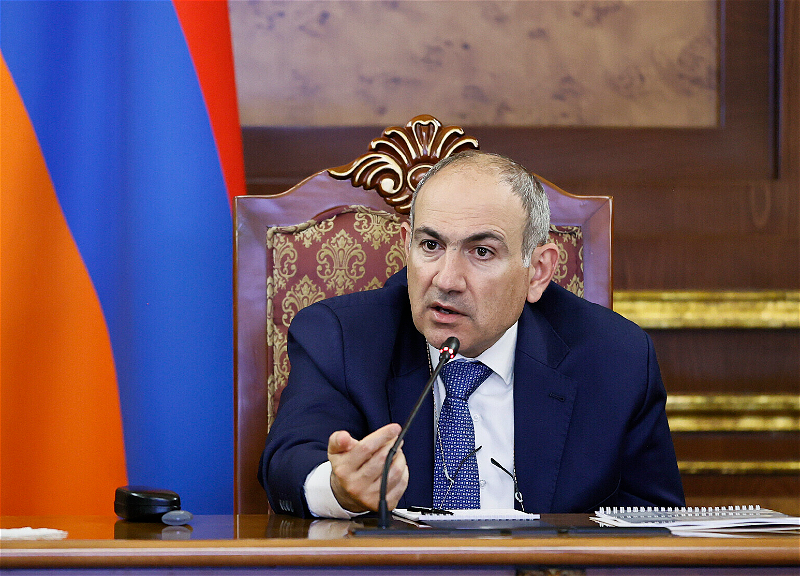
Armenian Prime Minister Nikol Pashinyan stated that the EAEU must clearly answer whether the union operates with free movement of labor, goods, services, and finance.
According to him, if these principles do not work, "that means the EAEU does not exist." "We say that it exists. We, including as a participating state, believe that some misunderstanding has occurred and created the impression that the EAEU does not exist. But if the EAEU says: I no longer exist, — well, if they do not exist, what can we do?" Pashinyan said at a government meeting.
According to the prime minister, what is happening in Armenia may cause serious concern in at least several EAEU countries, where it could be seen as a risk. Pashinyan noted that he intends to initiate a discussion in the EAEU format.
According to him, he also has questions for his colleagues in connection with the statement that was adopted in his absence. "We must understand: can any EAEU country make such decisions regarding any other country?" he stated.
The prime minister emphasized that if the answer to this question is positive, it would mean that the EAEU "declares its self-dissolution," and Armenia will have to draw the appropriate conclusions.
"The answer must be very clear: does it exist or not. If it exists — we will position ourselves, if not — there is no particular need to position ourselves anymore," Pashinyan said.
Russia from June 12, 2026, restricted the import of all quarantine products originating and dispatched from Armenia, as well as their transit through Russia to EAEU member states. Rosselkhoznadzor restrictions covered, in particular, Jermuk mineral water, alcoholic beverages, vegetables, fruits, and greens.
The agency cited as the reason "systematic detection of quarantine objects" in plant-origin products and flowers from Armenia. It is noted that the ban will remain in effect until a specific algorithm is developed to ensure the safety and traceability of shipped goods.
In Armenia, the introduction of Russian restrictions against it is considered Moscow's response to Yerevan's course toward closer ties with the EU and the transition to European standards. At the same time, Armenian authorities declare their intention to maintain membership in the EAEU as long as combining these directions remains possible.
Moscow, in turn, warns that Armenia's transition to EU standards could have economic consequences. Russian President Vladimir Putin previously stated that in such a case Russia will have to curtail integrative economic interaction with Armenia, and the republic could lose up to 14% of GDP in the event of higher energy prices due to exit from the EAEU.
Source: Novosti-Armenia