Yerevan's railway ultimatum: between Russian Railways, the TRIPP project, and arbitration
The discussion around the future of Armenia's railway network and the terms of its concession management has entered the public arena following a series of high-profile statements by Armenian Prime Minister Nikol Pashinyan.
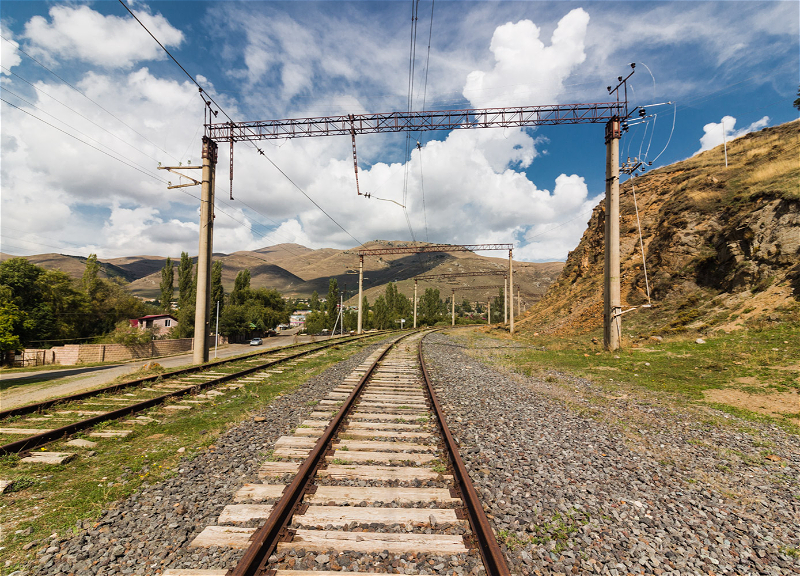
The attention of the Armenian authorities and international observers has focused on the question of the operation of key junction segments, including the Yeraskh–Akhurik section, which connects the country's infrastructure with the borders of Azerbaijan (the Nakhchivan Autonomous Republic) and Turkey. Yerevan's position boils down to the need to revise the concession or transfer the rights to it directly to a third party, while since 2008 the country's entire railway system has been managed by the South Caucasus Railway CJSC (SCR), a wholly owned subsidiary of Russian Railways JSC (RZD).
The legal basis for the Russian monopoly's operations on Armenian territory is a concession agreement with a term of 30 years, with the right to extend it for another 10 years. However, amid discussions of new logistics routes, the Armenian side has expressed its intention to attract external investors and third-party operators. The question of withdrawing or partially removing individual segments from the unified concession network has provoked substantive disputes, since the legal framework of 2008 does not provide for a unilateral revision of management rights without the consent of the parties or corresponding court rulings.
Yerevan declares its desire to maintain a diplomatic dialogue with the Russian side, while simultaneously assembling a set of legal and financial arguments for the possible transfer of concession rights to a third party. An analysis of the current state of negotiations, Azerbaijan's position on alternative transport routes, and the legal nuances of the TRIPP initiative (Trump Route for International Peace and Prosperity) makes it possible to form a detailed picture of how this situation is developing.
The legal conflict and financial proposals surrounding the SCR concession
The Armenian side has openly stated its readiness for a thorough revision of the terms of concession management. The Prime Minister of Armenia confirmed that the government hopes to agree on a mutually acceptable format with Russia, but does not rule out the use of strict legal procedures. "We want to resolve the railway issue in a friendly manner, but a situation may arise in which we will have to make decisions de jure. If disagreements arise, we will go to an arbitration court and discuss it there," the head of the Armenian cabinet said last month.
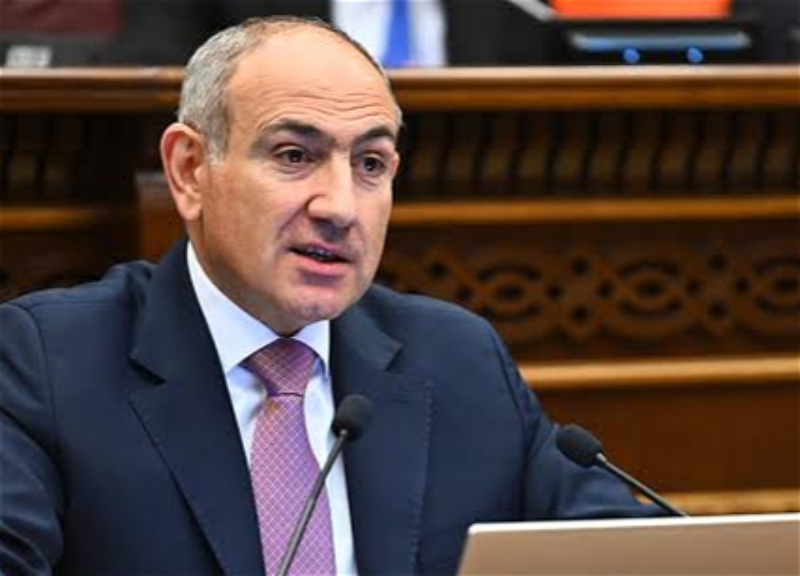
Yerevan's main financial argument in its dialogue with Moscow has been the proposal that the concession rights be bought out by investors brought in to implement new logistics initiatives. Characterizing the current market situation and the structure of existing obligations this past Monday, Nikol Pashinyan noted: "We are speaking openly with Russia, we are hiding nothing and we want to reach mutual understanding on the railway issue. In my assessment, there is now an opportunity to sell this concession right for approximately $400 million. I think this is a good opportunity. The railway is the property of Armenia; it is merely under the management of Russian Railways. Because the Armenian railways are under Russian management, we now risk missing this historic opportunity to integrate Armenia into the international railway network." At the same time, the head of the government emphasized the priority of the country's own state interests when making decisions on infrastructure: "We treat Russia's interests with great respect, but we consider it illogical to place them above our own. We ask, we urge that this path be taken." Yerevan believes that replacing the operator or selling the concession rights to a structure from a third country acceptable to both Yerevan and Moscow will make it possible to offset the risks and put the Armenian sections of track to use in international transit.
In turn, the relevant Russian agencies and the leadership of Russian Railways JSC point to the absence of legal grounds for unilaterally terminating the 2008 agreement. The Russian side recalls that over the intervening period significant investments amounting to hundreds of millions of dollars were made in modernizing and restoring Armenia's railway system, and that funds were also allocated from reserve funds to deal with the consequences of natural disasters on the tracks. Moscow notes that any changes in the ownership or management structure of the concession require strict compliance with the norms of international law and full compensation for all previously incurred costs.
The TRIPP project, the route along the Araz River, and risks for investors
The main catalyst for the initiative to change the concessionaire is the TRIPP project, which envisages the development of a multimodal transit corridor in southern Armenia. Within the framework of this concept, the TRIPP Development Company is being created as the organizational basis for attracting financing and coordinating the work, with 74% of the shares allocated to the American side and 26% to Armenia.

The spatial routing of the TRIPP project envisages the use of historic railway lines from the Soviet period. The Prime Minister of Armenia described the geography of the planned route in detail, stating: "In particular, it will pass through Nrnadzor–Agarak, along Armenia's southern border, on the bank of the Arax River (Araz – ed.). TRIPP does not envisage any foreign military or armed presence." According to the Armenian side's assessment, this route is capable of connecting Armenia with Azerbaijan, Russia, and the countries of Central Asia via an exit from Agarak toward the Nakhchivan Autonomous Republic.
However, in attracting international private capital, the question of potential regulatory restrictions has arisen. International investors from countries that have imposed sanctions against Russia point to the possible risks of falling under secondary sanctions in financial settlements and in operating infrastructure that is directly managed by a subsidiary of Russian Railways JSC. Pashinyan openly acknowledged the presence of this factor, noting that investors are already searching for alternative options: "International investors inspired by TRIPP are looking for ways to bypass the Yeraskh–Akhurik railway section, which is a serious problem capable of depriving Armenia of revenue and jobs."
It is precisely the risk of the Armenian Yeraskh–Akhurik section being excluded from international logistics chains that is pushing Yerevan to intensify negotiations with Moscow on the sale of the concession. The Armenian authorities fear that if the legal process drags on, investors will definitively give priority to alternative transport routes in the region.
Azerbaijan's pragmatic position and alternative logistics corridors
For Baku, the key condition for implementing regional logistics initiatives remains ensuring unimpeded, safe, and uninterrupted communication between the country's main territory and its Nakhchivan Autonomous Republic. Pursuing an independent transport policy, Azerbaijan has formed a system of alternative routes that do not depend on the legal status of the concession agreement between Armenia and Russian Railways JSC.
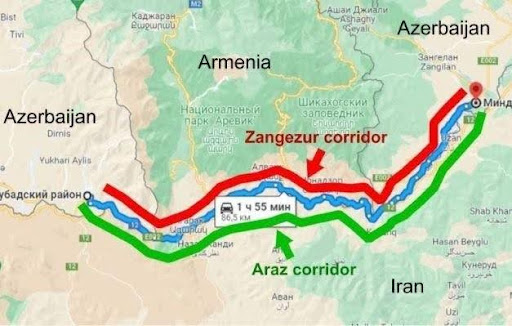
Within the Iranian vector, the country is actively building railway and road infrastructure toward the Nakhchivan Autonomous Republic through the territory of Iran (a route along the southern bank of the Araz River), where work on the Azerbaijani section is being carried out with a high degree of completion, amounting to 70–90%. In parallel, the Turkish vector is being developed — the Kars–Nakhchivan railway line project (Kars–Iğdır–Aralık–Dilucu), aimed at providing a direct outlet for cargo from the Nakhchivan Autonomous Republic to the Turkish railway network and European markets.
The existence of these communication alternatives allows Azerbaijan to build interstate logistics regardless of the pace and form of the negotiations or legal proceedings on the concession management of Armenia's railway network.
Prospects for a legal settlement
The further development of the situation around the Yeraskh–Akhurik section and the 2008 concession agreement depends on the parties' ability to find a balance between corporate law, international sanctions realities, and state interests.
The negotiation process is at the stage of legal and financial probing. Yerevan's statement about the possibility of attracting $400 million for the buyout of the concession rights by a third party demonstrates the Armenian side's desire to resolve the issue through market compensation. However, the final decision requires the official consent of the Russian government and Russian Railways JSC, as well as a meticulous assessment of all previously invested funds and infrastructure obligations.
While the parties hold consultations and set out their legal positions, the key factor for the South Caucasus remains maintaining the pace of infrastructure construction. The speed at which alternative sections of track outside Armenia are put into operation creates a tight time frame for Yerevan, encouraging the search for a constructive way out of the concession impasse.