A test of brotherhood: what lies behind the new wave of attacks on Azerbaijan in Turkey
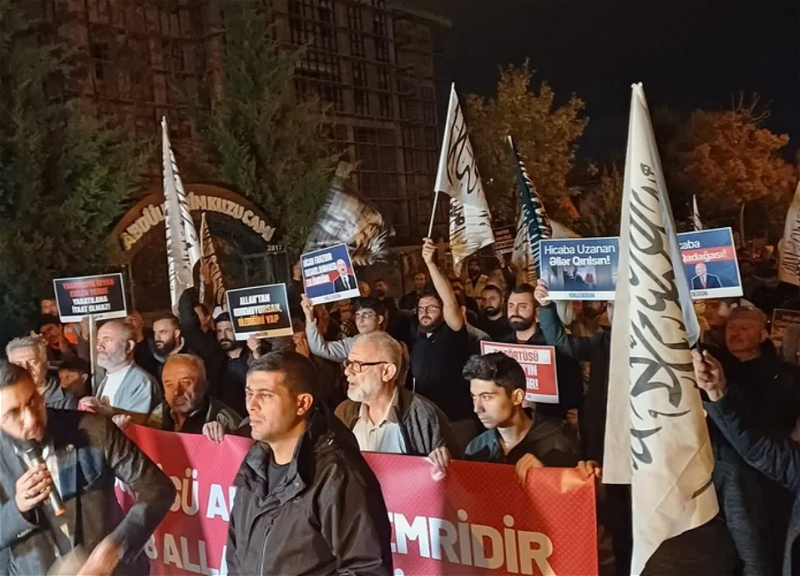
In recent days, Turkey's media space has been swept by yet another wave of information attacks directed against Azerbaijan. Under the cover of pro-Palestinian rhetoric and accusations of "cooperation with Israel," Azerbaijani state institutions, major national corporations, and the diplomatic corps are being subjected to systematic criticism.
However, any in-depth analysis of these processes shows that behind the pseudo-religious pathos and reproaches of "betrayal" lie not only flagrant double standards, but also a banal desire to turn a blind eye to one's own economic interests, as well as to prepare the ground for behind-the-scenes deals with Yerevan.
For Baku, these actions not only appear unfounded - they cause deep regret, given the colossal volume of real, rather than declared, support that Azerbaijan has provided and continues to provide to Turkey in all critical situations.
The Palestinian pretext and the real figures: hypocrisy against the backdrop of an embargo
The main trump card with which Turkish critics attempt to strike at Azerbaijan is the "Israeli factor." Our country is accused of maintaining economic and diplomatic ties with Tel Aviv. In particular, speculation about the fact that an Azerbaijani diplomat was in the hall during the Israeli prime minister's speech at the UN is presented almost as "venality."
But let us turn to the facts that Turkish critics prefer "not to notice."
In 2024, Ankara loudly announced the introduction of an official trade embargo against Israel. It would seem that a principled position had been established. However, according to official data from Israel's Central Bureau of Statistics, in that same year, 2024, Turkey ranked 5th among the largest suppliers of imports to Israel, shipping goods worth almost $2.86 billion. In 2025, the figures declined, but they are still measured in hundreds of millions of dollars ($924 million). In addition, trade has been successfully rerouted through third countries - Greek ports and Palestinian accompanying documents. Moreover, goods labeled in Hebrew still regularly appear on the shelves of Turkish supermarkets - products originally manufactured at Turkish factories for the Israeli market.
.jpg)
A logical question arises: why do the activists reproaching Baku stubbornly ignore their own country's multimillion-dollar trade flows with Israel? The rhetoric of political leaders and the real economic interests of Turkish business are, in this case, diametrically opposed. To call Baku's actions "betrayal" while turning a blind eye to one's own business with Tel Aviv through gray schemes is the purest hypocrisy.
Historical context: how Baku forgave real betrayals for the sake of unity
In Baku, the value of true alliance is well known, and disagreements have never been turned into an information show. For decades, the Azerbaijani leadership has shown colossal restraint and diplomatic tact when the actions of official Ankara directly jeopardized the vital interests of our people.
While Azerbaijani lands were under Armenian occupation and a million of our fellow citizens remained refugees and internally displaced persons, certain Turkish circles established a steady business with Yerevan. Moreover, after 2021 this business expanded even further. According to Armstat, UN Comtrade, and the OEC (Observatory of Economic Complexity), the volume of Turkish imports to Armenia, carried out predominantly illegally through Georgia, amounted and still amounts to hundreds of millions of dollars a year ($336 million in 2024, $367 million in 2025). Baku had exhaustive information about these chains, but never used it for an information war against Ankara, understanding the importance of preserving the foundation of fraternal relations.
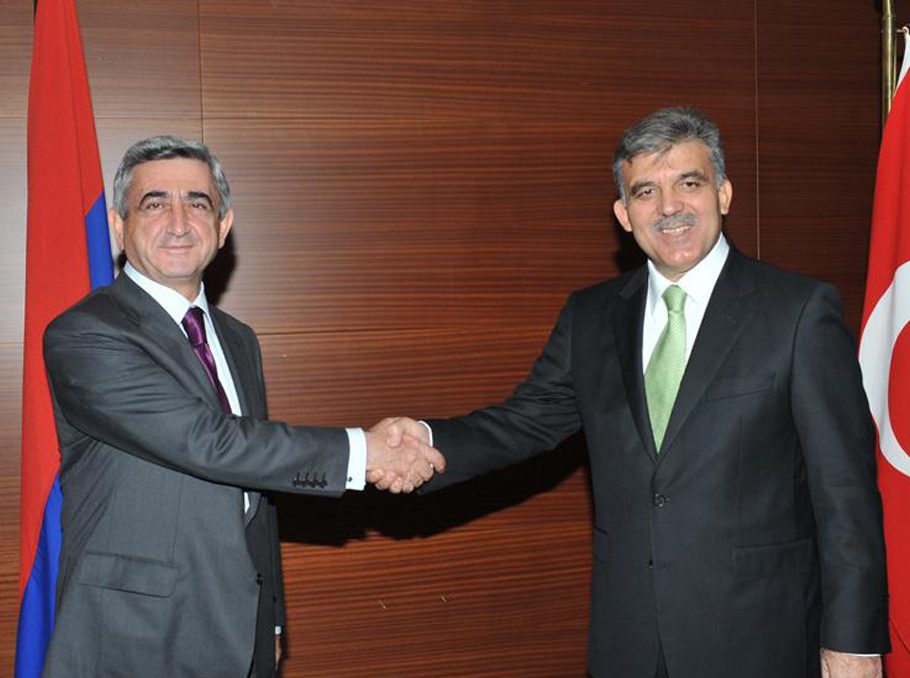
The attempt by the Turkish authorities to open the borders with Armenia within the framework of "football diplomacy" in 2008-2009, when the visit of then-President of Turkey Abdullah Gül to Yerevan and the signing of the Zurich Protocols effectively ignored the fact of the occupation of Karabakh, became a most severe test for Azerbaijani society. The footage from the football match in Bursa, where Azerbaijani flags were confiscated and thrown into garbage bins, resonated with deep pain in the heart of every Azerbaijani. That was the most direct test of the strength of the declared brotherhood; however, even then President Ilham Aliyev and Azerbaijani diplomacy chose to resolve the issue in closed negotiations, without stooping to the level of anti-Turkish propaganda and without calling their neighbor a "traitor."
Looking even deeper into history, during the First Karabakh War, when the peaceful Azerbaijani population was subjected to massacres, the Turkish side refused to provide even civilian transport helicopters for the evacuation of the wounded and of women, which the late ex-President of Azerbaijan Abulfaz Elchibey mentioned only years later, but Baku did not turn the tragedy into an instrument of information attack.
Moreover, in 1995, during the most difficult period of the formation of independent Azerbaijan, OPON units under the leadership of Rovshan Javadov attempted a coup d'état against national leader Heydar Aliyev. As reports of the Turkish intelligence service MİT and the materials of the high-profile "Susurluk" case later recorded, behind these events and the assassination attempts stood high-ranking figures from the entourage of then-Turkish Prime Minister Tansu Çiller, including Ayvaz Gökdemir and Mehmet Ağar.
.jpg)
Even when faced with the fact of such obvious interference in internal affairs, Heydar Aliyev displayed the highest wisdom, and the issue was settled through closed channels, since Baku preferred to protect the interstate alliance rather than inflate a scandal for the sake of momentary political points.
Today, narratives in the style of "we returned Karabakh to you" are increasingly heard from high tribunes in Turkey, and arms supplies are presented almost as a charitable gift, which absolutely distorts reality. All deliveries of the famous "Bayraktars" and other Turkish military equipment were paid for in full, down to the last cent, from the Azerbaijani budget under commercial contracts. At the same time, Azerbaijan, as a sign of gratitude and alliance, awarded Turkish companies close to the current government contracts for the restoration of the liberated territories worth more than $5 billion.
By comparison, other Turkic states provide assistance in the revival of Karabakh entirely selflessly: Uzbekistan built a school in Fuzuli and a factory in Khankendi, Kazakhstan a Center for Children's Creativity, Kyrgyzstan a school in Aghdam, and Turkmenistan is erecting a mosque. Against this backdrop, Turkish business operates in the region on an exclusively commercial basis, receiving billion-dollar contracts from the Azerbaijani state.
At the same time, Azerbaijan itself has never presented a bill for its support: for decades Baku has acted as Ankara's advocate on all international platforms from Europe to the United States, defending Turkey's position on the issue of the events of 1915.
Not fearing to spoil its own relations with the European Union and Greece, Azerbaijan built contacts with Northern Cyprus at a level that no other state in the world has dared to, and after the devastating earthquake of 2023 it instantly dispatched hundreds of rescuers and allocated $100 million for the construction of an entire "Azerbaijan" quarter in Kahramanmaraş, including 68 buildings with 1,200 apartments, a school, and kindergartens.
The true goals of the information campaign
The disinformation attacks being unfolded in Turkey today pursue quite specific goals, far removed from concern for Palestine or fraternal feelings. On the one hand, attempts continue in Turkey to force the normalization of relations with Armenia in its own economic interests, and in order to dampen the wave of discontent, the narrative is being formed that "Azerbaijan itself is playing a dirty game with Israel, therefore we have the right to open the borders with Yerevan." On the other hand, the use of foreign policy topics and the image of an "enemy" traditionally helps a number of Turkish politicians mobilize the conservative electorate ahead of elections, while campaigns against Azerbaijan represent a direct attempt to redistribute financial flows and push aside Azerbaijani investments in the Turkish economy.
Such fake information injections are far from the first attempt to denigrate Baku. However, it is time for the provocateurs in Turkey to realize a simple truth: relations between Azerbaijan and Israel rest exclusively on the national interests of our country.
Azerbaijan pursues a sovereign foreign policy based on its own security, economic development, and geopolitical realities. And no disinformation or outside pressure will force Baku to abandon a course that protects the interests of the Azerbaijani state and people.
We have always viewed relations with Turkey through the prism of Heydar Aliyev's formula "One nation - two states." But an alliance cannot be one-sided. The disinformation technologists and populists in Ankara who are trying to denigrate Baku for the sake of momentary political dividends and shadow deals are making a dangerous strategic mistake. Attempts to substitute cheap emotional blackmail for real economic indicators and historical truth strike directly at the very foundation of Turkish-Azerbaijani brotherhood - a foundation that Baku has safeguarded for decades, despite any trials.