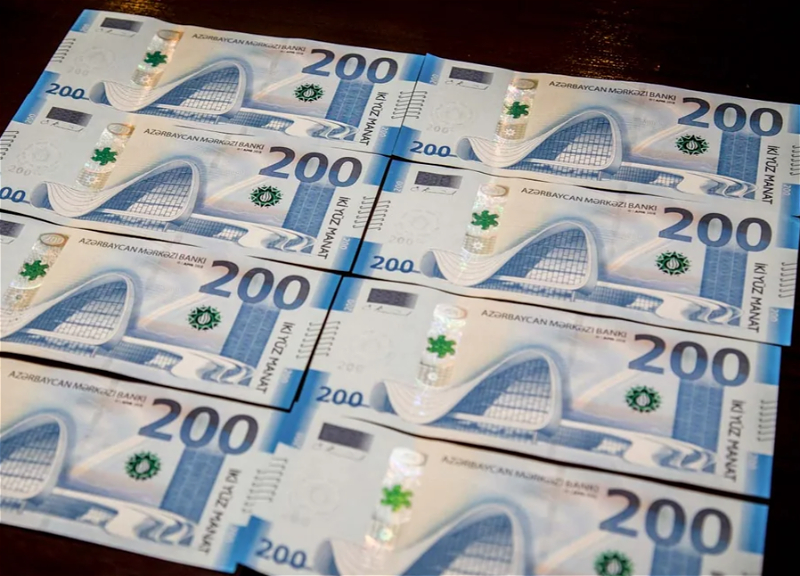
Less oil, more money: what the war in the Gulf means for SOCAR and the global oil industry
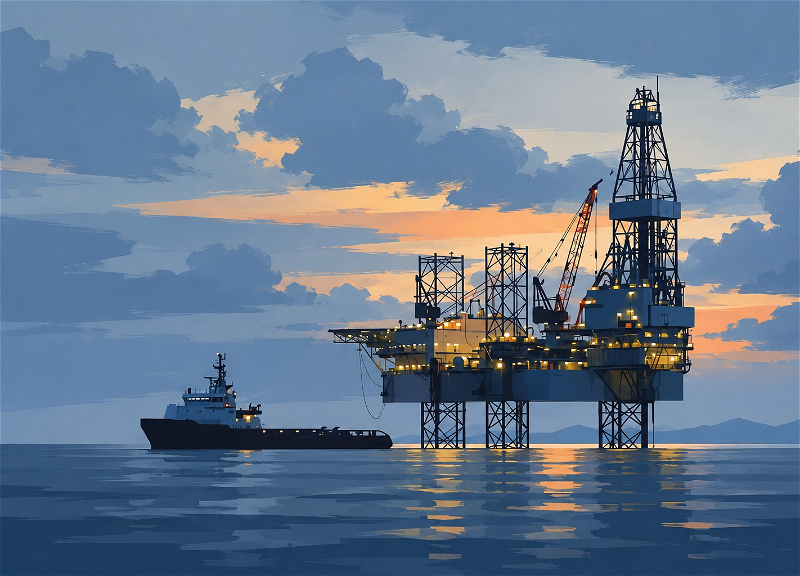
The war in the Gulf may bring a decade of thrift in the oil industry to an end and set off a new investment cycle.
That is the conclusion of an article published by The Economist on September 13th.
For Azerbaijan, where oil output has been sliding for a decade and a half for largely natural reasons, the argument has direct practical consequences.
The questions the crisis poses for the oil majors apply just as much to SOCAR, and to the state that is its sole owner.
A decade of thrift
To understand what is happening to the industry now, go back to the mid-2010s. Until 2014 oil had spent several years above $100 a barrel, and companies spent freely on expensive projects: deepwater fields, the Arctic, oil sands.
Then the market turned. The shale revolution made America one of the world’s biggest producers, Opec refused to cut output in November 2014, and by early 2016 Brent had fallen below $30. Projects launched at $100 became money-losers, companies wrote off tens of billions of dollars and energy’s weight in the stockmarket nearly halved. Shareholders did not forget.
Ever since, an unwritten rule has governed the industry: spare cash goes to paying down debt and rewarding owners, not to drilling new wells. The rule survived even 2022. When Russia’s invasion of Ukraine pushed oil above $120, capital spending rose, but cashflow rose faster, and the surplus once again went to creditors and shareholders.
The Economist reckons that much of the increase in investment back then reflected the rising cost of drilling and services rather than a real expansion of activity. Companies paid more; they did not drill much more.
Then prices fell and the pendulum swung the other way. In the 18 months or so before the Gulf war, firms started borrowing again so as not to cut payouts and to fund spending they had already committed to. But dividends cannot be paid for with debt indefinitely. On the eve of the war the biggest companies announced a combined 11% cut in shareholder distributions, mostly by scrapping share buy-backs, notes Alastair Syme of Citigroup. Special dividends at smaller firms, often financed with borrowed money, looked shaky too, and investors were preparing for harder times.
This year was supposed to be a grim one for oilmen, with Brent forecast to fall below $60 amid oversupply. The war upended that forecast and sent prices above $100. Shares in oil-and-gas companies have gained 40% since January, against 12% for the market as a whole. The combined profits of the West’s seven biggest oil companies and Aramco doubled in the second quarter, to $91bn.
Yet the industry chose to spend this money the old way, too.
In the second quarter alone the five biggest (ExxonMobil, Chevron, Shell, bp and TotalEnergies) cut their net debt by $36bn, or almost 20%. All but bp kept payouts steady or raised them. Little was left for expansion: the majors’ cash holdings have scarcely moved since the end of 2025, and bosses keep assuring investors that the windfall will go to them rather than to new projects.
Running to stand still
The Economist’s central argument is that this time thrift runs up against a physical limit. To see why, one needs to know something about the oil business that is rarely discussed outside it.
Once a field passes its peak, its output starts to decline naturally: reservoir pressure drops and water breaks into the wells. The industry is thus like a man running up a down escalator. Merely to stay in place, it must keep bringing new capacity on stream.
A report published last year by the International Energy Agency (IEA) shows how big the effect is. By its estimate, nearly 90% of annual upstream investment since 2019 has gone to offsetting declines at existing fields rather than to meeting growing demand. Were investment to stop altogether, global oil output would fall by 8% a year. Rates vary widely: the Middle East’s giant onshore fields lose less than 2% a year, while smaller offshore fields in Europe lose more than 15% on average.

Hence The Economist’s vivid formulation: every two years, depletion takes away from the world a volume equal to Saudi Arabia’s entire output.
Replacing it is getting harder because big discoveries have been scarce in recent years. By 2040 daily oil-and-gas production could fall by 31m barrels, nearly a fifth of today’s level. Wood Mackenzie, a consultancy, reckons that 70 companies could see their output halve.
This is, in effect, the price of a decade of underinvestment. Money that for years went to shareholders never turned into exploration, and the bill is now arriving in the form of shrinking reserves. The industry will have to invest regardless, not as a bet on high prices, but as a matter of corporate survival.
The war supplies both the means and the motive: cash on balance-sheets, and a reason to use it. Geopolitical upheaval and the wish to depend less on the Middle East strengthen the case for investment in their own right, says Paul Hickin of Petroleum Economist, an industry journal. And in America an administration friendly to drilling and dealmaking has less than two years left.
The first signs of a turn are already visible.
Rather than buying licences outright and committing capital up front, the majors are assembling vast tracts of acreage and sifting them with artificial intelligence to decide where to drill. So-called farm-down deals, in which a national oil company brings in a foreign firm to explore in exchange for a stake in the project, are becoming more common, partly because governments want to raise domestic production.
Mergers are picking up, too: six deals worth more than $1bn have been announced in the past two months. Bob Brackett of Bernstein, a broker, puts this down to buyers and sellers getting used to the idea of prolonged high prices, which makes it easier to agree on valuations. Dan Pickering of Pickering Energy Partners notes that the big companies have digested the acquisitions they made in the early 2020s. Private-equity firms, traders and Japanese companies are also hunting for assets.
The Economist supplies its own caveat. Hassan Eltorie of S&P Global points out that oil companies’ multiples (the ratio of their value to their cashflow) remain at pre-war levels. In other words, the market sees the rally in their shares as an effect of high prices, not as a lasting improvement in the industry’s prospects. Demand for oil is unpredictable, exploration may disappoint and big acquisition targets are few. Even so, The Economist concludes, the crisis gives the industry a chance to change course.
The view from Baku
The Economist’s logic maps onto Azerbaijan almost exactly, with one important difference: SOCAR has a single shareholder, the state. Questions that boards and investors settle at the majors thus become, in Azerbaijan’s case, questions of economic policy.
Depletion. For Azerbaijan this is no abstraction. Between 2010 and 2021 the country’s oil output fell by 30%, from more than 1m barrels a day to about 740,000. In the first quarter of 2026 it averaged 555,000 barrels a day, including condensate. In 2025 around 58% of the country's oil came from the Azeri-Chirag-Gunashli (ACG) block, discovered in Soviet times; it has been producing under the "Contract of the Century" since 1997. Its ageing sets the overall trajectory. Rovshan Najaf, SOCAR’s president, argued at Baku Energy Week that forecasts take account only of existing wells, and that once new projects are included the decline at ACG may not exceed 3%. But even in that scenario the aim is to hold output steady, not to grow it. The majors can look for oil anywhere from Namibia to Vietnam. Azerbaijan’s resource base lies in a single sea, which makes the question of new drilling all the more pressing.

Time. This is perhaps the most underrated factor. Years pass between a decision to invest and first oil. According to the IEA, new conventional projects have recently taken almost 20 years on average to go from exploration licence to production: roughly five years to discover a field, eight to appraise and approve it, and six to build the infrastructure. In Azerbaijan the wait can be shorter, because new fields sit close to existing infrastructure. Yet even here the example is telling: bp joined the Karabagh field project in June 2025, and first oil is not expected until 2029, even though it is a small field just 20–25km from Gunashli.
Hence a simple conclusion: Azerbaijan’s output in the mid-2030s will be determined by decisions taken in 2026–27, in other words during today’s windfall.
Gas. The Economist writes about oil and gas together; for Azerbaijan the distinction matters. The fall in oil production is partly offset by gas. In 2025 the country produced 51.5bn cubic metres (bcm) of gas, 2.4% more than a year earlier. Exports reached 25.2bcm, of which 12.8bcm went to Europe. The industry keeps investing in gas: in 2025 the partners in Shah Deniz approved a $2.9bn compression project, and in June 2026 SOCAR signed a long-term agreement with TotalEnergies, XRG (Adnoc’s investment arm) and Turkey’s BOTAŞ to supply gas from the next phase of the Absheron field from 2029. And on June 1st 2026 bp announced the start of commercial production of non-associated gas at ACG: the country’s main oil block has begun to yield gas from separate reservoirs.
Gas has its limits too. In 2022 Baku promised the European Union that it would double supplies to 20bcm a year by 2027, which requires both new production and bigger pipelines. These are the same questions of investment and time, only in gaseous form.
Around Hormuz, and transit. Azerbaijani oil travels through the Baku-Tbilisi-Ceyhan (BTC) pipeline to Turkey’s Mediterranean coast, bypassing the Strait of Hormuz. In the logic The Economist describes, such oil is valuable not only for its price but also for the reliability of its route. That strengthens the case for projects that looked doubtful at $60: redeveloping mature fields, small offshore structures and old onshore deposits. The Economist explicitly mentions mature fields that can simply be worked more intensively.
But the advantage has a second, transit dimension. BTC can carry 1.2m barrels a day, yet in the first half of 2026 about 97m barrels were loaded at its Ceyhan terminal, roughly 535,000 a day. The pipeline, in other words, is running at less than half its capacity, precisely because Azerbaijan’s own production is falling.
Neighbours already fill some of the space. Kazakhstan, keen to reduce its reliance on routes through Russia, shipped 1.2m tonnes through BTC in 2025 and plans to raise that to 1.5m–2.2m tonnes in 2026. Since July 1st 2026 the pipeline has been operated by a SOCAR subsidiary, which took over the role from bp. In a world where Middle Eastern routes are unreliable, Azerbaijan can make money not only from its own barrels but from other people’s, and that opportunity now lies largely in SOCAR’s hands.

A 30-year-old model, and that is good news. Farm-down deals, which The Economist describes as a new trend, are nothing new for Azerbaijan. The 1994 Contract of the Century was built on precisely this model, in which a national company brings a major into exploration and development in exchange for a stake, and it still works. In June 2025 bp took 35% stakes in the Karabagh field and the Ashrafi-Dan Ulduzu-Aypara block, becoming operator of both.
In 2026 SOCAR and bp took a step that echoes The Economist’s point about exploration driven by data and new technology. The two companies agreed to merge disparate seismic surveys from different years into a single pseudo-3D model, a first for the Azerbaijani sector of the Caspian.
To a layman this may sound like a technicality, but the point is simple. Much of the geological record of the Caspian consists of two-dimensional seismic lines shot over several decades with different equipment. Taken individually, they give a fragmentary picture; combined into a three-dimensional model, they allow structures once written off as unpromising to be reassessed. If the majors’ appetite for exploration really does return, Baku will have a window to bring them into new blocks on better terms than it could get in the years of cheap oil.
The Caspian bottleneck. The experience of 2022, which The Economist recalls, contains a warning. Back then much of the rise in investment was swallowed up by inflation in drilling services. In the Caspian that risk is greater than on the open sea. The Caspian is landlocked, and the only route in for large equipment is the narrow Volga-Don canal, which cannot take vessels wider than 16.5 metres. Drilling rigs therefore have to be shipped in pieces and assembled on site. If the majors start drilling all over the world at once, there will be no quick way to bring a rig in from the Gulf of Mexico or the North Sea. Access to rigs and services may prove as much of a constraint as money or geology.
Assets abroad. Outside Azerbaijan, SOCAR has historically been strong in refining, trading and logistics rather than in production. Its upstream experience beyond its home market is still taking shape: in Uzbekistan it holds 30% of six blocks in North Ustyurt and remains operator; bp joined in May with a 40% stake, but the project is still at the exploration stage. Buying producing assets abroad now would mean entering the market at peak prices, competing with majors, Japanese firms and private equity, at a time when, as The Economist notes, big targets are scarce.
That argues for patience, and for growing through exploration partnerships in its own region, where SOCAR brings local knowledge and infrastructure and a partner brings capital and technology, rather than rushing into acquisitions.
Who gets the windfall. Unlike Shell, SOCAR has no minority shareholders clamouring for buy-backs. So the question of whether to pay out or to invest takes a different form: spend the oil money through the budget, set it aside in the State Oil Fund (Sofaz), or let the industry invest it in production. The windfall is considerable. The 2026 budget assumes an oil price of $65 a barrel; on September 17th Azeri Light fetched $122.15 at the Italian port of Augusta. By the finance ministry’s reckoning, every extra $10 a barrel brings the budget about 400m manat.
The Economist explains the industry’s thrift by the trauma of the mid-2010s. Azerbaijan bears a scar from the same wave. The price collapse of 2014–16 brought two devaluations of the manat in 2015 and a difficult restructuring of the economy. Judging by the budget, the lesson has been learned: Sahil Babayev, the finance minister, has announced that transfers from Sofaz to the budget will be cut by 1.7bn manat in 2026. But a conservative budget protects against falling prices; it does not answer the question of where production will come from in ten years’ time.
The energy transition as a counterweight. One argument tempers any optimism. The Economist itself notes that the path of oil demand is uncertain. For Azerbaijan this is no abstraction: Europe, the main market for its hydrocarbons, aims to become carbon-neutral by 2050 and will gradually use less oil. Projects approved now will reach full output in the 2030s and will have to pay for themselves in a world where demand in Baku’s key markets may well be declining. Hence the particular value of gas, which European scenarios cast as a transition fuel, and the need for caution over oil projects with long payback periods.
Questions for Baku
The investor scepticism The Economist describes applies to Azerbaijan too: high prices may prove as fleeting as June’s slump after the tentative deal between America and Iran. But that is precisely why the crisis confronts Azerbaijan’s oil industry with questions whose answers will shape it for years to come.
How much of the windfall should go into new production, and how much into reserves? On what terms should foreign partners be brought into new blocks while their appetite for exploration is growing? How can an under-used BTC, now operated by SOCAR, turn geography into a steady income? And how should investment be divided between oil and gas as European demand changes?
In the first eight months of 2026 Azerbaijan’s exports of oil and oil products fell by 7.8% in volume but rose by 10.6% in value, to $9.28bn. The country is already earning more while selling less.
The question is how long that formula can hold without new barrels.
About the author:
First News Intelligence Unit (FNIU) is the analytical unit of 1news.az, specialising in research on Azerbaijan’s financial sector and economy.
Read in other languages:
Меньше нефти, больше денег: что война в Заливе означает для SOCAR и глобальной нефтяной отрасли
Daha az neft, daha çox pul: Körfəz müharibəsi SOCAR və qlobal neft sənayesi üçün nə vəd edir?