Captive to a draining phantom: how revanchism undermines Armenia's future
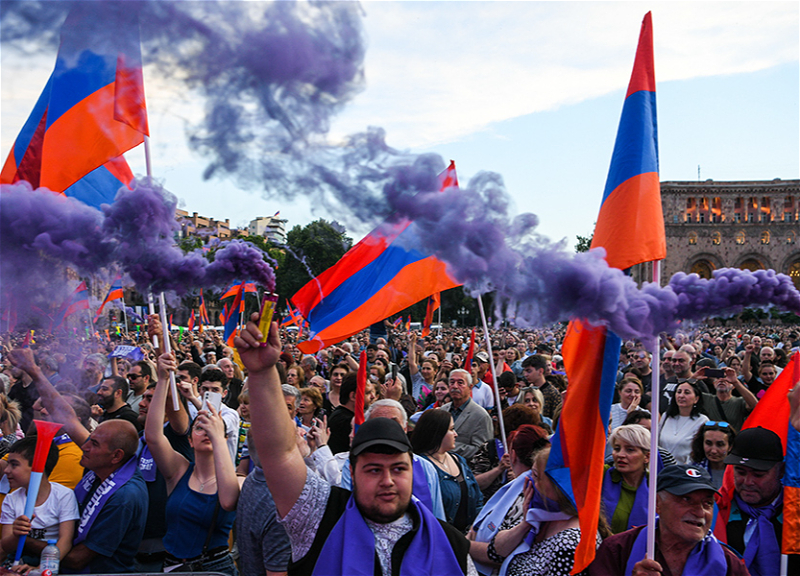
In recent years, Armenian political discourse has increasingly become hostage to a dangerous trend — radicalism and revanchism are becoming the cornerstone of public life.
The drivers of this destructive dynamic are not only radical forces within the country, but also part of the Armenian diaspora abroad.
The most politicized and radical structures of the Armenian diaspora continue to view Armenia not so much as a state living in a concrete geopolitical reality, but rather as an instrument for realizing their own historical notions.
When, against the backdrop of new geopolitical realities, intolerance toward the territorial integrity and sovereignty of Azerbaijan is openly cultivated in the political field of Armenia and its communities abroad, when calls to hatred, the falsification of historical facts and the sabotage of the peace process circulate — this is already a systemic pathology capable of destroying Armenian statehood from within.
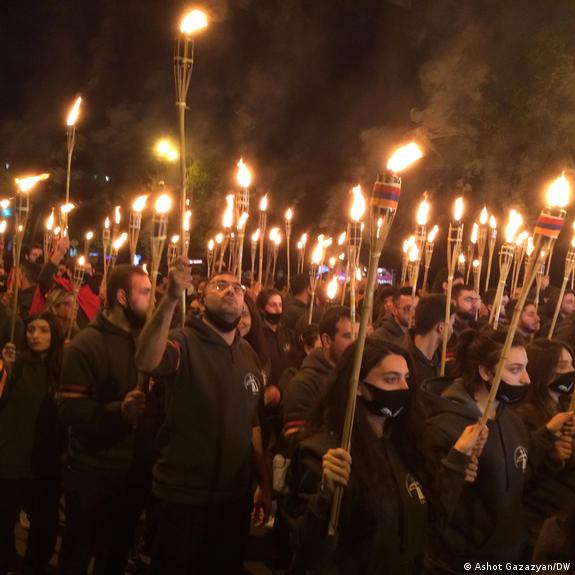
Echmiadzin and the diaspora circles connected with it remain one of the important channels for mobilizing revanchist rhetoric. This interwoven network of influence gave the radicals the opportunity to dictate the agenda to Yerevan for decades. For them, Armenia was not a place to live with its socio-economic problems, but a springboard for satisfying their political ambitions.
The Armenian diaspora against the "real Armenia"?
In the context of the rejection of the peace agenda by revanchist circles, the recent reaction to Armenian Prime Minister Nikol Pashinyan's meeting with students — members of the All-Armenian Student Association in New York — is telling. Pashinyan's desire to promote the concept of the "real Armenia" — a state within its internationally recognized borders, rather than within the borders of mythical phantoms — provoked a sharp reaction.
The chairman of the so-called All-Armenian Council for the Defense of the Armenian Church, Harutyun Agha-Sarkisyan, accused Pashinyan of pursuing a "dangerous line of division" within the youth, which "threatens to destroy pan-Armenian unity from within."
In fact, behind the rhetoric of "unity" lies a deep conflict — over who exactly has the right to shape the political views of the younger generation of the diaspora. The new model of relations with communities abroad being promoted by Yerevan seeks to destroy the familiar scheme. "Armenia is not a mentor of the diaspora, it should not be one and cannot be one. And the diaspora cannot be a mentor of Armenia," Pashinyan stated, thereby destroying the illusion that lobbyists abroad have the right to sacrifice the security of Armenia's citizens for the sake of their own ideological dogmas.
Moreover, official Yerevan directly points to the flip side of this process: "It seems to us that the diaspora is a means of Armenia's influence in that country, but the reverse is also true. The diaspora becomes a means of that country's influence on Armenia."
Protection from foreign voices
The understanding that the radically minded diaspora is, for the most part, an integral part of the revanchist forces compelled the Armenian authorities to make amendments to the electoral legislation. On July 3, the Armenian parliament approved changes depriving citizens who have long resided outside the country of the right to vote. Sixty-three deputies of the ruling faction voted for the changes to the law; the parliamentary opposition boycotted the session. Under the new rules, only those citizens who had permanently resided in the republic 48 days before the elections — that is, who had been in the country for at least 366 days out of the last two years — will be able to vote in nationwide elections and referendums.
One of the authorities' arguments was the need to prevent organized influence from abroad. Ahead of the elections, there were reports of a possible mass arrival of diaspora representatives in Armenia. Commenting on the adopted restrictions, then-deputy speaker and now parliament speaker Ruben Rubinyan stated that the goal was to insure the country "against a situation where electoral bribes would be handed out en masse abroad and elections in Armenia would be illegally influenced."
Confirmation of these fears was not long in coming. The Anti-Corruption Committee did indeed report on June 3 an investigation into the alleged bribery of hundreds of Armenian citizens living in Russia in exchange for their votes. The investigation revealed, in particular, that flights were organized through controlled bloggers for citizens holding Armenian passports.
Old puppets on a new stage
These days in Yerevan, representatives of the "parliament" of the liquidated separatist regime and the "Hai Dat" of the ARF "Dashnaktsutyun" held a new meeting with an old agenda — radical revanchist narratives about "captives," the "right of return," "cultural heritage" and "promoting the Artsakh issue in the world."
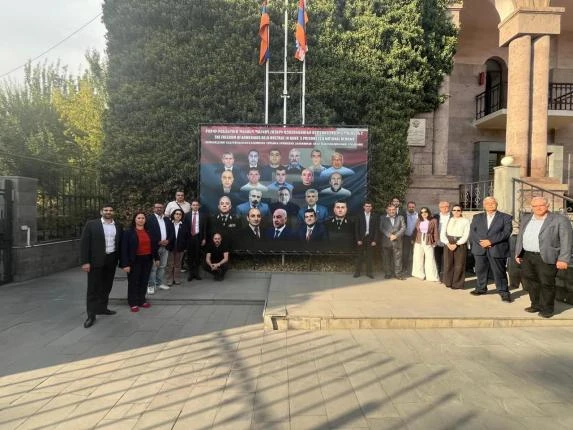
The inability to offer a constructive agenda forces revanchist circles to frantically regroup the pieces on the board. Another vivid example is the situation around the Union of Armenians of Russia. The head of the organization, Ara Abramyan, who has led it since 2000, regularly distinguished himself with revanchist appeals. Nevertheless, according to Armenian media reports, the replacement of Abramyan is now being actively discussed. The most likely candidate is named as Viktor Soghomonyan, the former press secretary of former Armenian President Robert Kocharyan. The possible change of leader while maintaining the previous political framework shows the main thing — this is not so much about personalities as about the reproduction of a well-known political tradition based on an ideology of aggression and intolerance.
Similar processes are taking place in the Armenian Church as well, which, instead of preaching peace, is turning into a headquarters of ideological resistance to any movement toward a final peace in the region.
***
Revanchism is no longer a dispute about the past; it is a political model that requires the constant "presence of an enemy," a return to "losses" and a refusal to accept the new reality.
If they want to continue living by this logic in Armenia, well, that is their choice.
Azerbaijan has stated its position with utmost clarity — peace, stability, development.
Armenian society will have to deal with its own political ghosts by itself.