Trump's Venezuelan gambit: Redrawing the world's oil map
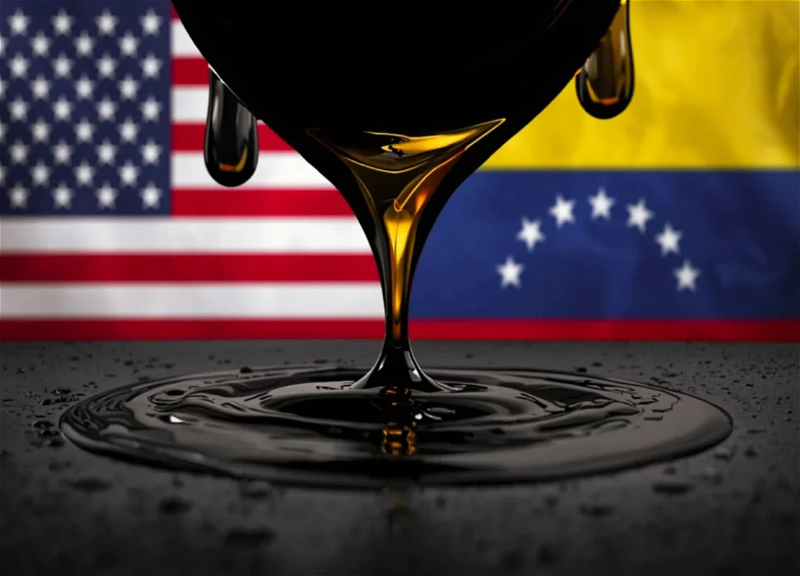
The statement by U.S. President Donald Trump about the conclusion of a large-scale agreement with Venezuela has already been dubbed "the biggest oil deal in world history."
The document provides for the transfer to American corporations and financial institutions of control over the development of 17 strategic fields with proven reserves exceeding 65 billion barrels. Amid the current international instability and the conflicts surrounding Ukraine and Iran, this step could radically transform the architecture of the global energy market, reshaping the customary balance of power.
The agreement, formalized as a result of negotiations between U.S. Secretary of State Marco Rubio and Secretary of Defense Pete Hegseth and Delcy Rodríguez, authorized by the President of Venezuela, with the participation of private sector representatives, is declared to be fully autonomous for the U.S. budget — without the use of taxpayer funds. In return, Washington gains control over resources that more than twice exceed the United States' own national reserves, creating a long-term basis for restraining gasoline prices domestically.
Control beyond borders and the OPEC factor
Venezuela holds first place in terms of proven resources — about 303 billion barrels. The transfer of 65 billion barrels to U.S. control means that Washington effectively gains levers of management over 21–22% of all Venezuelan subsoil resources. In the context of global confrontation, gaining access to such a raw materials base outside its own territory gives the United States an unprecedented instrument of influence on the world oil market.
In effect, the U.S. is creating a powerful counterweight to the pricing policy of OPEC+. The dependence of world prices on carte blanche decisions to limit production is called into question: direct access to Latin American oil provides Washington with instruments for smoothing out artificial deficits.
Geopolitical displacement: a blow to the interests of Beijing and Moscow
Over the past two decades, Venezuela has remained a crucial outpost of Chinese and Russian influence in Latin America. Beijing has invested tens of billions of dollars in infrastructure and in loans secured by oil, while Moscow provided military-political and technological support to the authorities in Caracas.
The interception of control over the country's key asset by American state structures and private business effectively means the dismantling of the Russian-Chinese presence in Venezuela's fuel and energy complex:
China loses a strategic channel for raw material supplies that is not controlled by straits under the supervision of the U.S. Navy;
Russia loses a key partner in the Western Hemisphere, through which alternative geopolitical influence was transmitted.
In the long term, the reorientation of Caracas will lead to tectonic shifts in geopolitics. Thus, for Beijing and Moscow, the loss of the Venezuelan platform will become a sensitive change in the balance of influence in the Western Hemisphere.
Infrastructure barrier: investments and the time horizon
Despite the global prospects, the current state of Venezuela's fuel and energy complex dictates more restrained assessments in the short term. As of today, Venezuela produces only about 1.2 million barrels per day — an insignificant volume on the scale of world demand, which in 2025 amounted to about 105 million barrels per day.

Commenting on the situation for 1news.az, the head of the Center for Oil Studies, energy expert Ilham Shaban emphasized:
"We are talking about the development of 17 strategic fields, and the projected investments may exceed $100 billion. At the same time, the specific legal and corporate structure of the agreement has not yet been fully disclosed... The development of the fields takes time, especially considering that Venezuelan infrastructure (oil pipelines, tank farms, export terminals) needs to be restored. Ensuring stable production from the new sites will require a considerable period, so in the next couple of years the impact of this project on the world market is unlikely to be noticeable."
Thus, in order to implement the declared plans, a large-scale reconstruction of the entire chain is necessary: from oil pipelines to export terminals. The required volume of capital investment, exceeding $100 billion, and the need to restore infrastructure mean that in the next two years the deal will not exert any tangible physical pressure on the global balance of supply and demand, the expert believes.
Market consequences
A fundamental shift, in the expert's opinion, will occur when American companies manage to restore capacity and increase daily production in Venezuela from the current 1.2 million to 2.5–3 million barrels per day.
"An inflow of an additional 1.3–1.8 million barrels per day will create sustained downward pressure on global quotations. However, an important qualitative specificity of Venezuelan raw material comes into play here: it is predominantly heavy and requires an appropriate technological configuration of refineries. The entry of these volumes will not simply add 'universal barrels' to world exchanges, but will create targeted supply for specialized processing plants. First of all, this concerns capacities on the U.S. Gulf Coast. The appearance of Venezuelan heavy oil will make it possible to cover the needs of American refineries, reducing the cost of the raw material basket and of refining. In this connection, the key economic effect of the agreement — a reduction in the cost of fuel — will primarily manifest itself in the North American market, strengthening the domestic economy of the United States and restructuring the customary flows of heavy oil throughout the world," Shaban noted.
Overall, the agreement on Venezuelan oil is not just a commercial deal or a local diplomatic success. It is a large-scale step toward reformatting the global energy architecture. By transferring the resources of Caracas under its control, the U.S. solves three tasks at once: it undermines OPEC's monopoly, displaces key geopolitical rivals — China and Russia — from the region, and ensures its own economic stability. The only question is how stable this construction will prove to be in practical implementation in the unstable Latin American region.