A thief must be jailed, and an executioner all the more so
History knows many examples of how states and entire societies attempt to rethink their past.
At times this process begins with legal procedures, when national law enforcement agencies turn to the actions of the country's former leaders. Court offices fill up with volumes of criminal cases, and loud charges are heard about the appropriation of state property, bribery, money laundering, and abuse of power. From the outside, this may seem like a healthy mechanism of self-purification: the law is the same for everyone, and former state leaders find themselves in the dock. However, a deep tragedy arises when such "justice" turns into a facade. When the legal system scrupulously tallies up financial machinations and alienated land plots, but deliberately turns a blind eye to rivers of spilled blood, destroyed cities, and the broken destinies of hundreds of thousands of people.
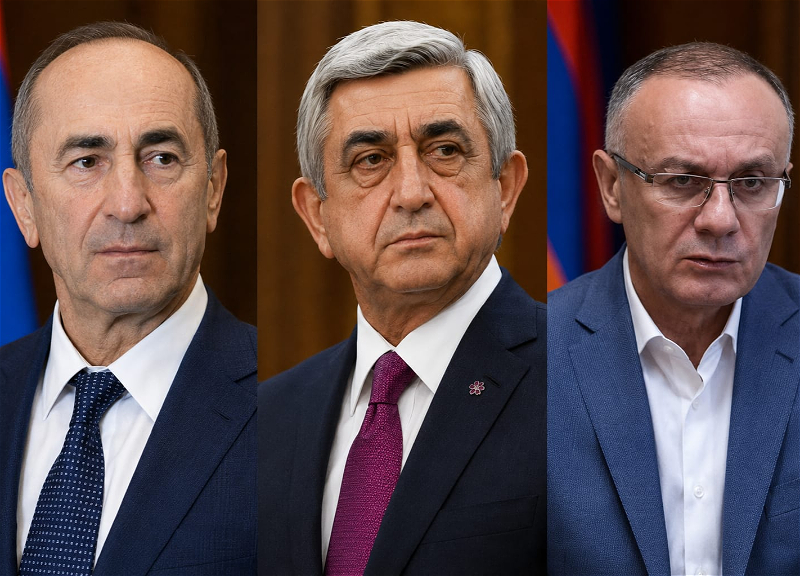
It is precisely this picture that is observed today in Yerevan. Armenia's anti-corruption agencies and courts are bringing charges against the former leadership — Robert Kocharyan, Serzh Sargsyan, and their closest circle. Questions of the legality of privatization and financial flows have become the main topic of internal proceedings. But the most important thing is missing from this carefully calibrated judicial process: responsibility for the grave war crimes and crimes against humanity committed by these same individuals during the thirty-year occupation of Azerbaijani territories. While punishing economic abuses, Armenia's state machine passes over in silence crimes that have no statute of limitations. Such an approach has nothing in common with a genuine restoration of justice — it is merely an attempt to write off a human tragedy as standard financial schemes.
Criminals at large and the heroism of perverted meanings: Yerevan's distorted reality
In a state governed by the rule of law, individuals involved in war crimes must become the object of inevitable criminal prosecution. In Armenian reality, former field commanders and ideologues of military aggression have enjoyed impunity for decades, and some remain at large even today. Seyran Ohanyan, Manvel Yeghiazaryan, and a whole number of other figures of the First Karabakh War, whose names are directly linked to the tragic events on Azerbaijan's formerly occupied lands, remain free. No full-fledged state investigations are being conducted into their role in the killing of civilians, the torture of prisoners, and the destruction of an entire region's infrastructure.
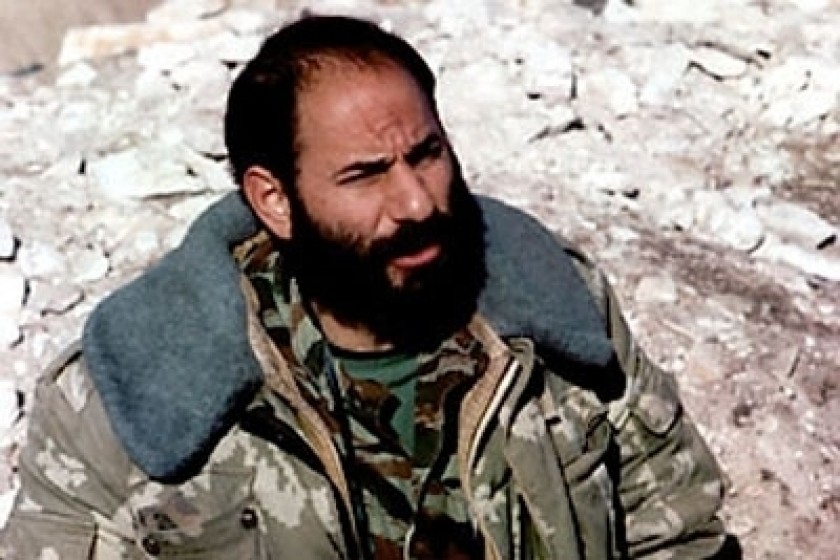
An even more alarming symptom of institutional distortion is the heroization of those who committed terrorist acts. The most striking example is Monte Melkonian, an internationally recognized terrorist whose hands are stained with the blood of both Azerbaijani civilians and citizens of other states. Instead of subjecting his legacy to unconditional condemnation, Armenian state structures and public institutions have turned him into a national symbol. Feature and documentary films are made about him with state support, educational institutions are named after him, and his biography is presented to the rising generation as a model of patriotism.
Read on the topic:
Cinema in the service of revanchism: who in Armenia is trying to "revive" a terrorist and war criminal, and why?
The facts of these individuals' participation in the gravest crimes of the First Karabakh War are not merely hushed up — they are being rewritten. Azerbaijan has repeatedly provided the international community with exhaustive evidence: photo and video materials, witness testimonies, identification records, and expert conclusions. Footage of mass graves, evidence of the destruction of Khojaly, proof of torture in Karabakh prisons — all of this forms an enormous body of legal facts. However, official Yerevan prefers to ignore this layer of its history, creating a dangerous precedent: a criminal becomes a hero if his victims were representatives of another people.
The Balkan precedents and the West's deafness: double standards of international justice
A comparison of the international reaction to the tragedies of the late twentieth century clearly demonstrates the deep crisis of the principle of impartiality in world politics. When Yugoslavia was collapsing and the Balkan region plunged into the abyss of bloody wars, the UN Security Council promptly established the International Criminal Tribunal for the former Yugoslavia (ICTY) in The Hague. The world community showed firmness: Slobodan Milošević, Ratko Mladić, Milan Martić, Milan Babić, and dozens of other political and military figures were held accountable. They were sought all over the world, arrested, put on trial, and sent behind bars for lengthy terms. In the case of the Balkans, international justice demonstrated the ability to go all the way, making no allowances for political expediency.
With regard to Azerbaijan, that very same international mechanism failed. The thirty-year occupation of twenty percent of the country's territory, the Khojaly genocide, the total destruction of Aghdam, Fuzuli, Jabrayil, Kalbajar, and other cities, ethnic cleansing, the expulsion of almost a million people — none of this led to the creation of an international tribunal under the auspices of the UN. Western structures, which so loudly proclaim the rule of law, limited themselves to formal resolutions, and over time even began calling on Azerbaijan to "forget the past" for the sake of some abstract peace agenda.
This is not merely a difference of approaches — it is a manifestation of deep and cynical double standards. Had the world community reacted harshly and uncompromisingly in 1992 to the genocide in Khojaly, had the organizers of that massacre found themselves in the dock, history might have taken a different path. The impunity demonstrated in Karabakh untied the hands of criminals in other parts of the planet. The well-known chain of tragedies — from silence over Khojaly to the genocide in Srebrenica in 1994 and the subsequent catastrophe in Rwanda — has its origin precisely where international law first gave way to political permissiveness.
A criminal has no nation, religion, or "good intentions." There are no "good" or "bad" war criminals. Dividing executioners according to the principle of their geopolitical usefulness destroys the very foundation of international law. Serbia today may debate the reburial of Mladić on its territory, but the fact remains: he was convicted by an international court. In the case of the Armenian criminals, however, international players, instead of demanding a tribunal, turned a blind eye to what was happening, and today they even go so far as to call on Baku to release the arrested leaders of the former separatist regime created on the occupied territories of Azerbaijan.
Baku's own Nuremberg and the dangerous syndrome of "historical amnesia"
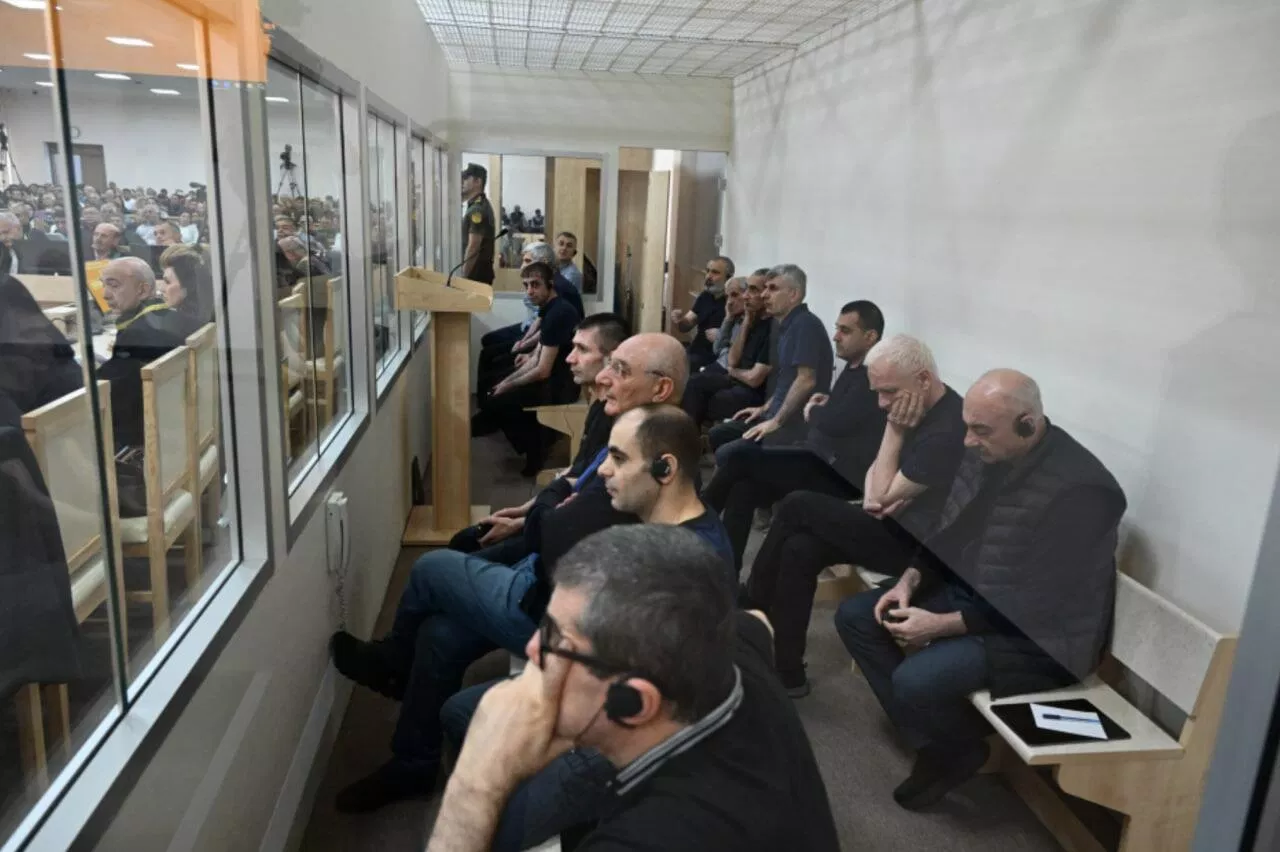
Having failed to see international institutions fulfill their direct duty, Azerbaijan was forced to take upon itself the functions of restoring legal justice. The events of recent years and the open trials of the former leaders of the puppet separatist regime in Baku have become, in essence, a national Nuremberg trial. Azerbaijani justice, strictly within the framework of international conventions and its own criminal legislation, conducted investigations, granting the defendants all procedural rights, legal defense, and public hearings.
In fact, Baku did what the international system should have done. However, instead of well-deserved approval, the Azerbaijani state faced pressure from a number of external forces. From certain European and American offices came calls to "amnesty" and "release" those who gave orders to shell the residential districts of Ganja, Barda, and Mingachevir with ballistic missiles in 2020, who organized the torture of prisoners and gave orders to destroy historical cultural heritage.
In parallel, a distorted narrative is being imposed in international diplomatic rhetoric. The impression is created that the conflict arose out of nowhere only in 2020. The political mainstream of some countries prefers "not to notice" thirty years of occupation. They are trying to erase from history the facts:
The existence of nearly a million Azerbaijani refugees and internally displaced persons, deprived of their homes for three decades;
The total plundering and wiping off the face of the earth of hundreds of populated areas;
The desecration and destruction of dozens of mosques, cultural monuments, and historical cemeteries;
The mass mining of territories, because of which civilians continue to die and be maimed even today.
For Azerbaijan, such "historical amnesia" is categorically unacceptable. It is impossible to build a firm and long-term peace by crossing out the scale of the evil committed and pretending that thirty years of an entire people's suffering simply did not happen.
The real path to peace: Yerevan's legal obligation
Genuine reconciliation between peoples is never achieved by concealing crimes. Azerbaijan, within its jurisdiction, has held accountable those criminals whom its justice system was able to reach. However, a significant portion of the individuals guilty of the deaths of thousands of civilians and soldiers remain beyond the reach of Azerbaijani courts — they are hiding on the territory of Armenia.
If Armenia's current leadership is truly sincere in its statements about commitment to a peace agenda, it must prove this not in words but in deeds. Peace is not simply the signing of a bilateral document for the cameras; it is the cleansing of one's own society of the legacy of war criminals. Yerevan is obliged to raise these cases within the country, conduct an honest investigation, and try Kocharyan, Sargsyan, Ohanyan, and their accomplices not only for financial machinations but also for crimes against humanity.
For this, Armenia has not only moral but also exhaustive legal grounds. First, Armenia is a state party to the 1949 Geneva Conventions and their Additional Protocols. According to these international acts, the country is obliged to search for, bring to trial, or extradite persons who committed or ordered the commission of grave breaches of the conventions (which include willful killings, torture, and the wanton and large-scale destruction of property not justified by military necessity), regardless of their citizenship.
Second, the corresponding mechanism is enshrined in Armenia's own national legislation. In particular, Article 14 of the Criminal Code of the Republic of Armenia directly establishes extraterritorial responsibility for grave and international crimes:
"A citizen of the Republic of Armenia, as well as a stateless person permanently residing in the Republic of Armenia, shall be subject to criminal liability under this Code for a crime committed outside the territory of the Republic of Armenia, if the act committed by him is recognized as a crime by the legislation of the place of its commission, or is not recognized as a crime by the legislation of the place of its commission but is a grave or especially grave crime, or is a crime provided for by an international treaty to which the Republic of Armenia is a party, and if this person was not convicted in a foreign state."
This legal norm provides Armenian jurisdiction with absolutely all the necessary instruments. The crimes committed by Kocharyan, Sargsyan, and Ohanyan on the territory of Azerbaijan are especially grave under both Azerbaijani and international law. They have no statute of limitations.
The attempt to try former leaders exclusively for economic corruption is an evasion of responsibility before history. A lasting peace in the South Caucasus cannot be built on a foundation of silence about genocide and war crimes. True reconciliation will come only when Yerevan realizes: criminals must sit in prison not for what they stole from the Armenian budget, but for taking the lives of thousands of innocent people. Only a full, honest, and uncompromising trial of the executioners of Karabakh will become the point from which a genuinely new page in the region can begin.