It's time for Brussels to pay the bills
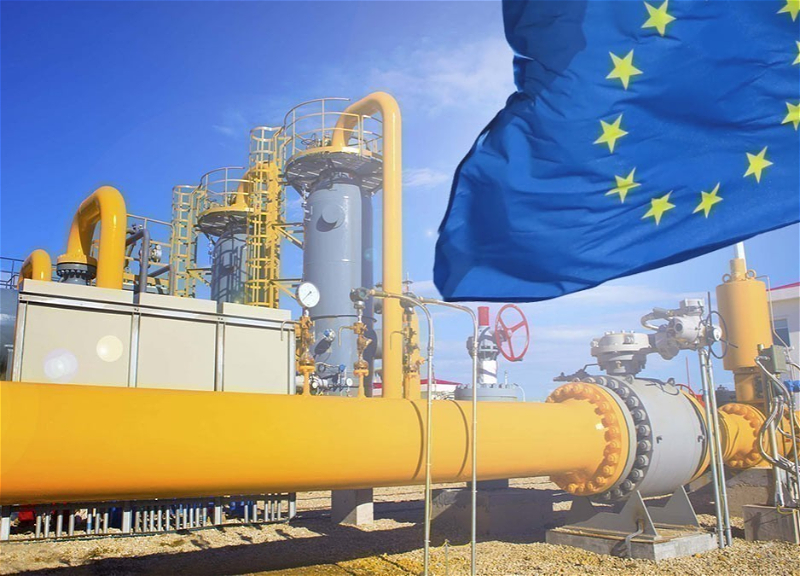
The protracted energy crisis triggered by the Russian-Ukrainian conflict has given the Brussels bureaucracy nothing more than the illusion of its own effectiveness.
The European Union's official reports pompously proclaim the main "victory" — the reduction of the share of Russian pipeline gas from a pre-crisis 45% to a modest 12%. However, behind this statistical veil lies the systemic failure of the European diversification strategy. Europe has not gained energy independence at all; it has merely traded one monopolistic dependence for another, replacing the eastern pipeline resource with liquefied natural gas from the United States. For a bloc claiming the status of a sovereign global player, such a swap means only one thing — a critical loss of room for geopolitical maneuver.
Expert Wesley Alexander Hill points directly to this dangerous shortsightedness of Brussels in his publication for Forbes. In his assessment, the European approach to finding alternative suppliers lacks systematic thinking and financial consistency:
"Time and again, Brussels declares ambitious targets and concludes partnerships while completely ignoring key investments and counting on the energy transition to happen all by itself, served up on a silver platter. The EU's attempt to simultaneously abandon Russian energy resources, restrict cheap Chinese 'green' imports, wind down nuclear power, and at the same time expect renewable sources to instantly close any gaps inevitably threatens the most severe economic consequences."
Changing the signboard instead of diversification: the syndrome of unfinished business
The main paradox of European policy is that the Old World is by no means locked in a dead end of "insurmountable circumstances." All alternative routes and reliable partners are right under the noses of European officials. However, as the Forbes author rightly notes, the key obstacle remains Brussels' systemic problem — a pathological unwillingness to back up its declarations with concrete checks and to carry strategic decisions through to actual construction.
European energy policy in recent years increasingly resembles a Byzantine parody: lavish ceremonies for signing memorandums are followed by complete silence as soon as it comes to working with contractors and financing. EU officials regularly announce ambitious plans, as if the energy transition and new physical supplies were capable of materializing on their own without real investment.
The most striking example of such institutional paralysis is the situation with the Southern Gas Corridor. In 2022, the European Commission pompously signed a memorandum of understanding with Azerbaijan, promising to double gas supplies along this route — from 10 to 20 billion cubic meters per year by 2027. Four years have passed. By the beginning of 2026, throughput had barely exceeded 11.5 billion cubic meters. The gap between the loud promises of EU officials and the dry figures of actual exports is enormous.
And the most paradoxical thing is the price of the issue. Specialists calculated long ago: to remove the technological constraints on the TANAP and TAP pipelines, it is enough to install just eight additional compressor stations. The cost of this project is about 400 million dollars. By the standards of the global energy market, this is literally pennies. With financing in place, the work takes one to one and a half years.
For comparison: after 2022, Europe spent billions of dollars on the emergency construction of costly LNG terminals. But when it became necessary to allocate a comparatively modest sum for the expansion of an already completed, functioning, overland artery, Brussels got bogged down in bureaucratic routine. European policy turned out to be not a strategic plan, but a set of spontaneous and chaotic reactions.
Why Azerbaijan remains the main guarantor of Europe's energy independence
Amid global geopolitical turbulence and the redrawing of world markets, Azerbaijan has definitively established itself as a fundamental pillar of the European energy architecture. The geography of the country's pipeline exports already covers sixteen states — from the South Caucasus and the Balkans to Central and Southern Europe — and as of this year the gas arteries have reached such premium markets as Germany and Austria. The 65% growth in supplies to the EU since 2022 has clearly shown that Baku not only responds promptly to the West's crisis demands, but also possesses real potential to close the continent's energy deficit over the long term.
The indispensability of the Azerbaijani vector for Europe rests on a unique synergy of several key factors at once. The commissioning of the deepwater formations of the Azeri-Chirag-Gunashli field and the steady increase in production at existing sites create a powerful resource reserve capable of sustaining a stable export curve for years. In parallel, Baku is demonstrating an extremely pragmatic approach to decarbonization: the large-scale commissioning of renewable energy sources — including hydroelectric power plants with a capacity of 340 MW already launched in Karabakh and solar generation of another 340 MW in preparation — will make it possible to produce up to 8 GW of "green" energy by 2032. This saves billions of cubic meters of natural gas that were previously burned at domestic thermal power plants and directly frees them up for export to European consumers. Moreover, the state's strategy of going beyond exclusively hydrocarbon raw materials is turning Azerbaijan into a potential direct supplier of clean electricity to the EU, while maintaining flexibility and developing new regions of demand.

However, in order for Baku to fully realize the role of a guaranteed energy shield for the Old World, Brussels needs to move from declarations to practical pragmatism. Despite the high interest of European consumers, the expansion of infrastructure runs up against financial and regulatory barriers. The EU's climate policy and rigid "green agenda" have substantially limited the ability of European banks to finance projects related to fossil fuels, even when it comes to the continent's basic energy security.
President of Azerbaijan Ilham Aliyev points directly to these critical factors.
"Thus, the expansion of the existing transport infrastructure is necessary, but the stumbling block remains the EU's 'green agenda.' European banks are also not showing readiness to finance projects related to fossil fuels. Hence the question arises: where should the funds be raised to increase the throughput capacity of the pipelines?
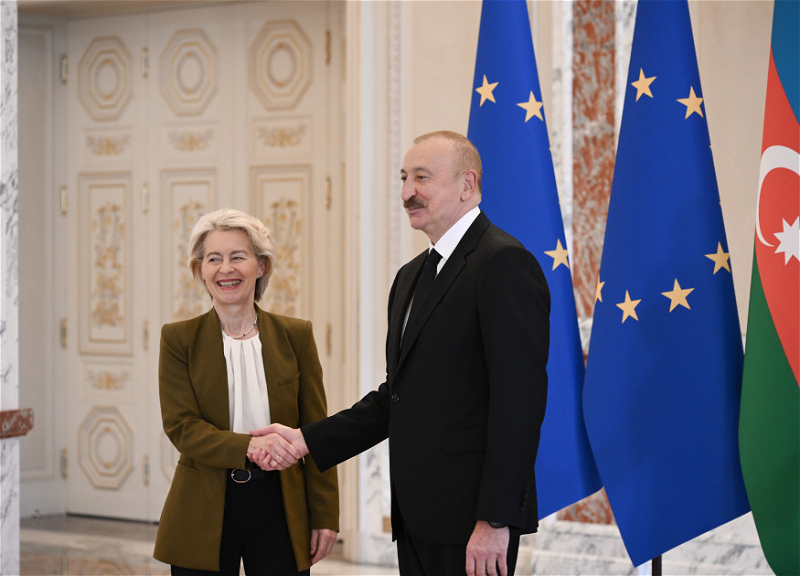
And one more question — perhaps even more important — is long-term contracts. This is exactly what we discussed with Mrs. Ursula von der Leyen: we need long-term contracts, because a substantial increase in production requires large-scale investments. And if at some point they tell us: 'Thank you, goodbye, we no longer need your gas' — what are we to do then? These are the two key factors," Ilham Aliyev said at the IV Shusha Global Media Forum.
Without lifting banking restrictions and concluding guaranteed multi-year agreements ensuring the return on multibillion-dollar investments, increasing export capacity remains physically and economically impossible.
If Brussels overcomes its bureaucratic dogmatism, it is precisely the partnership with Azerbaijan that will become a reliable bridge for Europe to genuine and sovereign energy security.
Ideological perfectionism versus geopolitical reality
It would seem that Europe has before it an ideal ally for strengthening European sovereignty. However, instead of developing a strategic alliance, Brussels regularly provokes "political" disputes, pushing Baku away. While the Eurobureaucrats close their eyes and ears, postponing investments "until better times," they are also putting their own industry at risk. Europe's intellectual and technological sector requires more and more stable electricity — especially against the backdrop of the rapid growth of data centers and artificial intelligence systems. Replacing baseload gas generation with renewable sources alone is physically not yet possible. Against this background, Brussels' excessive value-based arrogance looks not merely undiplomatic, but economically suicidal.
Why does the European bureaucracy stall where speed and pragmatism are required? The answer lies in the excessive ideologism with which Brussels substitutes for real foreign policy. Striving to look like an absolute moral arbiter, the European Union puts forward unrealistic demands on partners on whom it itself directly depends.
A contrast can also be observed today when comparing the approaches of the United States and the EU to the South Caucasus. President of Azerbaijan Ilham Aliyev and Prime Minister of Armenia Nikol Pashinyan managed to overcome colossal historical obstacles and sign a peace commitment at the White House. This agreement not only held up, but also spurred American investment in the region, laying the foundation for new logistics chains. Washington demonstrated classic pragmatism: it helped to lock in peace and immediately moved on to economically consolidating the result.
The author of the Forbes article also draws direct attention to this striking contrast, emphasizing that at the same time Brussels is burning its own bridges. Instead of picking up the momentum and backing the peace process with European money for infrastructure, European officials are sliding into emotional squabbles. The undiplomatic reaction of European Parliament President Roberta Metsola to President Ilham Aliyev's dissatisfaction with Europe's inaction during the summit in Yerevan demonstrates how Brussels is destroying its own energy policy. While Azerbaijan, the United States, and Armenia are acting constructively toward regional peace and cooperation, the attempts of European leaders to strike the pose of the offended party instead of making real investments are definitively undermining trust in the EU as a reliable partner.
The main conclusion for Europe: Baku as a test of pragmatism
The European energy crisis is not the result of an "insurmountable external force," but a direct consequence of chronic underfunding of infrastructure, the absence of strategic discipline, and Brussels' habit of substituting loud declarations for real action. The European Union managed to promptly bring down the acute phase of the deficit at the expense of ultra-expensive American LNG, but it completely failed in the work of turning alternative written agreements into physical export capacity.
If the European Union wants to preserve the remnants of its industrial competitiveness and retain the status of a sovereign geopolitical player, Brussels will have to urgently abandon emotional diplomacy and value-based moralizing.
In this new reality, it is precisely Azerbaijan that acts not merely as one of the possible suppliers, but as the main test object for the maturity and capability of European foreign policy. Baku is offering the EU a ready-made, pragmatic, and proven solution — from the time-tested overland arteries of the Southern Gas Corridor to the large-scale export of the "green" electricity of the future. But this potential cannot be unlocked amid bureaucratic paralysis.
Reserves and reliable arteries must be backed by money and action today — before the next crisis arrives and the taps are shut off once again.