"Filizchay," "Soyudlu," "Nasirvaz": Azerbaijan's gold potential in figures and projects
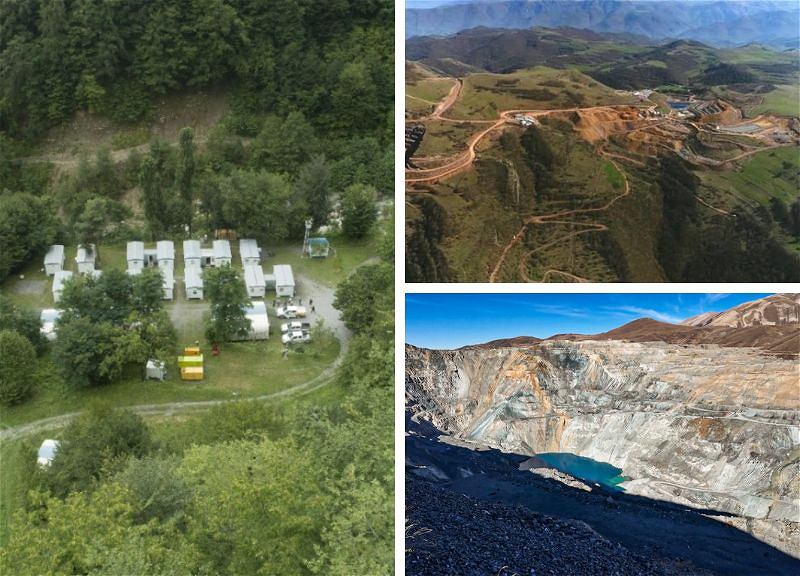
Azerbaijan's mineral resources could noticeably change the scale of its mining industry in the coming years.
This concerns not only gold — projects involving copper, zinc, lead, and iron ore are being developed simultaneously within the resource base.
These are the main parameters of the State Program for the Development of the Mining (Metal Ore) and Metallurgical Industry for 2027–2030, on which a meeting chaired by Azerbaijani President Ilham Aliyev was held on September 22.
At its center is not only the development of existing capacities, but also the launch of new projects capable of substantially expanding the country's mineral resource and production base.
Thus, AzerGold's four strategic projects are estimated at approximately 3.63 billion manats in investment, with about 90% of this amount planned to be provided from sources other than the state budget. By 2030, the company has set itself the goal of achieving an annual turnover of 1 billion manats.
From 179,000 to 1.02 million ounces
Over ten years, AzerGold has gone from a company specializing in gold mining to a structure combining geological exploration, the mining and processing of ferrous and non-ferrous metal ores, the production of industrial explosives, and work with non-metallic deposits. AzerGold was established in 2015.
Already in 2016, the company began operations at the "Chovdar" deposit in Dashkesan, and in April 2017 it exported its first gold and silver bars. "Chovdar's" own indicators have changed substantially during this time. Initially, recoverable gold reserves were estimated at 179,000 ounces, and the end of operations was expected in 2021. Geological exploration and optimization made it possible to increase reserves to 1.02 million ounces and to extend the deposit's operating life at least until 2032.
The processing of ore from the "Merekh," "Aghyokhush," "Tulallar," and "Chovdar" deposits was consolidated at the Chovdar Integrated Regional Processing Site. In 2024, using AzerGold's own funds and financing raised from local banks, a tank leaching plant was built and brought to full capacity. This made it possible to begin processing sulfide ores from "Chovdar."

Today, two processing technologies are used at the deposit, and annual output amounts to about 70,000 ounces of gold. The gold and silver alloys obtained are mainly exported, with part sold on the domestic market.
The company's economic indicators have also changed. According to data presented at the meeting by AzerGold Chairman of the Board Zakir Ibrahimov, gold production has more than doubled compared with 2017, and revenues have grown 3.5-fold. In the revenue structure, 92% comes from exports and 8% from the domestic market. The company's earnings before interest on debt, taxes, and depreciation (EBITDA) increased from 46 million manats in 2017 to 260 million manats in 2025. The average EBITDA margin exceeded 50%. Tax payments over this period grew 15-fold. About 42 million manats of the profit received in 2025 is planned to be paid to the state as dividends.
"Our main goal for the coming period is to turn AzerGold into a state company with an annual turnover of 1 billion manats by 2030," the head of the company said.
The next stage
It is connected no longer only with the operation of existing facilities. AzerGold is conducting large-scale geological exploration using hyperspectral satellite imaging, aeromagnetic and electrical prospecting surveys.
At the preliminary prospecting and evaluation stage, the studies cover 15,000 square kilometers. The work is planned to be completed in 2027, after which a map of the country's mineral resource potential, including the territories liberated from occupation, is to be prepared.
Another ten promising gold-copper deposits are at the exploration and evaluation stage. At the next stage, economically feasible reserves of five deposits are being determined. At the copper-gold deposits "Goydag" and "Bashkend" in Nakhchivan, as well as at the "Mazymchay" copper deposit in Balaken, preliminary resources have already been determined — a total of about 1.5 million ounces in gold equivalent.
In parallel, reserves of the "Nasirvaz" gold ore deposit in Nakhchivan and "Tutkhun" in Kalbajar are being calculated.
Three large facilities are at the stage of detailed exploration and feasibility study. At "Soyudlu," about 1.3 million ounces of gold have been identified, at "Ortakend" — 246,000 ounces, and at "Filizchay" — 4 million ounces in gold equivalent.
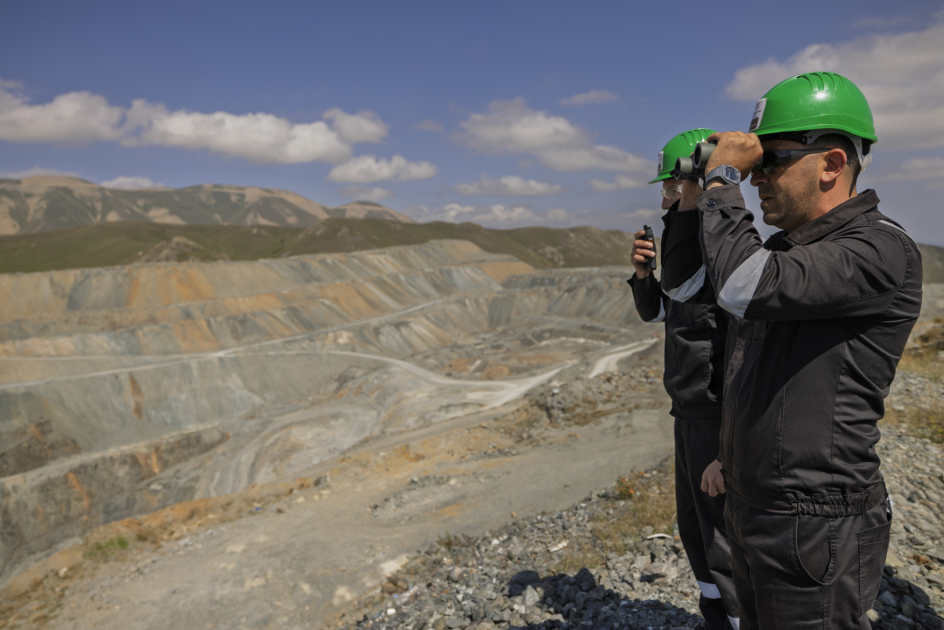
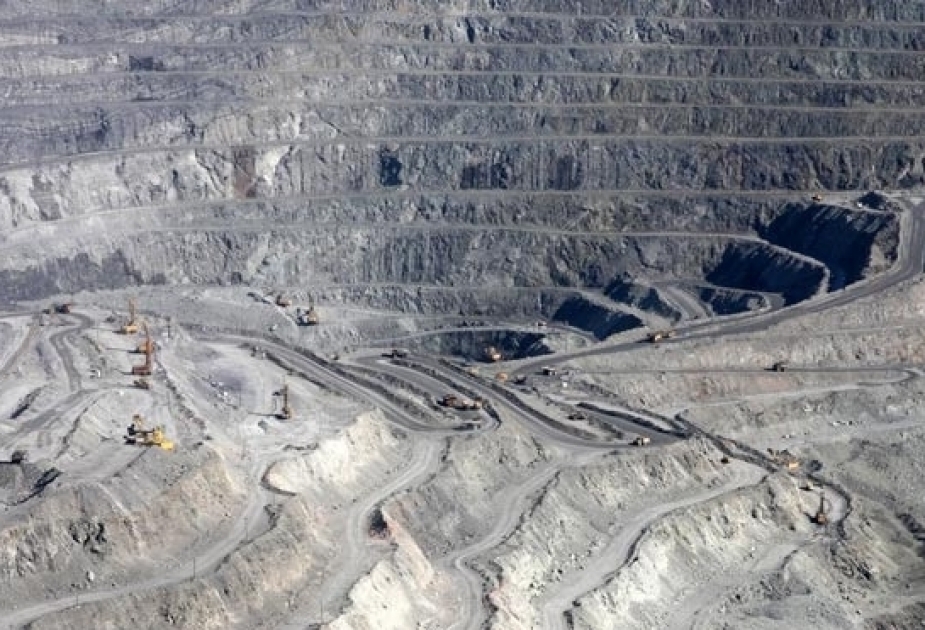
At the same time, work has already begun at the "Soyudlu" deposit — one of the largest gold ore facilities in the Caucasus. Stripping operations are under way, and the start of mining is scheduled for 2028.
Four projects worth 3.63 billion manats
It is precisely these resources that are to become the basis of the four strategic projects of the State Program.
The first is "Soyudlu." The project's gold reserves are estimated at 1.03 million ounces, and the economic value at current gold prices at 7.5 billion manats. The required volume of investment is 425 million manats. The start of mining is scheduled for 2028.
The second project is the "Ortakend" gold ore deposit in Nakhchivan. Here, reserves amount to 246,000 ounces and the economic value to 1.8 billion manats. Investments are estimated at 255 million manats, and the start of mining is planned for 2029.
The third project, and the largest in terms of resource base, is the "Filizchay" polymetallic deposit. Its full capacity is to be reached by the end of 2031. Over 34 years of operation, it is planned to extract 363,000 tons of copper, 2.7 million tons of zinc, and 1 million tons of lead.
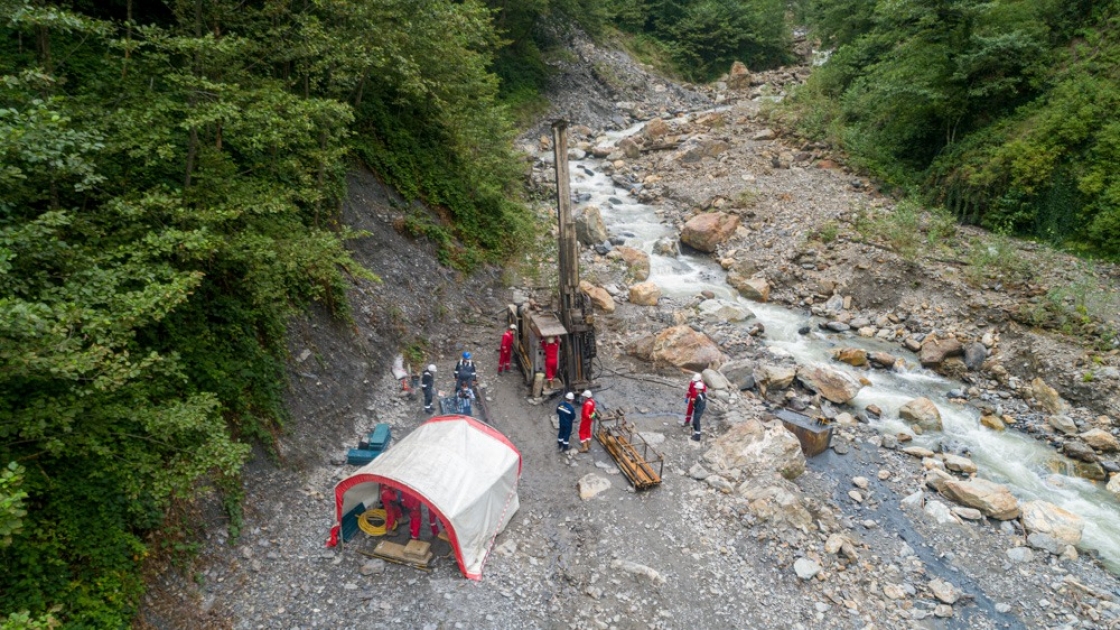
The project's economic value is estimated at 29.7 billion manats, and the necessary investment at approximately 1 billion manats. Financing is expected to be provided through AzerGold's internal revenues, borrowed funds, and investor participation.
The fourth project is the "Dashkesan" iron ore project. Its implementation is to begin in 2030. The project provides for the creation of capacity to produce 2 million tons of hot briquetted iron per year. Investments are estimated at 1.95 billion manats.
Thus, total investments in the four projects will amount to about 3.63 billion manats. The state budget will account for less than 10% of this amount.
Moreover, this concerns not only the extraction of raw materials. At "Filizchay," full-scale processing of copper, zinc, and lead is planned, and at "Soyudlu" — flotation processing of gold. "Dashkesan" is to create capacities for the production of hot briquetted iron, about 1.7 million tons of which may constitute export potential.
From extraction to the full chain
It is precisely the change in the structure of the industry that is one of the main results of the past ten years. Today AzerGold combines geological exploration, extraction, processing, exports, and domestic sales within a single system.
The company has also expanded its activities beyond its own deposits. Since 2024, AzerGold has represented the state's interests under the Production Sharing Agreement. Growth in indicators has also been recorded in this area.
In the first half of 2024, the output of Azerbaijan International Mining Company Limited in gold equivalent amounted to 5,300 ounces. In the first half of 2026, the figure reached 37,600 ounces — a 7.1-fold increase. The state's share of profit over the same period increased from 2.4 million to 37.6 million manats. Over the entire period of AzerGold's state representation, the state's share of profit has reached 77.5 million manats.
In 2026, a substantial role in the growth was played by the resumption of production at the "Demirli" copper-molybdenum deposit in the Aghdara district. The processing complex was reconstructed and put into operation in approximately one year.
At the same time, the structure of the company itself is changing. In addition to non-ferrous metals, AzerGold has entered the ferrous metallurgy sector through Dashkesan Demir Filiz LLC, and AzerBlast has begun the production and sale of industrial explosives. This year, the company also received the status of operator of non-metallic deposits.
"Thus, over 10 years, AzerGold has been transformed from a gold mining company into a diversified and integrated national mining company covering geological exploration, the extraction of ferrous and non-ferrous metal ores, the production of industrial explosives, and the non-metallic sector," Zakir Ibrahimov said.
What will change by 2030
The new state program effectively provides for the expansion of the resource and production base in four areas at once.
The first is gold: the commissioning of "Soyudlu" and "Ortakend" should add about 1.28 million ounces of reserves to production and increase export potential.
The second is ferrous metallurgy: "Dashkesan" is to ensure the output of 2 million tons of hot briquetted iron annually, of which about 1.7 million tons are intended for export.
The third is non-ferrous metals: "Filizchay" is to ensure the production of copper, zinc, and lead and to form a separate line in the country's export structure.
The fourth is related industries: the new projects create demand for processing, transport, services, industrial equipment, and other elements of the production chain.
Ultimately, this concerns a transition from individual extraction projects to a broader model in which the value of a resource is formed not only at the stage of its extraction.
For Azerbaijan, the key indicator of the coming years will be how quickly explored resources are converted into operating enterprises, products with higher added value, and export volumes.
That is precisely why the 2027–2030 horizon in the mining industry is measured not only in the number of tons and ounces. Planned for this period are 3.63 billion manats of investment, new capacities for gold, copper, zinc, lead, and iron, as well as the further expansion of geological exploration over a territory of 15,000 square kilometers. AzerGold's stated goals should show to what extent this resource potential is capable of being transformed into a sustainable non-oil industrial sector.