Suitcases of money and resolutions against Azerbaijan: the face of the European Parliament
The European Parliament positions itself as one of the key institutions of European democracy — a platform where issues of human rights, the rule of law, transparency, and the accountability of state institutions are discussed.
In recent years, these very topics have occupied a prominent place in the foreign policy activities of this European Union body, including with regard to the countries of the South Caucasus.
However, behind the loud declarations about democratic values, an uncomfortable question increasingly arises: how consistently does the European Parliament itself follow the principles whose observance it demands from others? In recent years, the European public has witnessed a whole series of corruption scandals involving members and former members of the European Parliament, suspicions of bribery, foreign influence, and attempts to purchase political loyalty.
Against this backdrop, the selectivity of the European Parliament's political activity attracts particular attention. While some states become the targets of harsh criticism and numerous resolutions, European structures demonstrate a considerably more benevolent approach toward others. This problem manifests itself especially clearly with regard to Azerbaijan and Armenia, where the European Parliament's position has for many years provoked a sharp reaction from Baku.
It is precisely the combination of corruption scandals within the European Parliament itself and its consistent anti-Azerbaijani political line that prompts a renewed examination of the question of how objective and impartial this institution is in its assessments.
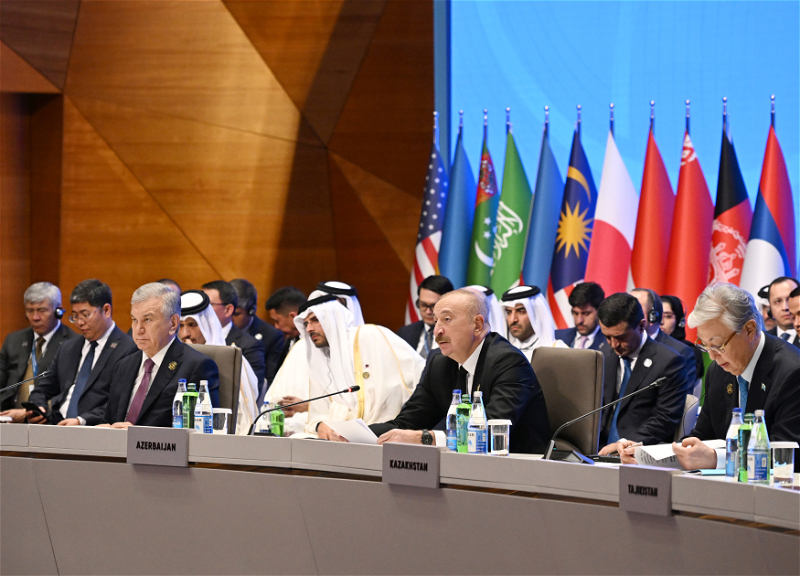
Azerbaijani President Ilham Aliyev sharply criticized the European Parliament, linking its attitude toward Azerbaijan to the problem of corruption and political bias. Speaking at a meeting with participants of international conferences in Baku on September 15, he stated: "The European Parliament is a den of corrupt officials. I say this with full responsibility — the European Parliament is a den of corrupt officials."
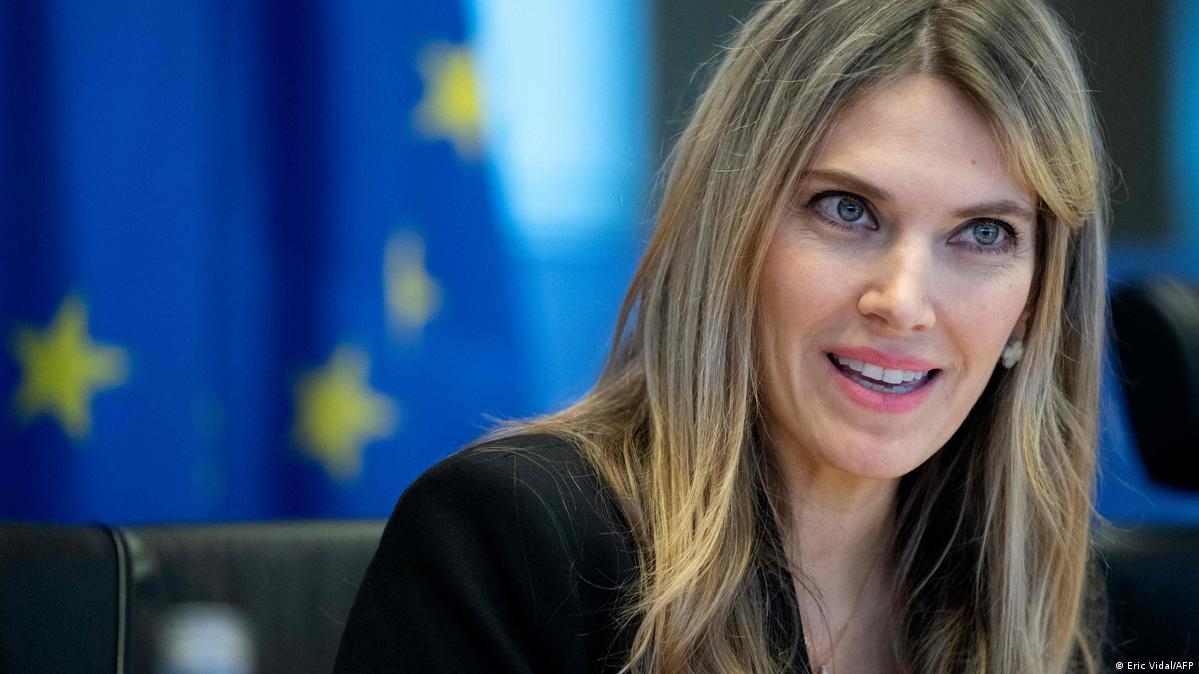
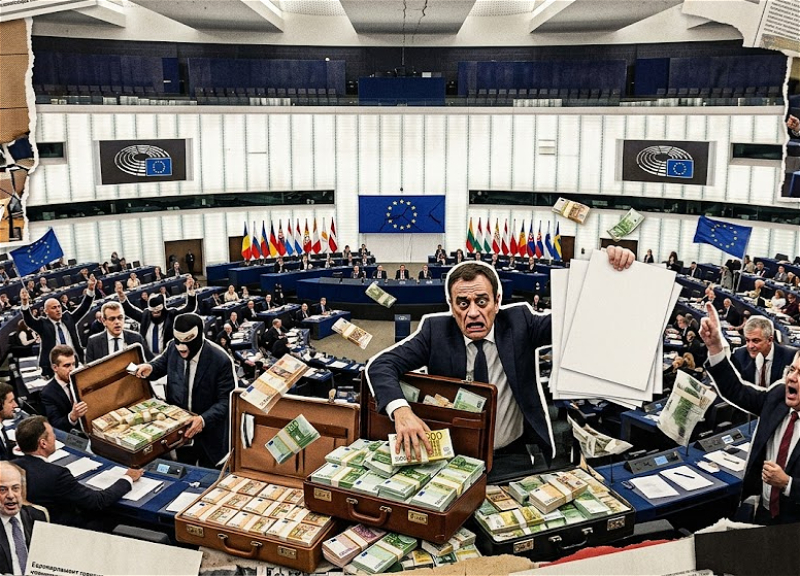
The president also recalled the corruption case involving the former vice president of the European Parliament, Greek member Eva Kaili: "Suitcases with millions of dollars were seized from the vice president's home, but all of this was hushed up. As if it never happened. Her name is known, she is a deputy from Greece. How many years have passed since then? Have any measures been taken against her? No! Was she brought to justice? No! Was she arrested? No! She was released," the Azerbaijani leader said.
Ilham Aliyev's statement came against the backdrop of a genuinely serious history of corruption investigations surrounding the European Parliament.
"Qatargate": money, influence, and a former vice president
The most well-known case was the so-called "Qatargate," which erupted in December 2022. Belgian law enforcement agencies investigated alleged corruption, money laundering, and participation in a criminal organization linked to attempts by foreign actors to influence the European Parliament's decisions. Among those implicated was Eva Kaili, who at the time held the post of one of the European Parliament's vice presidents. The European Parliament subsequently terminated her powers as vice president — 625 deputies voted in favor, with one vote against and two abstentions.
Particular attention was drawn to the cash discovered during the searches. According to Belgian media reports, a total of more than 1.5 million euros in cash was found in the homes of Kaili and former European Parliament member Pier Antonio Panzeri, as well as at Kaili's father's residence. Of that, about 600,000 euros were in Panzeri's home.
Other notable figures in the case were former deputies Marc Tarabella and Andrea Cozzolino. In 2023, the European Parliament stripped them of their parliamentary immunity at the request of the Belgian authorities. The European Parliament's own documents state that the investigation suspected Tarabella of receiving cash payments in exchange for supporting certain positions, and Cozzolino of participating in an arrangement to protect the interests of third states in the European Parliament.
It is also telling that the case has not disappeared from the European agenda several years later. In February 2026, the Brussels Court of Appeal confirmed the legality and impartiality of the investigative stage of "Qatargate" following complaints by the defense about the investigation's actions.
A new scandal — Huawei
Even more telling is that after "Qatargate," the European Parliament found itself at the center of a new corruption investigation. In March 2025, Belgian police conducted 21 searches in Belgium and Portugal as part of a case concerning alleged bribery linked to the lobbying activities of China's Huawei. The investigation concerned the alleged transfer of money, gifts, paid trips, and other benefits with the aim of influencing political positions and decisions in European institutions.
On March 18, 2025, the Belgian prosecutor's office reported that five people had been charged: four were accused of active corruption and participation in a criminal organization, and the fifth of money laundering. The European Parliament, for its part, announced its cooperation with the Belgian authorities.
It was this scandal that proved especially symbolic for the discussion about the European Parliament's transparency: the searches and detentions took place almost simultaneously with yet another vote on a resolution against Azerbaijan.
The Azerbaijani theme: a sequence of resolutions
At the same time, the very sequence of the European Parliament's decisions makes it possible to understand why Baku speaks of political bias.
In March 2024, the European Parliament adopted a resolution on closer EU ties with Armenia and the need for a peace agreement between Armenia and Azerbaijan. The document was adopted by 504 votes to 4, with 32 abstentions. In it, the parliament supported deepening cooperation with Armenia and the activities of the EU mission in Armenia, and called for readiness to impose sanctions against individuals who, in its assessment, threaten the sovereignty and territorial integrity of Armenia.
In October 2024, a separate resolution followed on the situation in Azerbaijan, human rights, and relations with Armenia. In the document, the parliament again referred to its previous resolutions on Armenia and Azerbaijan and put forward a number of demands to Baku.
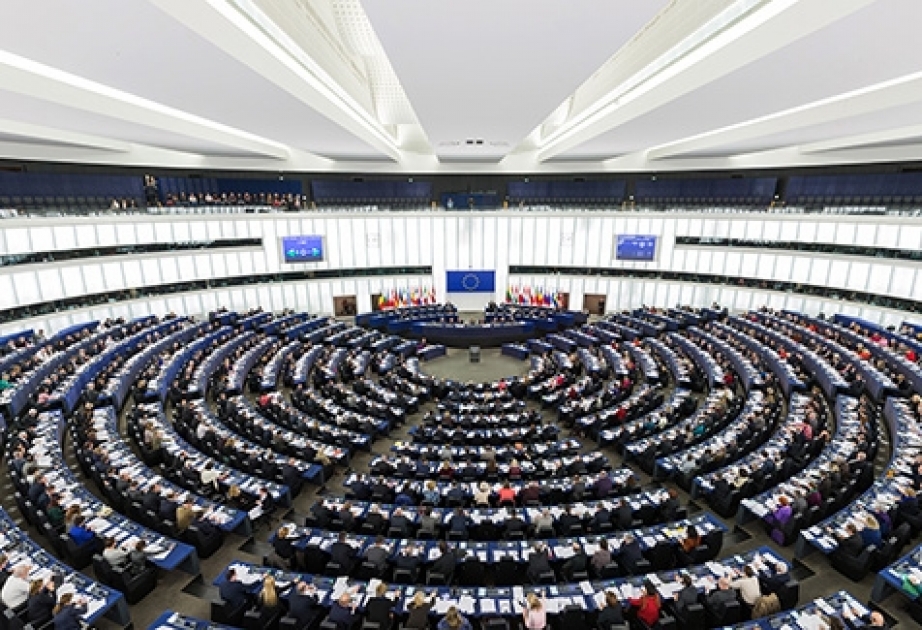
Finally, on March 13, 2025, the European Parliament adopted a resolution on persons of Armenian nationality detained in Azerbaijan, including the former leaders of the Armenian separatist regime in Karabakh. The document was adopted by 523 votes to 3, with 84 abstentions. It contained demands for the release of the Armenian prisoners, a call for possible sanctions against Azerbaijani officials, and a proposal to link further EU-Azerbaijan relations to a number of political conditions.
Thus, the thesis that the European Parliament has in recent years taken a tough line toward Baku has a documentary basis.
Ilham Aliyev's position
It is in this light that President Ilham Aliyev's statement should be understood: "The European Parliament has always provided support to the occupying country Armenia, and that is the case today as well." This assessment fundamentally reflects the long-standing biased and prejudiced policy of European institutions toward Azerbaijan.
Azerbaijan's well-founded criticism of the EU's legislative body is built on two indisputable facts. On the one hand, the European Parliament demonstrates open political bias, systematically taking a one-sided pro-Armenian position and ignoring international law. On the other hand, there is clear institutional degradation: against the backdrop of constant attacks on Baku, the European Parliament itself is mired in unprecedented corruption scandals involving current and former leadership, having definitively lost the moral right to act as an arbiter.
Ultimately, the question concerns not only individual scandals. It concerns trust in an institution that actively assesses adherence to the principles of democracy, the rule of law, and transparency in other countries. If investigations into the possible sale of political influence regularly arise within the institution itself, this inevitably becomes a subject of public criticism and requires the European Parliament itself to have the most convincing possible mechanisms of transparency and accountability.
That is precisely why Ilham Aliyev's words about a "den of corrupt officials" should be regarded above all as a harsh political assessment against the backdrop of specific, documented corruption investigations. The discussion on this topic becomes even more relevant amid periodically flaring corruption scandals, the impunity of the deputies involved in them, and the resolutions regularly adopted against Azerbaijan.