Baku raises the stakes: The OTS moves from unity to strategy
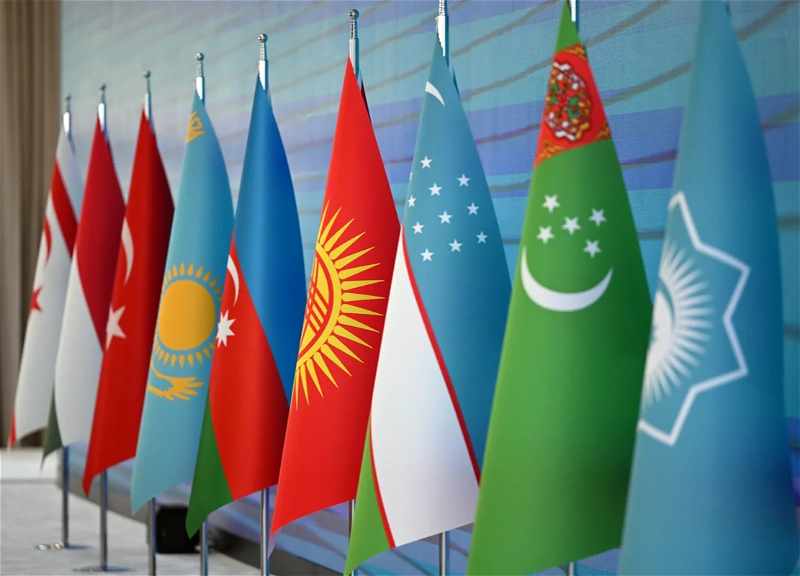
- Baku's chairmanship sets a new vector of integration in the Organization of Turkic States
- Connecting historical roots with a practical agenda of logistics and security, Azerbaijan is shaping a common strategic agenda.
- In doing so, the country is creating a new scale for the OTS
The Turkic world is gradually expanding the framework of a common historical and cultural space, strengthening its significance in international relations.
It is precisely this process that Azerbaijan is seeking to intensify today, using its chairmanship of the Organization of Turkic States to broaden cooperation - from political coordination to security, from transport, energy and trade to humanitarian cooperation.
For Baku, this is no longer only about strengthening relations between kindred peoples. The goal is to form a space capable of speaking with a more coordinated voice and possessing significantly greater political and economic weight on the international stage.
It is telling that these days Azerbaijan is hosting events that encompass several dimensions of this agenda at once.
Within the framework of the 7th meeting of the Council of Heads of Muslim Religious Administrations of the OTS, the First International Scientific and Practical Conference was held, dedicated to the outstanding thinker of the Islamic world, the Azerbaijani scholar and theologian-philosopher Sheikh Seyid Yahya Bakuvi Shirvani.
At the same time, the Fifth meeting of the secretaries of the security councils of the OTS member states is taking place in Baku.
The combination of these platforms is in itself indicative. It demonstrates how much the agenda of Turkic cooperation has expanded: from a common spiritual and cultural memory - to issues of security, strategic coordination and a joint response to the challenges of the modern world.
It is precisely in such an expanded understanding of Turkic cooperation that Azerbaijan sees the further prospects of the Organization.
Not only a common history, but also a common strategy
In his address to the participants of the meeting of the secretaries of the security councils, President of Azerbaijan Ilham Aliyev emphasized the foundation on which the interaction of the OTS states is built: «Common ethnic roots, language, culture and traditions unite our fraternal peoples into a strong family. The Organization of Turkic States, which formalizes our natural alliance, is a vivid example of the unity and fruitful cooperation of our friendly and fraternal countries, located across a vast geographical space and possessing significant political and economic potential».
Moreover, behind the cultural closeness, according to Baku's assessment, a far more substantive construct is taking shape. The President directly links the current stage with the growth of the opportunities of the entire Turkic space: «Today the Turkic world has entered a stage of its rise. The conditions of peace, tranquility and stability prevailing in our countries, and the successfully continuing development processes are great achievements of our peoples and states».
In this logic, the OTS becomes an instrument that should transform the combined potential of individual states into a more significant common resource. The denser the economic, transport, energy, humanitarian and political ties, the more opportunities there are for coordinating interests.
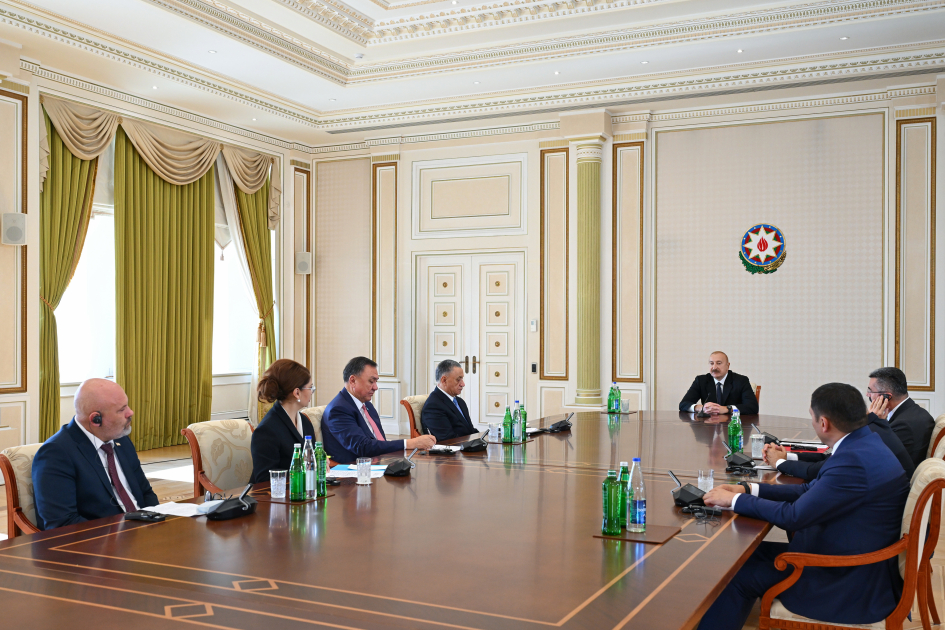
And here, too, Azerbaijan acquires particular significance. The country's geographical position makes it possible to connect the Turkic space of Central Asia with Türkiye and further with Europe. That is why the transport agenda for Baku is not a separate infrastructure issue; it is one of the key elements in the formation of an interconnected Turkic space.
The President links this prospect directly with the new regional reality: «The victory in Karabakh, won by Azerbaijan six years ago and which has become a source of our common pride, laid the foundation for a new geopolitical reality in the region. At the same time, this Victory created the ground for the implementation of the Zangezur corridor - a historical route connecting our countries economically, logistically and strategically».
Thus, the restoration of transport links is viewed as part of a broader process - the creation of an infrastructure framework capable of linking the states of the Turkic world with one another and extending these links in the European direction.
It is no coincidence that among the priorities of the Azerbaijani chairmanship the President singles out the Middle Corridor: «Within the framework of our chairmanship, we are making efforts to develop the Middle Corridor, which is an important transport and logistics project connecting Europe with Asia and contributing to the well-being of the Turkic states, including the Zangezur corridor and other transport links».
Here one of the main features of Baku's current approach manifests itself: Turkic integration acquires a fully material dimension. Roads, railways, trade routes, energy communications and logistics create permanent ties between states, turning geographical proximity into economic interdependence.
From cultural closeness - to institutional rapprochement
At the same time, Azerbaijan is consistently expanding the framework of the conversation about the Turkic world.
On September 15, receiving a delegation of members and observers of the Council of Heads of Muslim Religious Administrations of the OTS, the co-organizers of the conference on Sheikh Seyid Yahya Bakuvi and members of the Supreme Religious Council of the Peoples of the Caucasus, Ilham Aliyev emphasized Azerbaijan's special position: «Azerbaijan is both a part of the Turkic world and a Caucasian country». The President linked this dual affiliation with the country's history and the region's geography: «This once again shows that the Turkic world and the Caucasus are two spaces which, in essence, constituted a single geography, and the only Caucasian member country of the Organization of Turkic States is Azerbaijan».
For Baku, this has not only historical but also contemporary significance. Azerbaijan is capable of acting as a connecting link between several spaces - the Turkic, the Caucasian and the broader Islamic. That is precisely why Baku is simultaneously developing contacts with the Turkic states, the countries of the Caucasus and the Muslim world.
The conference dedicated to Sheikh Seyid Yahya Bakuvi, in this sense, goes far beyond an academic event. Turning to the legacy of the outstanding thinker becomes a platform for a conversation about the cultural and spiritual commonality that historically connected various parts of the region.
The President especially emphasized the significance of the joint presence of representatives of different communities: «Of course, we have close ties with the Turkic world, we have close kinship and friendly ties with the peoples of the Caucasus. Naturally, the fact that you are here together has very great symbolic significance. Because it is precisely such joint events that unite us even more, strengthen the bonds of friendship and brotherhood between us and are wonderful messages to the world».
In this formula, the principle itself is important - cultural and religious ties are complemented by economic and political ones, and those, in turn, by security mechanisms.
The next level - security
The Fifth meeting of the secretaries of the security councils of the OTS shows especially clearly how far this agenda has gone.
In a world where traditional threats are supplemented by cyber risks, transnational crime, terrorism, drug trafficking and hybrid threats, states are increasingly faced with problems that cannot be effectively addressed exclusively within national frameworks.
That is precisely why the President is already speaking of the need for a common agenda: «In the modern world, along with traditional threats, new challenges are emerging that concern humanity, including cyber threats; new hotbeds of instability are forming, and a crisis of international law is being observed. All this dictates the need to define our common agenda aimed at solving regional and global problems, forming a unified position on important issues and coordinating our activities in all directions».
This is a fundamentally important transition. An organization claiming a more prominent role in the international system must have mechanisms not only for economic or cultural cooperation, but also for strategic dialogue.
This is exactly what the Azerbaijani leader emphasizes: «Cooperation between the security councils of the member states of the Organization of Turkic States testifies to the fact that the integration process of the Turkic world is not limited only to the political, economic and cultural spheres, but also has a long-term strategic character».
Today it is about the formation of a permanent mechanism of consultations and coordination. A regular exchange of risk assessments allows states to better understand common threats and align their approaches to them. President Ilham Aliyev separately lists the areas where such coordination acquires practical significance: «Such issues as the fight against international terrorism, transnational organized crime, illicit drug trafficking, religious extremism and hybrid threats, and the protection of critical infrastructure, cannot be resolved by any state alone».
Thus, security becomes yet another dimension of the institutional rapprochement of the Turkic states.
Azerbaijan as the initiator of a common agenda
The distinctive feature of Baku's current chairmanship lies, in particular, in the fact that it seeks to bring various directions together into a single system.
Last year, at the Gabala summit, a declaration was adopted that the President calls an important roadmap. It covers the political, economic, energy, humanitarian and military directions and the sphere of security. This means a gradual transition from individual projects to a more comprehensive model of cooperation.
«Within the framework of its chairmanship of the Organization of Turkic States, Azerbaijan is making every effort to further strengthen unity and solidarity between our countries, to realize the broad potential of our cooperation and to contribute to sustainable development, peace and security in our region as a whole», - is how the Azerbaijani leader speaks about this.
The practical content of this policy is also manifested in symbolic initiatives. One such event was the Week of the Turkic World, dedicated to the 100th anniversary of the First Turkological Congress. And here, too, history and modernity come together. The memory of the development of Turkology becomes part of contemporary cultural diplomacy, and the humanitarian agenda - an element of a broader process of rapprochement.
As can be seen, today's activity of the OTS is developing along several directions at once, with one reinforcing the other - culture forms a sense of commonality, transport connects spaces, the economy creates mutual interest, and political and strategic dialogue forms mechanisms of joint response.
What does this change?
The totality of these processes is gradually changing the very nature of the Organization of Turkic States.
Individual states possess different resources, geography and foreign policy priorities. But they are united by historical, linguistic and cultural ties, as well as by growing interest in transport routes, trade, energy and security.
It is precisely the totality of these factors that creates the potential which the President of Azerbaijan associates with the further strengthening of the OTS: «Ahead lies joint work, the strengthening of cooperation, an even closer connection between our countries and peoples, and the strengthening of the role of the OTS on the international stage. Through joint efforts, we must strive to turn the OTS into one of the leading international institutions, into one of the leading international organizations».
«Our unbreakable friendship and brotherhood are among the main factors determining the growing international authority and potential of the Organization of Turkic States, which today is our single family, as well as its transformation into one of the strong geopolitical centers of the world», - the head of state emphasizes.
The formulation «geopolitical center» has fundamental significance here. It shows the scale of the task that Baku associates with the further development of the Organization. It is about the potential of the Turkic world receiving a more prominent institutional and international expression.
Azerbaijan, meanwhile, proceeds from the premise that influence cannot be ensured by declarations alone. It requires regular political dialogue, sustainable economic ties, functioning transport routes, humanitarian projects and mechanisms of cooperation in the sphere of security.
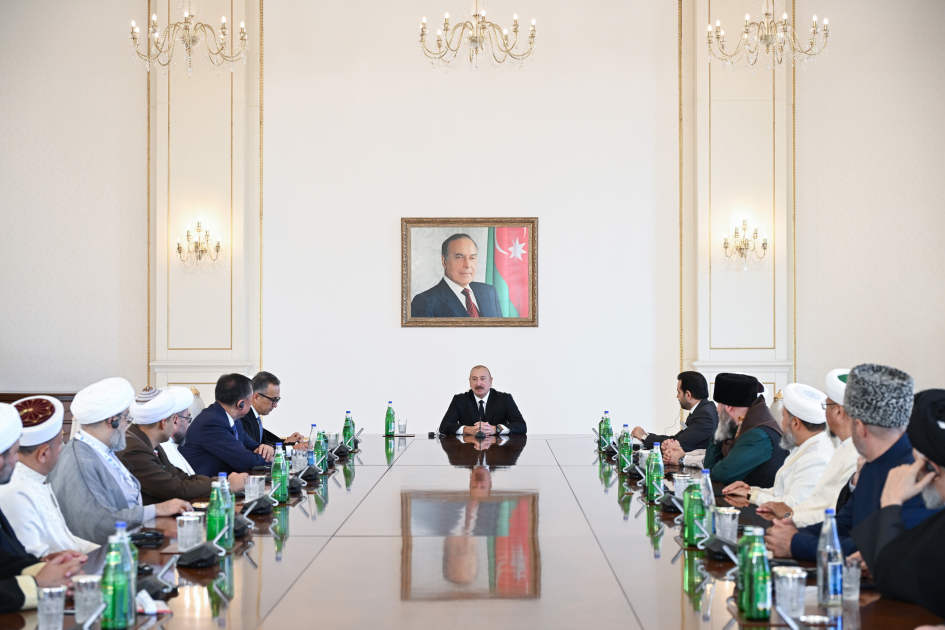
It is precisely in this context that the current events in Baku, which have become yet another platform for a meeting of representatives of the Turkic world, should be viewed. The conference dedicated to Sheikh Seyid Yahya Bakuvi and the meeting of the secretaries of the security councils are at different poles of the agenda, but in fact demonstrate a single trend: the space of Turkic cooperation is becoming more multilayered.
***
Today Azerbaijan is using its chairmanship of the OTS to move the idea of Turkic unity from a predominantly historical and cultural plane into the sphere of concrete political, economic and strategic cooperation. From the Trans-Caspian International Transport Route and the Zangezur corridor to coordination in the field of security, from scientific and humanitarian projects to the formation of a common agenda - Baku is consistently expanding the content of this integration.
The ultimate meaning of the process is determined by the sustainability of the ties being created. If transport routes connect markets, economic projects link states through common interests, and political and expert platforms form a permanent dialogue, then the OTS will gain a far more substantial presence in the international system.
It is precisely such a prospect that Ilham Aliyev outlines when speaking of the current stage as the rise of the Turkic world. In this construct, Azerbaijan seeks to act as one of the engines of the process - a state connecting Central Asia with the Caucasus and Türkiye, the Turkic agenda with the Islamic world, economic interconnectedness with security issues.
And that is why the current meetings in Baku are not disparate events; a single line can be discerned in them: by strengthening internal ties, the OTS is building up its international authority, and Azerbaijan is striving to turn this growing potential into a full-fledged center of political, economic and strategic attraction - one of the prominent geopolitical centers of the modern world.