Azerbaijan to study Albanian Christian heritage on the territory of Armenia. Why is this important?
Many pages in the history of the South Caucasus still require objective and comprehensive study.
This especially concerns the historical and cultural heritage on the territory of present-day Armenia, where individual monuments and testimonies of the past have for decades been viewed primarily through the prism of one-sided historical interpretations.
As a result, part of this heritage has been insufficiently studied, part has been lost, and some historical evidence has still not received a proper scholarly assessment. That is why today it is especially important not simply to speak about historical truth, but to consistently document it — to search for surviving archival evidence, study monuments, epigraphy and manuscripts, compare sources and restore the historical context.
In this context, the initiative put forward in Azerbaijan to study the Albanian Christian heritage on the territory of present-day Armenia is of particular significance.
A history that cannot be erased
The Western Azerbaijan Community has initiated the creation of a working group to study the Albanian Christian heritage on the territory of present-day Armenia. This concerns the historical regions of Zangezur, Daralayaz and the basin of Lake Goycha, where numerous testimonies of the rich cultural and religious heritage of Caucasian Albania have been preserved.
Such an undertaking brings the historical topic into a concrete plane — work with documents, archives, inscriptions and monuments. It is precisely this approach that leaves far less room for political speculation and one-sided interpretations of the past, since history is determined not by pretentious statements, but by scholarly sources. In other words, this is systematic work to restore the historical picture on the basis of what can be confirmed by documents and verifiable research.
The task of the working group is to study, using scientific methods, the history, architectural and epigraphic features, as well as the attribution of churches, chapels, khachkars and monasteries on the basis of archival documents and other primary sources. It is precisely the primary sources that are of fundamental importance here — history must be verified by documents, inscriptions, archival materials and the monuments themselves.
"In the Azerbaijani scholarly community, there is a widespread opinion that the documents of the Albanian Catholicosate of the 16th–19th centuries have been completely destroyed. The losses are undoubted, however, the archival and manuscript collections of a number of countries hold numerous documents and sources concerning both the Albanian catholicoses and the religious and social history of the era, and some of them have already been published. These materials are scattered across various collections. Their systematic search and collection in a single scholarly database constitute the main mission of the working group. At present, the Western Azerbaijan Community already has several hundred documents on this topic," its statement notes.
"The Western Azerbaijan Community considers the multilayered religious and cultural heritage on the territory of present-day Armenia, including the medieval monuments of Caucasian Albania, part of its heritage as the heirs of deported Azerbaijanis. This position can be substantiated in the international scholarly community only by facts based on sources and by repeatedly verifiable research. This study will also serve to document the historical and cultural grounds for the safe and dignified return of the deported population," it emphasizes.
Background of the issue
The issue is especially important because the lands of Caucasian Albania, in addition to the territory of modern Azerbaijan, also encompassed Western Azerbaijan (the present-day territory of Armenia).
According to the results of scholarly research, during the period of the spread of Christianity in Caucasian Albania, some of the local Turkic tribes living on the territory of present-day Armenia, including in the vicinity of Irevan, adopted this religion and built a large number of temples.
Traces of this heritage, according to the cited research, are found in various districts of Western Azerbaijan. According to research by historians Tofig Najafli, Rashad Mustafa and Ramin Alizade, to the east of Lake Goycha near the village of Tsil, the inscribed stones of an early medieval Albanian-Kipchak church were destroyed by Armenians (source: Azertac). To the east of the lake, near the early medieval village of Nardeyuz, there is a large Turkic cemetery in a deplorable state. Here, along with khachkars belonging to Kipchak Turkic Christian tribes, there are a significant number of memorial stones proving the ancient history of the Oghuz tribes.
Among the Albanian-Kipchak temples on the territory of Goycha, one can note the churches of Gizilveng (village of Gizilveng), Gamishli (village of Gamishli/Ganli/Ganli Allahverdi), Dashkent (village of Dashkent), Kichik Mezre (village of Bala Mezre), Eyriveng (village of Eyriveng), Khudaveng (village of Yukhari Adiyaman) and Shogakaveng (village of Chorakyug).
In the mahal of Hamamli (Ashtarak), most of the ancient churches were built by Christian clergy of Kipchak origin. The Albanian-Kipchak temple located here, known as the Kazakh Basilica, proves that the Kazakh tribe — a branch of the Kipchak tribes — lived here from ancient times. Among the main Christian religious monuments of Hamamli, one can note the Church of the Holy Cross built in the 4th century, the monuments of Ashtarak of the 7th–13th centuries, the Karmravor Church built in the 7th century by the Kipchak priests Manas and Grigori, the 7th-century Aruch Church, the 5th-century church in the village of Hovhanavang, the 5th-century Gazakh Basilica in the city of Abaran and the 5th-century church in the village of Ashnak. On most of these monuments, Armenian khachkars were later installed under the guise of restoration, and the inscriptions were erased.
Among the Albanian-Kipchak Christian monuments of Zangibasar, the 7th-century church (village of Shahab), the Avujar monastery of the 10th–13th centuries, the church and fortress of the 10th–13th centuries (village of Ursazor), and the 13th-century Aghja monastery (near the village of Gilanlar) especially stand out. Among the destroyed Albanian religious monuments in the mahal of Sardarabad, the 5th-century basilica and the 7th-century Temple of the Blue Angels are especially noteworthy. The pre-Christian religious shrines on the territory of Sardarabad, passed off as "Armenian religious temples," also reflect the religious worldview of the population of Albania.
The oldest Christian monument on the territory of Karakilsa in Western Zangezur is the Gizilkilsa temple, built in the 5th century. Part of this temple, located near the village of Erefse, is in a ruined state. An ancient Albanian cemetery has also been discovered next to the church. However, the Armenian authorities, as with many Albanian temples on the territory of the Karakilsa district, present the Gizilkilsa temple as an Armenian monument.
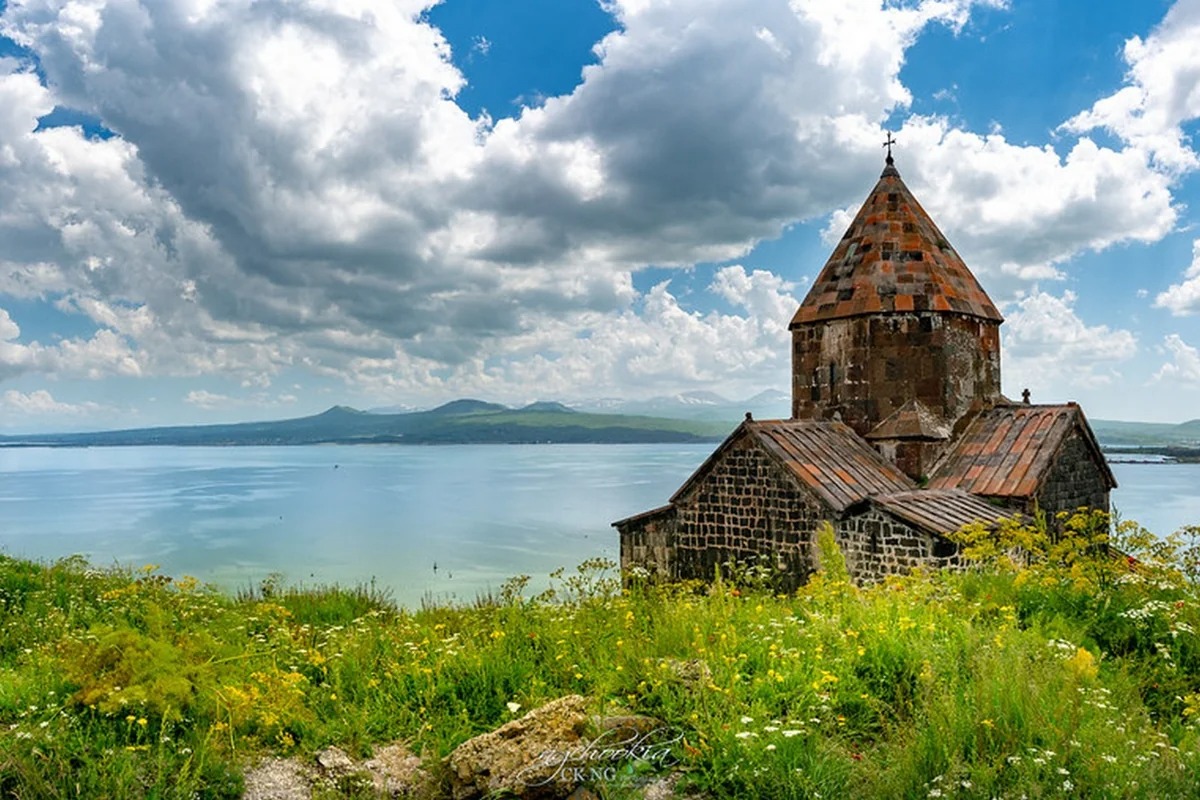
The Garakilsa temple was built in the 6th–7th centuries on a high hill in the center of the district. Since this temple is built of gray tuff, its outer walls appear black in damp weather. The Armenians resettled in Zangezur in the first half of the 19th century for a long time called this temple in the Azerbaijani manner — "Garakilsa." Depicted on the wall of the temple is the ruler of Zangezur from the Kipchak Turkic Geysoylu clan, Khan, as well as the faces of Christian saints and prayers from the Gospel. The Armenians walled up two windows on the front walls of the temple with stone and carved false inscriptions in Armenian on its wall. In the courtyard of the Garakilsa temple, there were stone sandugas, ram statues (goch dashi) and an Albanian cemetery, reflecting the nomadic way of life of ancient Turkic tribes. The Armenians destroyed most of these monuments, setting up an Armenian cemetery in their place. In 1961, the Garakilsa temple was turned into an Armenian Gregorian church. The modern appearance of the temple has undergone serious falsification through the introduction of false elements by Armenian architects.
All these examples are important not only as a list of surviving or lost monuments. They show the scale of the issue, which requires systematic study.
From the politics of memory to work with sources
In this sense, the creation of a working group within the Western Azerbaijan Community is significant not only in terms of studying individual temples or monasteries. It allows the question to be posed more broadly: how fully has the history of Christian heritage on the territory of present-day Armenia been studied today, and which sources still remain outside scholarly circulation?
The answer to it can be given only by systematic work with sources — archival documents, manuscripts, epigraphy, the architectural features of monuments and their comparison. That is precisely why the scholarly approach declared by the working group, which entails the search for, collection and systematization of scattered materials, is of fundamental importance. Since historical conclusions must be based on specific documents and research.
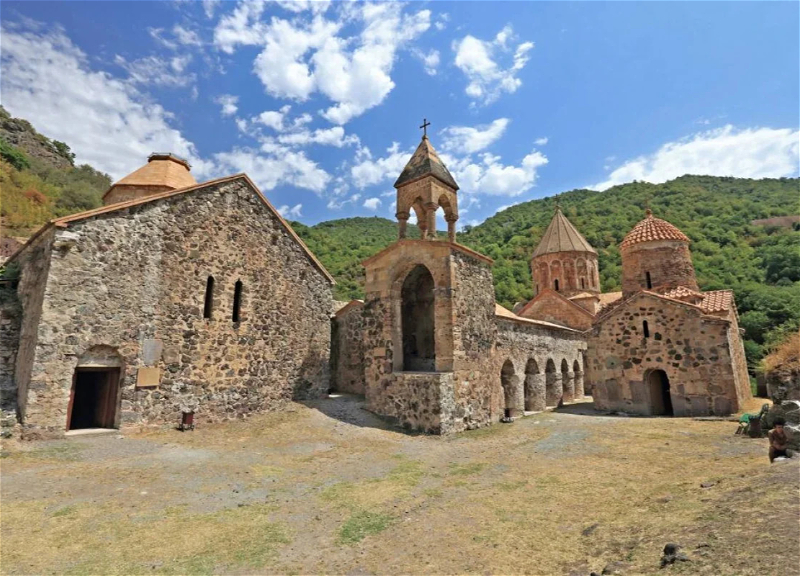
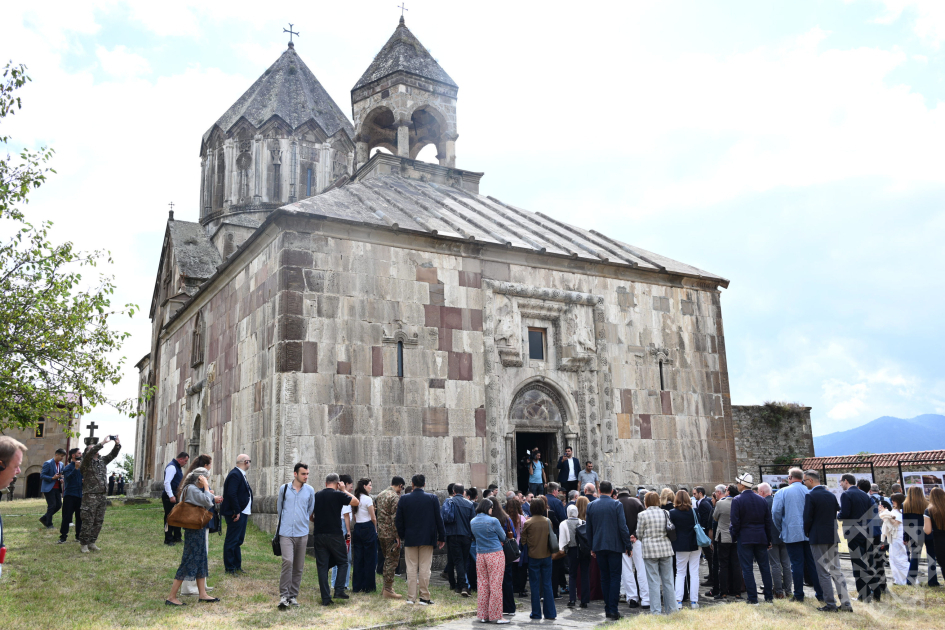
This is all the more relevant because today historical and cultural subject matter is linked to the diplomatic agenda. How closely was demonstrated by the recent visit of foreign diplomats to the Gandzasar and Khudaveng monastery complexes during another trip to Karabakh and East Zangezur.
This caused a sharp reaction in Armenia, behind which a deeper problem can also be discerned — the attitude toward historical memory. The persistent denial among Armenian radicals of the history and culture of the Azerbaijani people, which possesses a most rich heritage — including on the territory of present-day Armenia — hardly contributes to the establishment of a long-term peace.
On the other hand, the rhetoric heard in Armenia over the visit by foreign diplomats to ancient Albanian temples once again shows that serious disputes still persist in that country's society around the rejection of the "miatsum" policy. Over the past 30 years, it created the ground for the deportation of Western Azerbaijanis from Armenia, the occupation of Azerbaijani territories, ethnic cleansing, and the destruction of cultural and religious heritage. The consequences of this policy are well known.
Incidentally, against the backdrop of what is happening, Nikol Pashinyan's "Real Armenia" concept is also accompanied by a serious crisis. As can be seen, merely renaming political approaches is not enough if false notions about the past and attempts to appropriate the historical heritage of a neighboring people persist in society.
In the context of the peace process
Today Azerbaijan and Armenia are approaching peace. That is precisely why it is especially important that historical issues do not become yet another instrument of political manipulation and are not used to preserve false stereotypes.
In Azerbaijan, the reaction to the diplomats' visit to the liberated lands is justly regarded as interference in the country's internal affairs and a step aimed at inciting irredentism — such approaches strike a blow to the peace process, undermine mutual trust and create space for revanchist forces.
The issue also has another side. If the past is indeed a "subject of dispute," then it is all the more necessary to open archives, search for documents, study monuments and compare sources. Not to destroy inconvenient evidence and not to rewrite it according to a predetermined scheme, but to return to scholarly circulation everything that has been preserved.
That is precisely why another example is telling — for many years Turkey has been proposing to Armenia to open the archives and conduct a joint, comprehensive and scholarly study of the events of 1915 in the Ottoman Empire. Armenia has still not responded to this proposal… Not to destroy inconvenient evidence, not to rewrite it according to a predetermined scheme and not to conceal it, but to return to scholarly circulation everything that has been preserved — precisely this principle should be applied to any pages of the past under discussion.
That is precisely why the work on the Albanian Christian heritage has significance that goes beyond the framework of a single research project. It concerns the very principle of the attitude toward history.
Instead of new claims regarding historical topics, Armenian society would do well to focus on ending attempts to deny, distort and destroy the cultural and historical heritage created by the Azerbaijani people on the modern territory of Armenia. This would be a step toward a more honest conversation about the past.
Peace can be built where sources are open for study, monuments — for research, and historical facts are not adjusted to fit the political situation. History can be attempted to be rewritten — inscriptions erased and falsified, the appearance of monuments changed, and evidence that does not fit the accepted interpretation pushed out of scholarly circulation. But the disappearance of a source does not mean the disappearance of the historical fact itself.
Therefore, today's task is not to argue more loudly, but to search more deeply. Archive by archive, document by document, monument by monument, to restore that part of the past which for too long remained a subject of political speculation and distorted interpretations instead of scholarly research.
And in this sense, the creation of the working group is not simply another appeal to a historical topic. It is an attempt to return the conversation about the past to its main criterion: not to the loudness of statements, but to the strength of sources.