The Middle Corridor emerges from the shadow of European plans
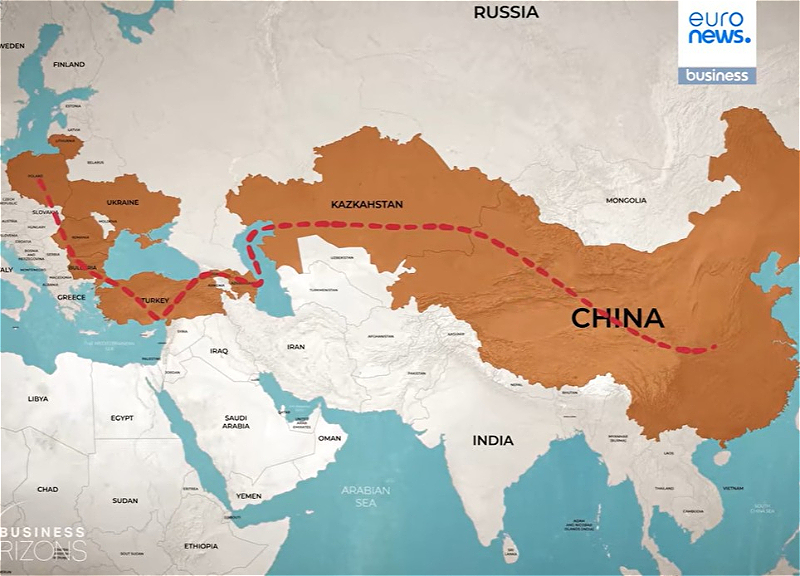
Until recently, the Middle Corridor was more often mentioned in political statements and expert forecasts as one of the possible routes between Europe and Asia.
Now the attitude toward it is taking on a fully tangible character. The European Commission has announced its intention to mobilize up to €12 billion in public and private investment through the Global Gateway initiative to develop the route linking Central Asia and the South Caucasus with the European market.
The intention was announced on September 16 by European Commission President Ursula von der Leyen in her annual address to the European Parliament. According to her, the goal of the project is to diversify trade routes, triple freight flows and reduce transportation time by 2030. To advance this goal, the European Commission intends to organize a regional summit on transport connectivity together with the Prime Minister of Bulgaria.
At the same time, the €12 billion should be understood precisely as a target volume for mobilizing investment, and not as an already approved package of direct EU funding. European involvement in the development of the Middle Corridor began long before the current announcement.
From statement to infrastructure
Behind this figure there is already a quite specific infrastructure agenda. In February, the European Commission published a study of the investment needs of the Trans-Caspian corridor. According to the document, trade along the route has grown fourfold since 2022, and with the necessary investment it could increase threefold again by 2030. The study also identified sections of infrastructure requiring modernization and additional investment.
A telling example is Kazakhstan. In June 2026, the European Investment Bank (EIB) signed a framework loan with the republic for €150 million for the reconstruction of highways belonging to the Trans-Caspian transport corridor. The total cost of the program is about €300 million, and the projected volume of reconstruction is about 1,370 kilometers of roads. The EIB views the project as part of Global Gateway.
In parallel, the EU is developing cooperation with Azerbaijan. In January, the European Union and Baku agreed to strengthen cooperation within the framework of Global Gateway and the interregional connectivity agenda. Together with the European Bank for Reconstruction and Development (EBRD), work has begun on a feasibility study for a railway project in Nakhchivan.
In July, the creation of an EU–Azerbaijan partnership on connectivity was announced in Baku. It covers transport, energy and digital connections, as well as project coordination and the search for financing. At the same time, the European Commission announced preparations for a regional investment conference in Baku with the participation of representatives of the EU, the South Caucasus, Central Asia, international financial institutions and private capital.
Why Azerbaijan matters in this system
One of the key sections of the Trans-Caspian route passes through Azerbaijan, and the significance of this direction is already reflected in the statistics.
According to the Ministry of Digital Development and Transport of Azerbaijan, in January–July 2026 transit shipments through the country exceeded 9.1 million tons, increasing by 11.6% compared to the same period of 2025. On the East–West direction, transit grew by 16.5%. Over the same seven months, container turnover at the Alat International Sea Trade Port increased by 20% and reached 72,370 TEU.
Azerbaijan's State Statistics Committee also records significant shipment volumes along the East–West direction. Thus, in January–June 2026, 9.207 million tons of cargo were transported along this transport corridor, of which 4.595 million tons were carried along the Europe–Caucasus–Asia route.
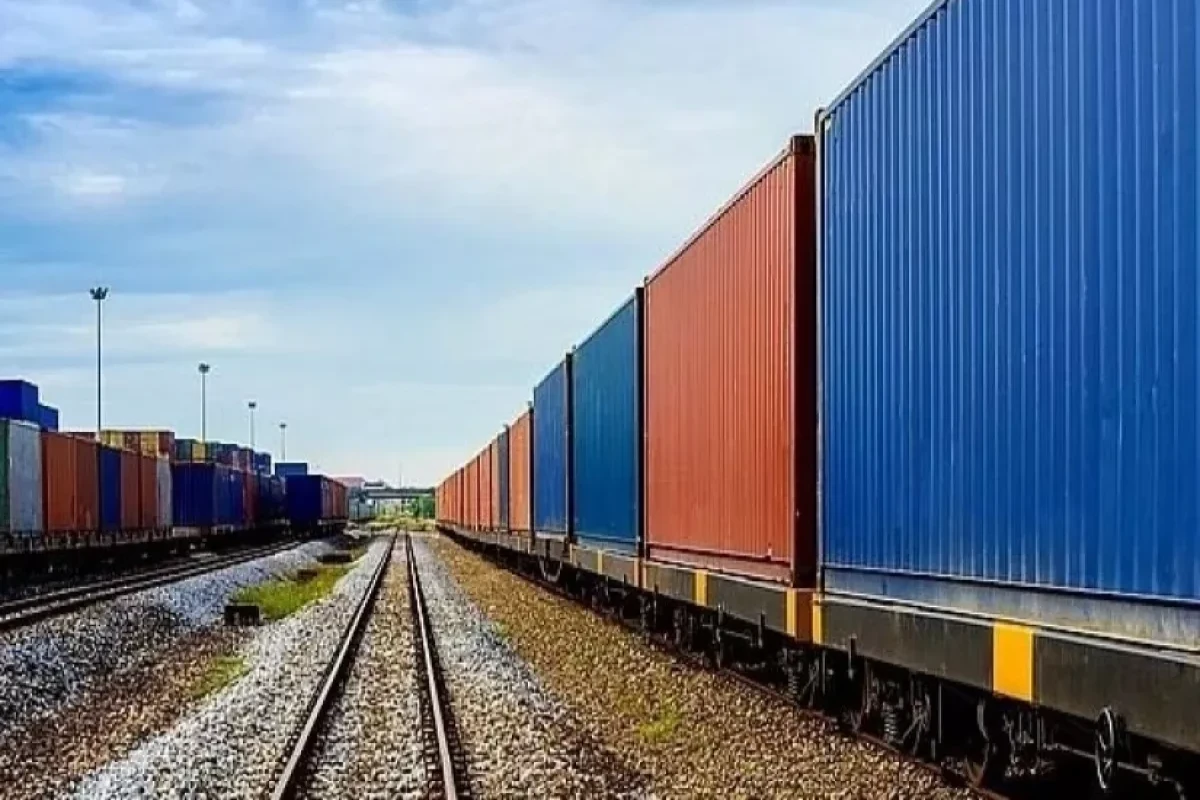
Delivery speed is changing as well. According to the Ministry of Digital Development and Transport, the transit time for cargo along the China–Europe route has been reduced, compared with the previous 38–53 days, to an average of 12 days. The ministry attributes this to infrastructure modernization, digital solutions, electronic permits, the e-TIR and e-CMR systems, cargo tracking and the simplification of border procedures.
The growth in shipments simultaneously raises requirements for the capacity of the entire chain — from Kazakhstan's roads and Caspian ports to the railway infrastructure of Azerbaijan, Georgia and Turkey.
Not a replacement, but an additional route
European investment should not be viewed as an attempt to create a route that would completely displace existing transport directions. The EU's task is to diversify links between Europe and Asia, reduce dependence on individual directions and increase the resilience of trade chains.
The Middle Corridor passes through several states and combines rail and sea transportation. Cargo between Central Asia and Europe crosses the Caspian Sea, then travels through the South Caucasus and may then head toward Turkey and Europe. Therefore, the efficiency of the route depends on the coherence of the entire chain, and not on the condition of an individual section.
This is precisely where the main practical question arises: will the declared mobilization of capital be able to ensure the synchronous modernization of the infrastructure of several states at once.
Broader than transport
In June, the EU and Azerbaijan preliminarily concluded discussions on new partnership priorities for 2026–2030. And in July, the creation of an EU–Azerbaijan partnership on connectivity and a high-level dialogue covering infrastructure, logistics and digitalization was announced in Baku. The European Commission also views the Trans-Caspian corridor as one of the areas of future cooperation with Baku.
The transport agenda also intersects with the energy agenda. The EU cooperates with Azerbaijan in the field of gas infrastructure, electricity interconnections and renewable energy. European documents mention the Central Asia–Azerbaijan corridor, the Caspian–Black Sea–Europe green energy corridor and other projects of regional energy links.
Now the question is which specific projects will receive support — from railway sections and ports to digital systems and customs infrastructure. For Azerbaijan, this creates additional opportunities for developing a transit economy and expanding ties with Central Asia and the European market.
Ultimately, the efficiency of the Middle Corridor will be measured by an entirely practical indicator, namely how much faster, more reliably and more predictably cargo will be able to travel the entire way from Central Asia to Europe.
Ali Mammadov