The Anatomy of Bank Avrasiya: Liquidity Deficit, Dependence on the Government «IV Drip,» and the Secret of Former Beneficiaries
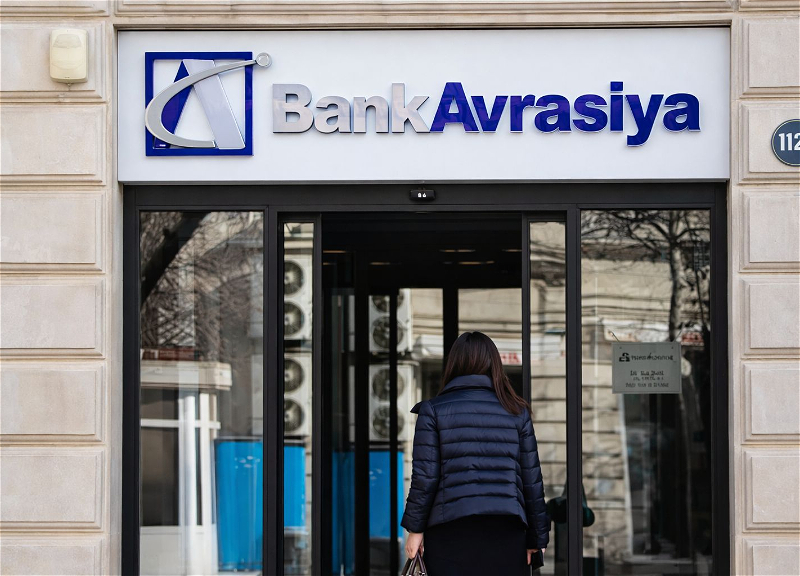
This article attempts to provide an in-depth analysis of the 18-year history of a bank that holds 83 million manats in guarantees, relies heavily on state funding, and suffers from chronic liquidity shortfalls.
At the end of 2025, the little-known Azerbaijani Bank Avrasiya (License No. 251, issued by the Central Bank of Azerbaijan on November 28, 2007) marked the 18th anniversary of its operations in the Azerbaijani financial market.
Over these years, the bank has weathered two national currency devaluations, a global financial crisis, a pandemic, and several waves of tightening regulatory requirements.
It remains a licensed institution under the Central Bank of Azerbaijan, with total capital exceeding 88 million manats.
However, a detailed analysis of the bank’s financial statements over its entire existence—from the first audited reports in 2008 to the prudential data from early 2025—reveals persistent structural features that call into question the very business model of this institution. This is not about violations or abuses, but rather a fundamental mismatch between formal stability indicators and the actual risk profile.
This material is based exclusively on public sources: audited financial statements certified by the international audit firms Baker Tilly, Moore Stephens, and RSM Azerbaijan, as well as prudential reports disclosed in accordance with the requirements of the Central Bank of Azerbaijan.
18 Years in Limited Visibility Mode
Bank Avrasiya’s history begins in 2007, when the institution received its banking license. Its early years coincided with a credit boom in Azerbaijan—a time when the country’s banking sector was posting double-digit growth rates, and regulatory requirements had not yet reached their current level of stringency.
Even in the earliest audit reports available for analysis, a noteworthy feature is recorded: year after year, international auditors issued what is known as a “Qualified Opinion.” The reason remained unchanged for more than a decade and a half—the bank did not disclose information about its ultimate controlling beneficiary, which formally contradicts the requirements of International Accounting Standard (IAS) 24 “Related Party Disclosures.”
For most of its history, the bank’s shareholder structure included three key participants: the Azerbaijani companies Euro Standard MMC and Azbizneskom MMC, as well as the offshore entity Tayning Global Ink., registered in a jurisdiction with limited disclosure requirements.
However, according to the latest available audited report for fiscal year 2024, the ownership structure has undergone significant changes.
The offshore shareholder Tayning Global Ink. no longer appears among the owners. Euro Standard has also exited the capital. Their place has been taken by Top Properties MMC (49.5%) and an individual, Rustam Eynullayev (1%). Azbizneskom’s stake increased from 25% to 49.5%.
This transformation occurred in the context of a general tightening of transparency requirements for Azerbaijan’s banking sector.
However, the very fact of the offshore shareholder’s long-term presence and the auditors’ systematic qualifications regarding beneficiary disclosure remains a rather enigmatic part of the bank’s institutional history.
The Paradox of Excess Capital
At first glance, Bank Avrasiya appears to be a model of capital stability. According to prudential reporting data from early 2025, the bank’s total capital amounts to 88.47 million manats—significantly exceeding the regulatory minimum of 50 million established by the Central Bank of Azerbaijan.
Moreover, the bank’s capital adequacy ratio reaches extraordinary levels. With risk-weighted assets of 160.3 million manats, the capital-to-risk-assets ratio stands at approximately 55%. For comparison: the regulatory standard implies a minimum level of 10–12%, and most commercial banks operate in the 15–25% range.
Such a high capital adequacy ratio is traditionally interpreted as a sign of conservative risk management. However, in the context of banking business, excess capitalization may indicate something else—an inability or unwillingness to effectively deploy resources into income-generating assets.
Bank Avrasiya’s loan portfolio at the beginning of 2025 amounts to 137.14 million manats. With total assets of 214.5 million manats, this means the bank directs only about 64% of its resources to lending—a figure significantly below industry averages for banks of comparable size.
A natural question arises: what economic function does a financial institution serve that accumulates capital far exceeding its operational needs, while demonstrating limited activity in the core banking business—lending to the real economy?
Anatomy of the Loan Portfolio: Geography and Quality
A detailed analysis of Bank Avrasiya’s loan portfolio structure reveals several characteristic features that complement the picture of the bank’s institutional specificity.
The first feature is pronounced geographic concentration. According to the credit risk report data, of the 137.14 million manats in the total loan portfolio, 111.8 million (81.5%) is attributable to borrowers located in Baku. The bank’s regional presence remains minimal—lending outside the capital accounts for less than one-fifth of the portfolio.
For a bank positioning itself as a universal commercial institution, such concentration is unusual. It may be explained either by a deliberate business strategy of focusing on the capital market, or by limitations in the branch network and customer base.
The second feature is a significant share of non-performing loans (NPLs). As of early 2025, the volume of overdue debt amounts to 17.28 million manats, or 12.6% of the total loan portfolio. This exceeds average figures for banks of comparable size.
However, the most alarming aspect is not just the NPL level itself, but its structure by delinquency duration. According to detailed prudential reporting data, 15.89 million manats of the 17.28 million in overdue debt—that is, 92% of all non-performing loans—have been overdue for more than one year.
This figure requires separate consideration. A loan that has not been serviced by the borrower for more than twelve months in most cases represents hopeless debt with minimal chances of recovery. International banking practice implies writing off such assets after all collection measures have been exhausted. Keeping them on the balance sheet avoids a one-time hit to capital, but creates a distorted picture of the institution’s actual financial position.
The bank has formed loan loss reserves of 15.2 million manats (11% of the portfolio). Formally, this almost matches the volume of identified problem debt. However, if a significant portion of NPLs represents “dead” assets with a multi-year history of non-payment, questions arise about the adequacy of the reserves created and the appropriateness of credit risk assessment.
The third feature is concentration of large credit risks. The reporting data indicates the presence of one borrower with debt of 12.77 million manats, which constitutes 14% of the bank’s total capital. This figure is formally within acceptable limits, but indicates a significant dependence of the bank on a limited number of large clients.
Liquidity: Chronic Structural Deficit
If Bank Avrasiya’s capital adequacy indicators can be characterized as excessive, the liquidity situation represents a mirror opposite.
Analysis of the liquidity risk report reveals a persistent structural imbalance between the maturity of the bank’s assets and liabilities. As of early 2025, the bank’s on-demand liabilities—that is, funds that customers are entitled to withdraw immediately—amount to 61.04 million manats.
The immediately available liquid assets to cover these liabilities are estimated at 30.73 million manats.
The gap is 30.31 million manats. In other words, the bank has only half the funds needed to simultaneously fulfill all on-demand obligations.
Under normal market conditions, such a gap does not pose an immediate threat: the probability that all depositors will simultaneously demand the return of their funds is statistically low. Banks traditionally manage this risk by maintaining access to the interbank market and credit lines from the regulator.
However, in a situation of lost confidence—whether due to negative news, rumors, or a systemic crisis—it is precisely the instant liquidity indicator that determines the bank’s ability to survive a “bank run” without external assistance. A deficit of 30 million manats means that Bank Avrasiya in such a scenario would be critically dependent on emergency support from the Central Bank.
Notably, this structural imbalance is not a temporary phenomenon. Retrospective analysis of reports from previous years shows that the gap between instant assets and liabilities is chronic in nature and reproduces year after year.
Off-Balance Sheet Obligations: The Invisible Leverage
The most significant risk factor identified during the analysis appears to be the volume of Bank Avrasiya’s off-balance sheet obligations—primarily bank guarantees issued.
According to prudential reporting, the total volume of guarantees issued by the bank amounts to 83.18 million manats. This figure is comparable to the size of the bank’s entire total capital (88.47 million manats) and constitutes 94% of it.
A bank guarantee is a commitment by the bank to fulfill a client’s financial obligations to a third party in the event that the client itself is unable to do so. Until a claim is made, the guarantee is not reflected on the bank’s balance sheet as a liability—it exists “off-balance sheet,” in the notes to the financial statements.
However, from a risk perspective, a guarantee is equivalent to a loan: upon default by the principal (the party for whom the guarantee was issued), the bank is obligated to make payment from its own funds. Thus, off-balance sheet guarantees of 83 million manats represent a potential obligation, the realization of which could absorb virtually all of the bank’s capital in one fell swoop.
The key question: who are the beneficiaries of these guarantees?
Prudential reporting does not disclose information about specific recipients. However, theoretically, if a significant portion of the guarantees were issued in favor of companies related to the bank’s shareholders or their business interests, this could have created a specific model in which the bank effectively acted as an instrument for securing the obligations of affiliated entities.
Such a model is not illegal when prudential limits on related-party transactions are observed. However, it significantly changes the understanding of the bank’s economic function: from an institution of financial intermediation, it transforms into a risk management mechanism for a limited group of beneficiaries.
With a guarantee-to-capital ratio of 94%, even a relatively small percentage of defaults among principals could critically undermine the bank’s capital base. If 15–20% of guarantees are called, total capital would fall below the regulatory minimum of 50 million manats.
Whether the bank could fulfill its obligations to depositors in such a scenario is a separate question.
State Funding: Institutional Dependence
The structure of Bank Avrasiya’s liabilities deserves special attention, particularly the role of government sources in funding its operations.
According to 2024–2025 reporting data, the bank’s obligations to the Central Bank of Azerbaijan and state funds amount to 51.5 million manats. In the structure of the bank’s total liabilities (125.7 million manats), this item accounts for 41%—the largest share among all funding sources.
For comparison: the volume of customer deposits (funds from individuals and legal entities) amounts to 71.4 million manats. Thus, government funding only slightly trails market deposits and significantly exceeds any other single source of resources.
Such a funding structure is atypical for a commercial bank oriented toward market operations. Typically, central bank funds and development institution resources are used by banks to implement targeted lending programs—support for small businesses, mortgage lending, agricultural sector financing. These resources are provided on preferential terms and imply their allocation to specific categories of borrowers.
The question of how Bank Avrasiya uses the government resources it has received and whether this use corresponds to the programs’ intended purposes requires separate study. However, the very fact that a bank with total capital of 88 million manats attracts 51 million from government institutions indicates the institution’s limited ability to secure funding from market sources.
Retrospective analysis shows that dependence on government funding has intensified in recent years. In 2023, the bank experienced a significant deposit outflow: customer funds decreased from 79.6 million to 48.4 million manats. It was during this period that borrowings from the CBA and state funds increased, effectively compensating for the loss of market funding.
Profitability: Economics of Scale or Economics of Purpose?
Bank Avrasiya’s financial results complement the picture of an institution with a non-standard business model.
The bank’s net profit for 2024 was 3.7 million manats—a figure comparable to the previous year’s result (3.6 million). With total assets of 214.5 million manats, return on assets (ROA) is approximately 1.7%—a value in the lower range for Azerbaijan’s banking sector.
Return on equity (ROE), with net profit of 3.7 million and capital of 88 million, is approximately 4.2%. For comparison: efficiently operating commercial banks typically demonstrate ROE in the 10–15% range.
Low return on equity combined with excess capitalization creates an economic paradox. The bank’s shareholders have 88 million manats of tied-up capital that generates returns substantially below alternative investments—including simply placing funds on deposit at other banks.
From the perspective of rational economic logic, such a situation should prompt shareholders either to intensify operations to increase return on capital, withdraw excess capital through dividends, or sell the business to a more efficient operator.
The fact that none of these scenarios has materialized over many years suggests that the bank’s economic function for its owners is determined not by profitability metrics, but by other factors—access to banking infrastructure, the ability to conduct certain types of transactions, or maintaining a banking license as a strategic asset.
Operational Dynamics: Contraction and Stabilization
Analysis of the dynamics of Bank Avrasiya’s key indicators in recent years reveals a characteristic trajectory: after a period of turbulence, the bank entered a phase of controlled stabilization with signs of operational contraction.
The most pronounced indicator of this process was the dynamics of the deposit base. In 2023, the volume of customer funds decreased by almost 40%—from 94.9 million to 68.1 million manats (according to audited data). By 2025, deposits had partially recovered to 71.4 million manats, but remain significantly below 2022 levels.
A deposit outflow of this magnitude amid overall banking sector stability typically signals either a loss of customer confidence or a deliberate decision by the bank not to compete for deposits by raising rates. Given that the bank compensated for the lost resources through government funding, the second scenario appears more likely.
The loan portfolio demonstrates relative stability: after growing to 137 million manats, it remains at approximately this level. However, portfolio quality, as shown above, raises questions due to the high proportion of aged non-performing loans.
The bank’s total assets grew to 214.5 million manats, which formally indicates business expansion. However, this growth was driven primarily by an increase in liquid assets and securities investments, rather than intensification of lending activity.
Questions Without Answers...
The described combination of factors—the chronic presence of an offshore shareholder for most of the bank’s history, systematic auditor qualifications regarding beneficiary disclosure, structural instant liquidity deficit, extraordinary volume of off-balance sheet guarantees, and significant dependence on government funding—raises a number of questions that perhaps only the regulator—the Central Bank of the Republic of Azerbaijan—can address.
However, this analysis does not presume to evaluate the regulator’s actions—that would require access to the supervisory authority’s internal documentation.
It merely notes the existence of publicly observable features in the bank’s operations that together form an atypical profile for a universal commercial institution.
Final Assessment: The Bank as a Financial Instrument
Bank Avrasiya’s history allows us to identify a stable institutional model that differs significantly from the classical model of a commercial bank.
A classical commercial bank attracts deposits from the public and businesses, transforms them into loans to the real economy, earns on interest margins and fee-based operations, and strives to maximize return on equity while observing prudential constraints.
Bank Avrasiya demonstrates different priorities: ultra-high capitalization with low profitability; limited lending activity with pronounced geographic and client concentration; massive off-balance sheet obligations comparable to the size of its capital; significant dependence on government funding amid outflow of market deposits.
Such a profile is more characteristic of what is known in international practice as a “captive bank” or “treasury company”—a financial institution created to serve the specific needs of a limited group of beneficiaries, rather than to operate in the open market.
Such a model is not illegal. It does not necessarily imply violations or abuses. However, it raises the question of whether the institutional form (a universal commercial bank with a full license) corresponds to the actual content of operations.
Following the analysis, a number of questions remain, the answers to which could supplement understanding of Bank Avrasiya’s business model:
Regarding the guarantee portfolio: Who are the principals (recipients) of the 83 million manats in bank guarantees? What is the industry structure of these obligations? What share of guarantees was issued in favor of parties related to the bank’s shareholders?
Regarding the loan portfolio: What measures are being taken to work with overdue debt that has been delinquent for more than a year? What are the prospects for recovering these assets? Why doesn’t the bank write off hopeless debt?
Regarding state funding: Under what programs were the 51.5 million manats from the CBA and state funds attracted? What is the intended purpose of these resources? Does actual use correspond to stated goals?
Conclusion
Bank Avrasiya in 2025 is a financial institution with formally stable capital indicators, but with pronounced structural features that distinguish it from a typical commercial bank.
The combination of factors—excess capitalization with low profitability, chronic instant liquidity deficit, extraordinary volume of off-balance sheet guarantees, dependence on government funding, and a long history of limited transparency regarding the beneficiary structure—forms the profile of an institution whose economic function is apparently determined not by the market logic of financial intermediation, but by the specific needs of a limited circle of beneficiaries.
This conclusion is certainly not a manifestation of excessive suspicion—it represents a statement of observed facts based on analysis of public reporting.
For the market, the regulator, counterparties, and the bank’s customers, one question remains essential: how sustainable is the model of an institution that holds guarantees at 94% of its capital while suffering from a chronic instant liquidity deficit of 30 million manats?
The history of banking crises shows that such imbalances can remain unnoticed for years—until an external shock transforms latent risks into realized losses.
Автор: First News Intelligence Unit
This material was prepared based on analysis of Bank Avrasiya’s public financial statements for 2008–2024 (audited reports certified by Baker Tilly, Moore Stephens, RSM Azerbaijan) and prudential reports for 2025, disclosed in accordance with the requirements of the Central Bank of the Republic of Azerbaijan.
Read in other languages: