Thorbjørn Jagland in the 'Epstein Case': Corruption in Europe and Pressure on Azerbaijan
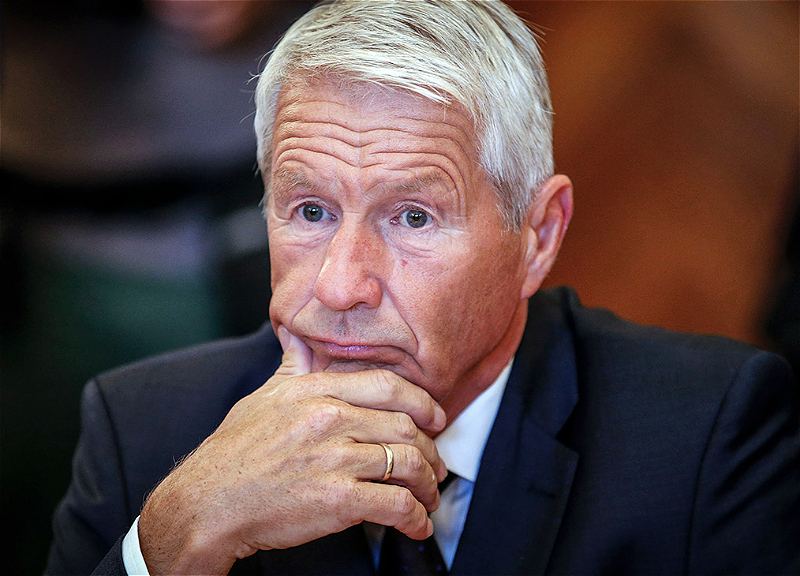
“The most significant threat to democracy in Europe is corruption. More and more people on our continent are losing faith in the rule of law. The Council of Europe must act, and act immediately,” these words were spoken a few years ago from the PACE podium by the former Secretary General of the Council of Europe, Thorbjørn Jagland.
Such impassioned speeches were not uncommon for him—Jagland consistently projected the image of an uncompromising fighter against corruption on many international platforms. Today, that image is rapidly crumbling.
Scandals exposing systemic abuses and large-scale crimes within the Western elite—including political figures—have cast doubt on the sincerity of many loud declarations. Among these is the name of Thorbjørn Jagland, lending a tone of blatant hypocrisy to his earlier moralizing speeches.
From Moralizing to Investigation: How Jagland’s Name Surfaced in the 'Epstein Case' Materials
Norway’s economic crime unit, Økokrim, has initiated an investigation into the former Prime Minister of Norway, ex-chairman of the Norwegian Nobel Committee, and former Secretary General of the Council of Europe, Thorbjørn Jagland. This was reported by Reuters on Thursday, February 5.
It is specified that the 75-year-old Jagland is under suspicion of serious corruption crimes linked to the convicted American financier Jeffrey Epstein. It should be noted here that Epstein did not live to see his trial; he was found hanged in his cell at a Manhattan prison.
“We believe there are strong grounds for conducting an inquiry, as during the period covered by the disclosed documents, he (Thorbjørn Jagland) held the positions of chairman of the Norwegian Nobel Committee and Secretary General of the Council of Europe,” stated Økokrim head Paal Løset. He clarified that the investigation was prompted by information contained in recently declassified materials related to the 'Epstein Case.'
As Reuters reports, no charges have been filed against Jagland at this time. According to journalists, investigators are examining whether, while holding the aforementioned positions, he accepted gifts, undertook trips, or took loans. To this end, the police have requested the removal of Jagland’s immunity, which he held as a former head of an international organization.
In turn, Norway’s Foreign Minister Espen Barth Eide announced that he would grant this request. “It is important that the facts in this case are clarified,” the minister emphasized. He promised that Oslo would propose to the Committee of Ministers of the Council of Europe to strip Thorbjørn Jagland of his immunity.
One of Jagland’s lawyers stated that his client would fully cooperate with the investigation.
A spokesperson for the Nobel Committee declined to comment on the matter but added that the Norwegian Committee is also interested in the investigation of this case, as reported by DW.
Private Connections and High Diplomacy: Questionable Intersections
According to the disclosed materials, Thorbjørn Jagland maintained contact with Jeffrey Epstein during the period when he served as Secretary General of the Council of Europe and chairman of the Norwegian Nobel Committee. These documents indicate that Jagland visited Epstein’s residence and used personal connections with him in the context of his international activities. The very nature of such interactions raises questions about the permissibility of these ties for a leader of institutions claiming to be Europe’s moral and legal compass.
The published documents also suggest that the Secretary General of the Council of Europe acted as an intermediary between Epstein and representatives of certain states, leveraging his diplomatic status. Between 2016 and 2018, the intensity of contacts between Jagland and Epstein noticeably increased. Specifically, the materials point to Epstein’s attempts—through Jagland’s mediation—to establish and develop contacts with the Russian side, including in the format of business negotiations. As noted by The Independent, Epstein seemingly fully exploited Jagland’s diplomatic position, which allowed him to build communications at a level inaccessible to a private individual without such mediation. The question remains open as to how such connections and actions might have influenced the activities of the Council of Europe and the shaping of its political decisions during that period.
Selective Approaches: The Azerbaijani Direction
Thorbjørn Jagland’s duplicity was particularly evident in his approach to Azerbaijan. While serving as Secretary General of the Council of Europe from October 2009 to September 2019, he consistently worked to create a negative political atmosphere around Baku, using the organization’s institutional mechanisms. As a result, Jagland’s actions led to strained relations between Azerbaijan and European structures.
For instance, in October 2015, the Secretary General of the Council of Europe announced the withdrawal from the “Joint Working Group on Human Rights in Azerbaijan”—a format whose creation he had actively initiated. He justified his decision by claiming that the situation in the country had allegedly “deteriorated” in this area.
In April 2019, in Strasbourg, Jagland proposed that member states of the Council of Europe adopt a political decision regarding visits to so-called “gray zones,” including Karabakh. In response, Baku rightfully pointed out the inadmissibility of external interference in the country’s internal affairs. Specifically, Azerbaijan’s Ministry of Foreign Affairs reminded that Baku’s clear position on this issue had been repeatedly communicated to all relevant international organizations, including the Council of Europe: “It is the sovereign right of a state to admit certain individuals, whether representatives of international organizations or citizens of other states, to its territory within internationally recognized borders and in accordance with domestic legislation.”
In June 2018, Armenian media circulated statements by the spokesperson of Armenia’s Ministry of Foreign Affairs, claiming that Secretary General of the Council of Europe Thorbjørn Jagland had initiated the termination of Azerbaijan’s membership in the Council of Europe. In response, Azerbaijan’s Ministry of Foreign Affairs stated that Jagland had always been distinguished by a pro-Armenian stance and biased attitude toward Azerbaijan, and that thanks to the Armenian Foreign Ministry spokesperson, the wider public learned what was already known about Jagland in the organization’s corridors.
Such episodes only reinforced the perception of Jagland’s policies as selective and politicized, directly contradicting the principles of neutrality, respect for sovereignty, and the rule of law that he publicly espoused on behalf of the Council of Europe.
European Standards and the Test of Corruption
Thorbjørn Jagland is far from the only European official whose actions toward Azerbaijan raised questions about objectivity and impartiality, and whose reputation is now under scrutiny due to corruption allegations.
Recent years have shown that several high-ranking representatives of European structures, who publicly positioned themselves as “fighters for justice,” were in reality involved in corruption schemes and financial misconduct.
A series of high-profile scandals related to the EU and its institutions has severely undermined trust in European bureaucracy. Lobbying schemes, bribes, hidden financial transactions, and opaque deals, periodically uncovered through journalistic investigations and official audits, call into question the effectiveness of institutions in managing corruption risks. These incidents not only tarnish the reputation of individual officials but also raise serious concerns about the depth and systemic nature of problems within the European administrative system. Despite the EU’s declared goals of being a model of transparency, rule of law, and democratic standards, recent practices reveal significant gaps between stated principles and actual control mechanisms.
Investigations in recent years demonstrate that corruption and financial misconduct in European institutions are not episodic but reflect more systemic risks spanning various levels of governance and areas of activity:
- In December 2025, the European Public Prosecutor’s Office launched an investigation into alleged fraud in the European External Action Service (EEAS) in Brussels and the College of Europe in Bruges. The probe concerned an EU-funded diplomat training program, including a tender for a training curriculum for future diplomats, the College of Europe’s purchase of student housing, and potential violations of EEAS tender rules.
- Earlier, in 2022–2023, the high-profile “Qatargate” scandal shook Brussels. During the investigation, police arrested several senior European Parliament officials on suspicion of accepting bribes and lobbying for Qatar’s interests. According to the investigation, corruption schemes involved MEPs, politicians, lobbyists, and their family members. Law enforcement agencies in Belgium, Italy, and Greece seized 1.5 million euros in cash, as well as computers and mobile phones. Among those detained was European Parliament Vice-President Eva Kaili, also known for her active pro-Armenian stance, accused of receiving money and gifts to influence political decisions.
- Scandals have also affected EU financial structures. In 2017 and 2019, the Supervisory Board initiated investigations into the European Investment Bank following complaints from civil society organizations about insufficient transparency and attempts to block audits. Additional scrutiny was given to potential violations in the bank’s transactions, including issues of confidentiality and financial disclosure.
- Moreover, between 2018 and 2021, significant irregularities were uncovered in the EU’s agricultural subsidy management system. Billionaires received a total of around 3.3 billion euros from funds intended to support farming households, while thousands of small farmers were forced to shut down their operations.
These examples only partially reflect the scale of corruption in the EU, which, by estimates, costs the union’s budget between 179 and 990 billion euros annually—up to 6% of its GDP. Sociological surveys show that about 70% of Europeans consider corruption to be widespread, and in their view, the situation continues to worsen.
It would not be an exaggeration to suggest that corruption and lobbying elements have influenced the stance of some European institutions toward Azerbaijan. This is particularly evident in the context of pro-Armenian interest groups operating within EU structures. The main platforms for such initiatives have been the European Parliament and the Parliamentary Assembly of the Council of Europe (PACE). Regular European Parliament resolutions lacking objective grounds, as well as PACE’s subjective approaches to Azerbaijan, created the impression of attempts at political pressure and raised doubts about the independence and objectivity of these institutions’ decisions. In response to such unfair actions, Baku justifiably took a firm stance, notably suspending cooperation with PACE in January 2024 in protest against the unjustified restriction of the Azerbaijani delegation’s powers.
These facts, like the case of Thorbjørn Jagland, vividly illustrate the intersection of personal ambitions and official positions. They demonstrate how personal interests can be exploited within the weaknesses of European institutions.
Taking all this into account, it is highly likely that new investigations, particularly in the context of the Epstein case, will uncover additional names and facts. It seems we won’t have to wait long for new revelations.