Armenian Expert on Why Moscow is Again Pulling Armenia into a Political 'Swamp' - INTERVIEW
Armenia is approaching its upcoming parliamentary elections under conditions that outwardly appear familiar but are, in essence, deeply conflicted and dangerous.
Old elites, pro-Russian revanchist groups, and new political projects are once again attempting to impose scenarios of the past on society—scenarios of dependency, war, and stagnation. Against this backdrop, external influences are intensifying: informational pressure, financial injections, and attempts at direct interference in the electoral process.
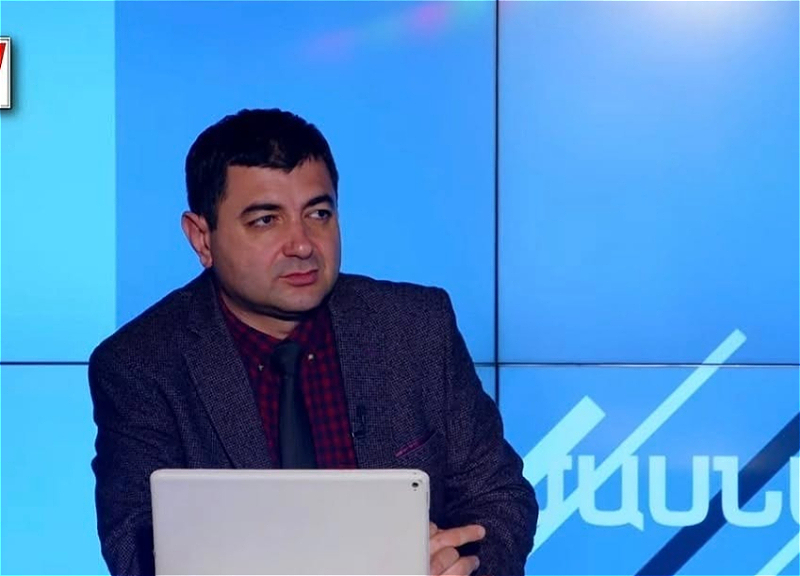
We spoke with David Stepanyan, an expert from the Armenian Institute of International Relations and Security Issues and a political commentator, about why the current campaign largely mirrors 2021, how Moscow is trying to use democratic procedures to drag Armenia back into a political 'swamp,' why the pro-Russian opposition has no real chance of victory, and what societal demand is key today.
- In what political and social conditions is Armenia approaching the 2026 parliamentary elections? Can we speak of deepening societal polarization?
- Speaking about the conditions in which the country is heading into the elections, it can be noted that they are largely similar to the situation in 2021. Two main conditional forces are once again entering the electoral process. On one side is the ruling party 'Civil Contract,' and on the other is the so-called pro-Russian camp.
This camp is represented by several key poles around which various political projects and parties are grouped. These include circles associated with Samvel Karapetyan, Robert Kocharyan, and Serzh Sargsyan. Despite differences in names, personalities, and formats, all these forces are essentially united by a common political and ideological direction.
Overall, it can already be predicted that around 30 political forces will participate in the elections, most likely running primarily as part of various blocs and coalitions.
Speaking of blocs, it should be clarified that this primarily refers to pro-Russian forces. The ruling party 'Civil Contract,' as far as can be judged at this point, will go to the elections independently, without any alliances or coalitions.
The pro-Russian forces have their relatively stable electorate—mainly voters dissatisfied with the current government.
At the same time, the government also retains its own electoral base, largely formed by people who, on the contrary, have a negative attitude toward the so-called opposition. I would characterize it as a systemic opposition, oriented toward serving Russia's interests.
- Should Yerevan's appeal to the European Union be seen as an actual acknowledgment of a real threat of external interference in the electoral process? How justified are claims of intensified disinformation campaigns from Russia in the context of attempts to influence the election outcome?
- Yes, without a doubt, the Armenian leadership's appeal to the European Union for financial assistance is an actual acknowledgment of the threat of external interference—primarily from Russia. There is information that at least about 165 million dollars is planned to be allocated to support pro-Russian forces in the parliamentary elections on June 7.
Moreover, there are reasons to believe that such financial injections will not be limited to this and will continue in other forms. Russia, it seems, is betting on returning Armenia to the political and strategic swamp in which the country was until very recently, and is trying to implement this scenario precisely through the electoral process.
In other words, the bet is on democratic mechanisms to bring overtly anti-democratic forces to power. This is precisely the paradox of the current situation.
From Russia's side, a large-scale and targeted campaign is currently underway—primarily informational, which is a component of hybrid warfare. There is an attempt at systemic influence on the Armenian electorate: they are trying to intimidate, disorient, and create an atmosphere of fear and hopelessness to then force them to come to the elections and vote in support of pro-Russian forces.
Yes, this factor is indeed present and cannot be ignored—it is a deliberate and planned attempt at external interference in the electoral process.
- Why does a significant part of the opposition forces avoid direct and public assessment of Moscow's possible interference in Armenia's internal affairs?
- When speaking of a significant part of the opposition forces that avoid direct and public assessment of Moscow's interference in Armenia's internal affairs, we mean precisely those political structures that are supported by Russia and directly dependent on Moscow.
This explains their emphasized restraint and avoidance of clear formulations. This is a consequence of political and financial dependence on an external center of influence, as these opposition forces, among other things, are financed by Moscow.
Undoubtedly, there is also a purely electoral calculation here—and it is quite simple. A significant part of Armenian society is well aware of the role Russia played during the 44-day war, and this factor remains a sensitive element of public perception and political mobilization.
And this role, to put it mildly, was far from pro-Armenian. That is why there is a clear electoral calculation here: these forces try to avoid direct affiliation with Russia in the public sphere as much as possible.
- Robert Kocharyan previously stated the formation of an 'exceptional situation' in the domestic political sphere and the closeness of opposition approaches on key issues, which allegedly opens the way for the creation of a large pre-election bloc. How realistic is such a scenario, given the internal contradictions of the opposition and societal demand?
- There is no exceptional situation in the domestic political sphere, as Robert Kocharyan claims. Nor is there any real closeness of common approaches between different opposition blocs.
In my opinion, the most likely scenario is the formation of several blocs—at least three, one of which will be overseen by him personally. This refers to the so-called pro-Kocharyan bloc, which will include various politicians and political parties.
However, this bloc will not be formed on the basis of real ideological unity or a clear political program, but around general declarations and vague formulations about the 'closeness of approaches' within the opposition on a number of key issues. This is essentially what is being discussed.
As for a common approach and the hypothetical possibility of uniting disparate opposition blocs, this can only be discussed in one scenario—after the elections.
If all these blocs make it to parliament and collectively gain enough votes to form a majority and surpass the ruling party 'Civil Contract,' they might theoretically have an incentive to negotiate and attempt to implement such a power change scenario.
However, I personally assess the likelihood of the fragmented opposition collectively gaining more votes than 'Civil Contract,' which is running alone, as extremely low, almost negligible. That is why such discussions today, in my view, are more speculative than politically realistic.
As for societal demand, this is indeed a key question. In Armenian society, after the Second Karabakh War, a clear and conscious demand for peace has emerged. It undoubtedly existed before, but after the events of the war, for obvious reasons, this demand has significantly intensified.
Armenian society, to put it mildly, is not inclined toward a new war—the military scenario has long exhausted everyone. Moreover, more and more people clearly realize that this war was often used not in Armenia's interests. Formally, we fought and tried to defend our positions, but in reality, it often turned out that Russia's interests were primarily being protected.
This understanding largely underlies the strengthened societal demand for stability, peace, and rejection of externally imposed conflict scenarios.
The reason for this is no secret. Since 1991, from the very beginning of the military phase of the conflict, Russia has systematically parasitized on this confrontation. This is a fact. And a significant part of the casualties—both Armenian and Azerbaijani—were largely due to Russian interests and the way these interests were realized and protected by prolonging and exploiting the conflict.
That is why there is a clear societal demand for peace in Armenia today. This demand is shaped by experience, disappointment, and an understanding of the real cost of war. And for obvious reasons, it is in no way associated with the pro-Russian opposition—the reasons for this I have already outlined earlier.
- Does the current government retain real chances of winning the elections?
- Regarding the chances of the current government in the upcoming elections, the following can be said: without a doubt, the 'Civil Contract' party will come out on top and become the political force with the most votes. Whether they will surpass the 50 percent plus one vote threshold—it's premature to say at this point, in my opinion. I am not 100 percent certain, although the chances of such a result are quite high.
Based on the current domestic political situation, the actions of the current government, and the behavior of the pro-Russian opposition, the likelihood of such a scenario is indeed high, but making definitive predictions with full certainty at this stage is still premature.
- What political and institutional steps can the current government take to prevent an unfavorable election outcome for itself?
- In theory, the current government could indeed ban participation in the elections, for example, of Samvel Karapetyan's political force 'Strong Armenia,' as there are a number of obvious violations of current legislation surrounding it. Samvel Karapetyan, if I am not mistaken, is a citizen of several states, including Russia, and this alone makes his direct participation in the electoral process legally problematic.
Additionally, there are serious questions regarding the legal and financial status of the party itself, the sources of its funding, and its compliance with the requirements imposed on political organizations. Overall, there is a whole set of issues related to the institutional legitimacy and formalization of this political force. That is why the grounds for claims from the authorities are more than sufficient.
And, in principle, the current government has all the means, without stepping outside democratic procedures, to ban this force from participating in the elections. However, I assess the likelihood of such a scenario as quite low. Most likely, this political force will still be allowed to participate in the electoral process.
The reason is simple: the government is generally confident in its position and does not view this structure as a real threat. This political force, by and large, has no serious chances of independent success. At most, it can hope to partially replace or, in the future, push aside the traditional pro-Russian forces associated with Kocharyan and Sargsyan in the 2026 parliament, or at least significantly dilute their presence in the legislative body.
Thus, as far as can be judged, the current government does not see a serious threat to itself in the existence of this political force or its participation in the elections. In ruling circles, there is a fairly clear and articulated confidence in their own victory and in their ability to form a parliamentary majority.
Based on this logic, the government assumes it will retain control over the legislative body and, accordingly, ensure the election of the next prime minister of the country.