Azerbaijan and Armenia No Longer Play by Russia's Rules
In politics, there is a convenient illusion often imposed from the outside: that chaos in a region emerges on its own, that conflicts escalate spontaneously, and that loud statements from external actors are merely emotional noise without any systematic nature.
This illusion benefits those who prefer to act covertly, avoiding being labeled as participants in the process while methodically interfering in it. The South Caucasus has, for years, existed in a state where external players diligently portray themselves as arbiters, peacemakers, and mediators, while simultaneously pushing the parties toward decisions that exclusively serve their own interests, rather than those of the conflicting sides. Against this backdrop, any attempts by Baku and Yerevan to implement their own vision of security and sovereign policy inevitably provoke irritation among those who have long considered the region their default zone of influence, disregarding the changed reality.
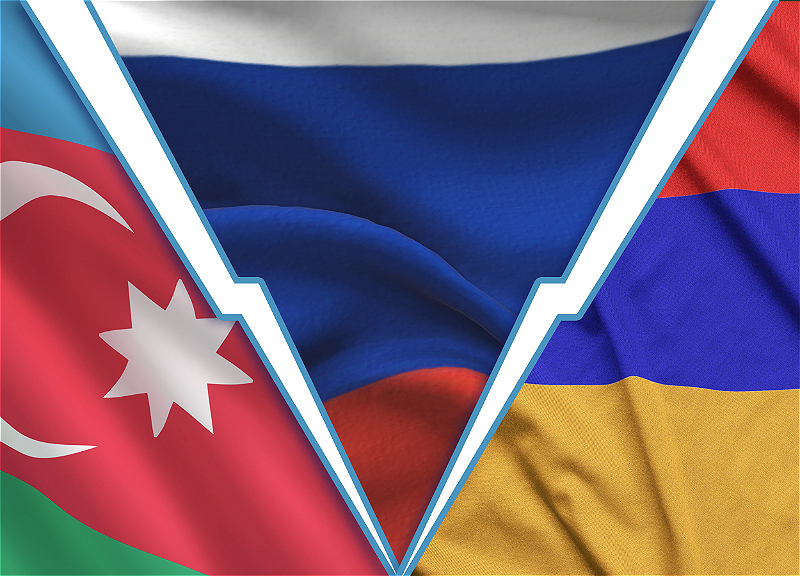
In this framework, Russia does not act as a neutral observer or an honest broker but as an active participant in a hybrid confrontation, simultaneously targeting both Armenia and Azerbaijan. This may seem paradoxical only to those who still think in terms of formal alliances and outdated integration labels. In practice, Moscow has long operated differently, not dividing partners and opponents by official declarations but assessing them solely by their degree of controllability. As soon as controllability diminishes, a familiar set of tools is activated, including information attacks and personalized smear campaigns as means of influence.
The judicial processes in Baku and Yerevan have become a real stress test for this scheme. The trial of Ruben Vardanyan in Azerbaijan and the case against Samvel Karapetyan in Armenia, at first glance, pertain to different legal systems, jurisdictions, and sets of charges. However, Moscow's reaction to both has been strikingly similar, revealing the true nature of what is happening. In both cases, the focus is not so much on defending specific individuals as on protecting a mechanism of external influence that had long functioned smoothly but has recently begun to falter.
In Azerbaijan, Ruben Vardanyan is perceived not as a private individual with a successful business background but as a political 'paratrooper' who appeared in Karabakh at a moment when the separatist regime needed a new source of legitimacy and funding. His renunciation of Russian citizenship did not serve as evidence of independence but rather appeared as a technical maneuver designed to simplify the execution of his assigned task. His appointment as the so-called 'state minister' was seen in Baku as Moscow's attempt to maintain control over regional processes through informal channels when formal ones ceased to work.
Within Azerbaijan's legal framework, the issue is not about political disagreements but specific criminal acts related to the financing and organizational support of illegal armed formations operating in Karabakh, aiding the separatist regime, and actions that the investigation qualifies as involvement in war crimes and undermining the country's territorial integrity. In other words, this is not about a symbolic figure but about a person whose actions, according to the prosecution, had direct consequences for the state's security and the lives of its citizens. This legal context fundamentally distinguishes the judicial process from the political campaign that external commentators attempt to turn it into.
Samvel Karapetyan occupies a mirror position in the Armenian context. His name has long been associated with close ties to the Russian elite, and his activities extend far beyond business influence. For Nikol Pashinyan's government, this case is not about personal accountability but a demonstration of the principle that internal processes in Armenia are no longer an extension of someone else's external strategy. Therefore, the trial in Yerevan should be seen as an attempt to eliminate a 'fifth column' and protect state sovereignty from external interference. In this sense, the actions of Baku and Yerevan to limit external influence on them align.
The reaction of the Russian propaganda machine to both processes has finally dispelled all doubts. It has shown how painfully Moscow perceives Azerbaijan and Armenia's efforts to free themselves from Russian influence and pursue genuinely independent foreign policies.
Konstantin Zatulin, First Deputy Chairman of the State Duma Committee on CIS Affairs, Eurasian Integration, and Relations with Compatriots, who has long been a marker of such campaigns, reacted as if both cases were the same, just set in different contexts. The courts in Baku and Yerevan were declared by him as 'politically motivated,' the verdicts as 'reprisals,' and the states themselves as ungrateful and imprudent. The rhetoric, honed over years, has been relaunched. The same accusations, the same arguments about Russia's displacement from the South Caucasus, the same pathos of 'We’ve done so much for you, and you repay us with nothing.'
After the Azerbaijani Foreign Ministry handed a note to the Russian Ambassador in Baku, Mikhail Yevdokimov, on February 6 regarding Zatulin's anti-Azerbaijani statements, one might have expected at least a symbolic pause. However, a pause does not seem to have been in Zatulin's plans. In an interview with RTVI, he called Baku's reaction a 'pointless offense' and described the sentences against Armenians accused of war crimes as 'effectively a deferred death penalty.' The phrasing, more fitting for a political thriller than a commentary on a judicial decision, was deliberately chosen for its emotional charge.
On the 'Rossiya' TV channel, the rhetoric became even more straightforward. The twenty-year sentence given to Ruben Vardanyan was labeled 'essentially a life sentence,' and Azerbaijan was portrayed as a state systematically violating the rights of Armenians. The cherry on top of this informational cake was the accusation of displacing Russia from the South Caucasus, delivered with such anguish as if it were a personal loss rather than the consequence of sovereign decisions by independent states. The identical arguments in defense of Vardanyan and Karapetyan only underscored that, for Moscow, the value of these figures is the same, and thus the irritation over Baku and Yerevan's actions stems from a common source.
For Azerbaijani authorities, the verdict against Vardanyan was not just the conclusion of a specific case but a clear signal that past passports, old connections, and previous merits to someone do not grant immunity from accountability before Azerbaijan—accountability for crimes committed against its people. This is a demonstration that the country's territory is no longer a space for experiments with external control. In Yerevan, the trial of Karapetyan serves a similar function. It is intended to show that Armenia rejects the role of a powerless satellite and is ready to evaluate the actions of any individuals through the lens of national interests, rather than passively accepting a list of names handed down from Moscow offices.
In both cases, the legal form has become a form of institutional resistance to external interference. Judicial decisions have established red lines beyond which any attempts at political maneuvering lose meaning and cease to be a subject of discussion. In Vardanyan's case, it is a principled demonstration that the peace process and internal justice in Azerbaijan exist outside the logic of external ultimatums and are not subject to adjustment for foreign interests. In Armenia, the processes against figures associated with Russian influence follow the same path—as a way to define the limits of acceptable presence and interference, where each judicial step is seen not as an element of bargaining but as a statement of independence in matters of security and state sovereignty.
Against this backdrop, special attention should be paid to Zatulin himself, who, as mentioned earlier, continues to hold the position of First Deputy Chairman of the State Duma Committee on CIS Affairs, Eurasian Integration, and Relations with Compatriots. His public statements essentially undermine the very idea of the Commonwealth, turning it into a platform for broadcasting offensive rhetoric toward member states. It is unsurprising that, under these conditions, questions about the advisability of Azerbaijan's continued participation in the CIS, where such figures shape the agenda without any consequences for themselves, are growing louder.
The absence of President Ilham Aliyev at the latest meeting of CIS heads of state was a logical continuation of this stance. Judging by appearances, Baku does not intend to create the illusion of engagement in a format increasingly used as a platform for pressure rather than equal dialogue. This decision does not appear as a gesture of demonstrative rupture but as a cold acknowledgment of the fact that respect is not automatic—it must be earned through actions.
In the end, the trials of Vardanyan in Baku and Karapetyan in Yerevan represent a surgical removal of Russian influence from the internal politics of the two countries. The differences in charges and legal details do not alter their political nature. This is a demonstrative refusal to follow Moscow's 'recommendations' on personnel and legal matters, backed by concrete decisions rather than declarations. And this is precisely why the Russian reaction has been so nervous and so predictable: when tools of influence break down, all that remains is to loudly express outrage and feign offense, hoping that familiar incantations might still work. However, the South Caucasus increasingly shows that the time for these incantations is coming to an end.