Is Moscow Taking Its Hybrid War Against Baku Across the Ocean?
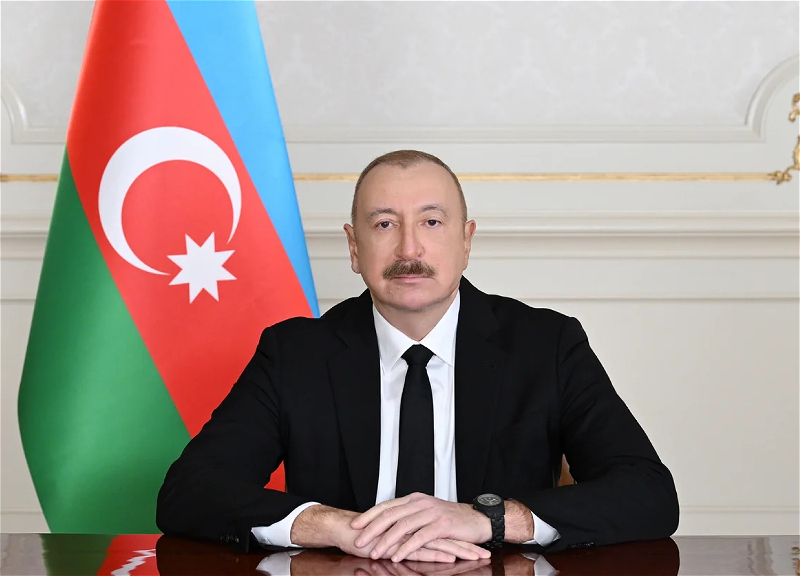
The visit of President Ilham Aliyev to Washington at the invitation of Donald Trump to participate in the first meeting of the Peace Council marked a significant foreign policy event, underscoring Baku's growing role in shaping the global security architecture.
However, this very visit triggered yet another unfriendly move from Russia, which is increasingly shifting from diplomatic irritation to the tools of hybrid pressure.
A recent manifestation of this approach was the Washington provocation—an action by a radically inclined group near the hotel where the President of Azerbaijan stayed during his visit.
A Provocation as a Planned Operation
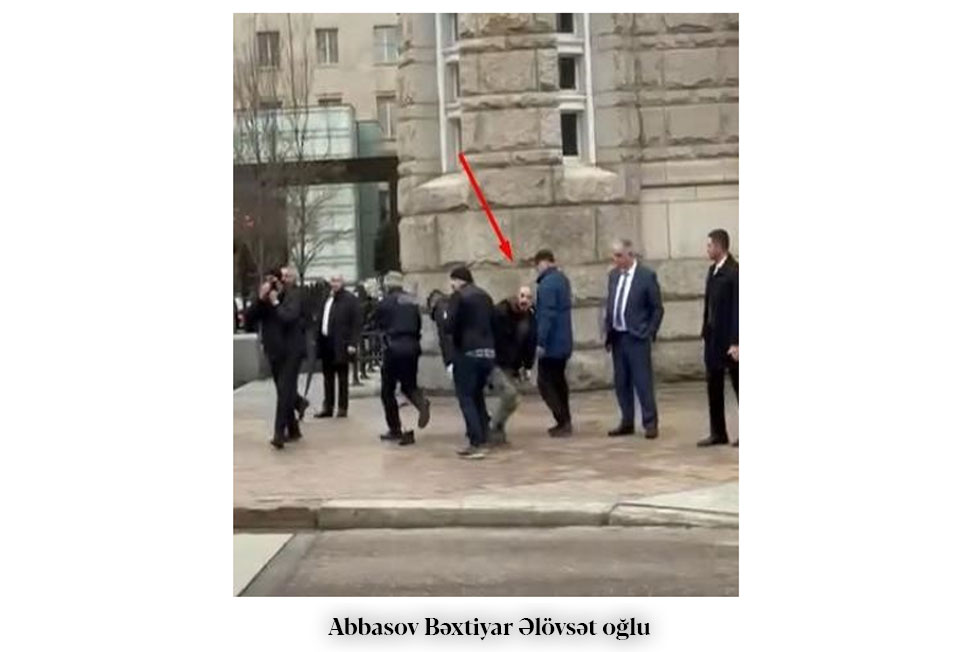
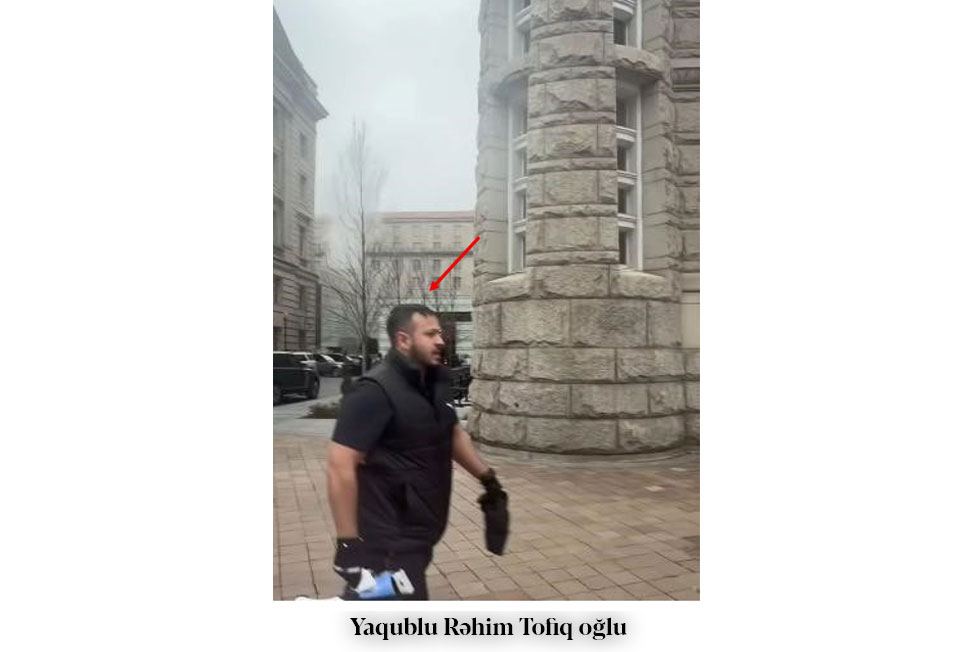
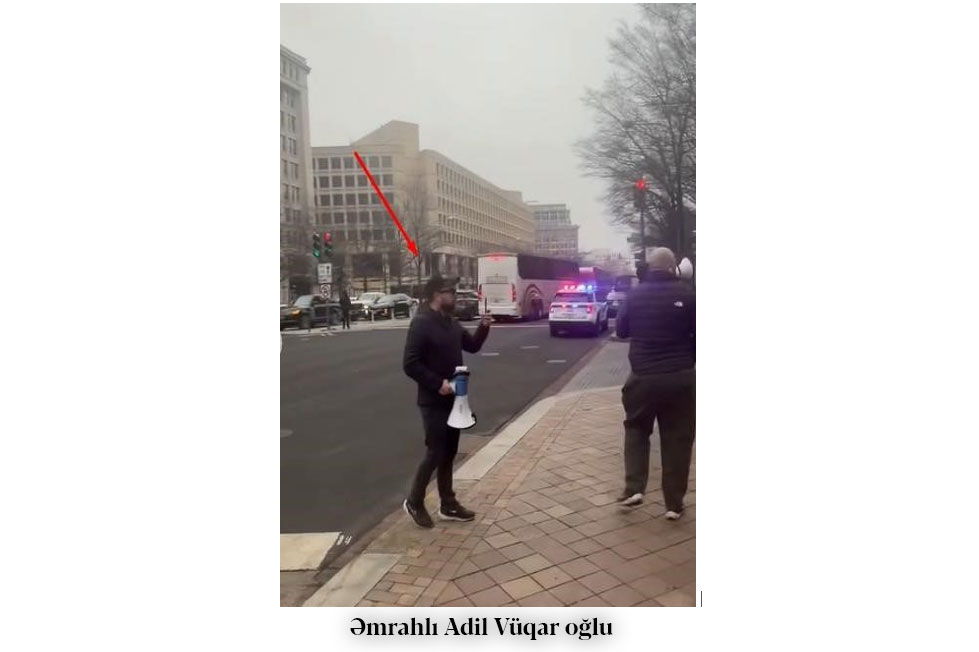
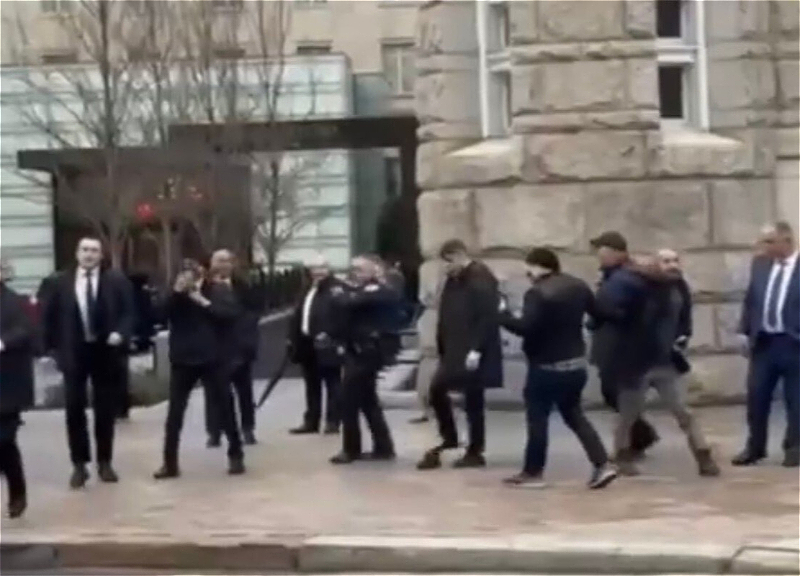
On February 19, in Washington, a group of radically minded individuals carried out overtly provocative actions near the hotel where the President of Azerbaijan was staying. Insulting and unethical statements were made against the country's leadership, and attempts were made to breach the secured area.
Joint operational efforts by the Security Service of the President of Azerbaijan and American law enforcement agencies enabled the threat to be neutralized promptly. The Washington provocation was neither spontaneous nor related to 'emigrant discontent.'
It was a targeted action, evidently orchestrated by Russia as an element of hybrid pressure on Baku. This was preceded by an information escalation in media outlets affiliated with Russian state structures.
In news reports, talk shows, and on 'expert platforms,' distorted interpretations of Azerbaijan's actions were systematically promoted. Official Baku was portrayed as a 'destabilizing factor,' while the reasons and context were deliberately excluded from analysis. This backdrop served as a preparatory stage for further actions.
Subsequently, the rhetoric was elevated to an institutional level: several State Duma deputies made statements containing elements of threats and hints at Azerbaijan's sovereignty, indicating a shift to political-psychological pressure. In the logic of hybrid strategy, this was accompanied by cyber activity, creating comprehensive pressure.
The combination of 'media - parliament - street action overseas' was employed to discredit Azerbaijan at a time of heightened international engagement.
The Washington provocation was not an isolated incident but part of a consistent hybrid campaign beyond the region.
The nature of the incident, its synchronization with the information campaign, and the composition of the participants leave no doubt: this was not a spontaneous protest but a pre-organized action.
Video recordings circulated on social media clearly demonstrate the aggressive and demonstrative behavior of the participants, aimed not at expressing a position but at creating an incident with international resonance. Such a pattern is well-known as an element of special operations disguised as 'street activity.'
Biographies as Evidence
An analysis of the biographies of the participants, their migration routes, and established connections elevates the situation to the realm of national and international security. A significant portion of the radicals had systemic ties to the Russian Federation—long-term residency, possession of Russian citizenship, frequent trips, and contacts with figures previously implicated in investigations regarding the coordination and financing of opposition activities.
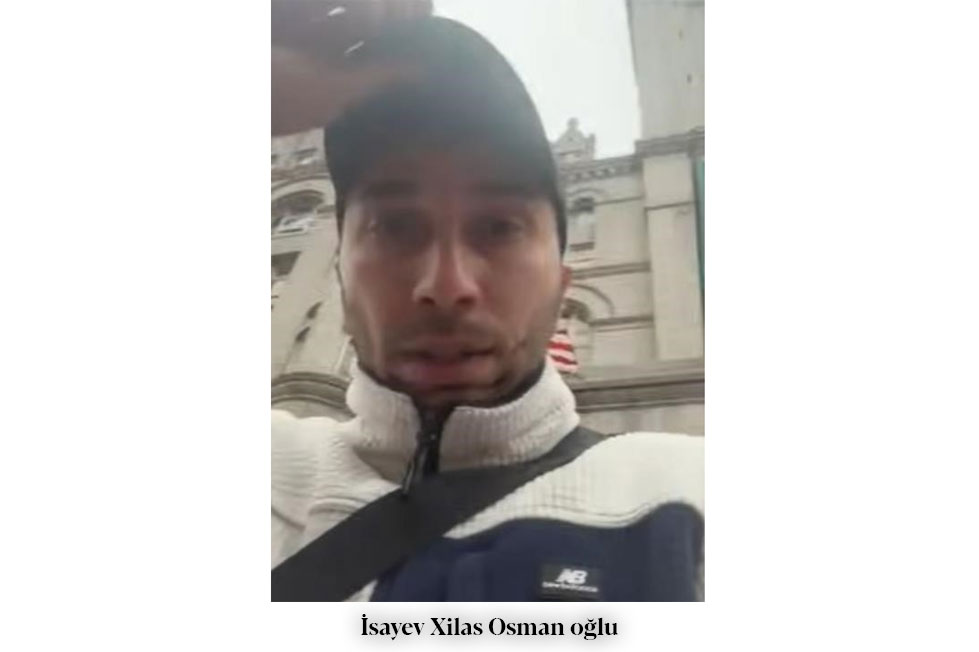
The most telling figures—Adil Emrahli, Ragim Yagublu, Bakhtiyar Abbasov, and others—are united by a common trajectory: active ties with Russia, subsequent relocation to the USA, and synchronized involvement in anti-Azerbaijani actions. The coincidences are too systematic to be random.
Adil Vugar oglu Emrahli, born on 02.08.1990, is a citizen of the Russian Federation. While in Azerbaijan, he frequently traveled to Russia. He lived for a long time in the Russian city of Novgorod. Most recently, on 15.10.2022, he left for Germany using a Russian Federation passport. He currently resides in the USA. There is information that he is married to a woman named Tatyana Viktorovna, whose nationality is unknown.
Ragim Tofiq oglu Yagublu, born on 06.04.1998, is a member of the Musavat party. Ragim Yagublu, the son of Tofig Yagublu, last left Azerbaijan on 20.03.2022, heading to Turkey. He currently resides in the USA. While in Azerbaijan, Ragim Yagublu also repeatedly traveled to the Russian Federation and returned. On 12.07.2018, he went to Russia and returned on 13.08.2018. There is information that he visited Russia 8 times.
Bakhtiyar Alovsat oglu Abbasov, born on 30.04.1972, is also a citizen of the Russian Federation. While in the country, he frequently traveled to Russia. It is known that he traveled to Russia and returned approximately 16 times. He was a member of the PFPA. According to available information, he was recruited to cooperate with Russian special services. He was close to Saleh Rustamov, who directed illegal financial resources to the PFPA from Russia, and for a long time participated with him in fundraising. After Saleh Rustamov's arrest, on the instructions of the special services with whom he had previously collaborated, he changed his form of public activity and was transferred to the USA, where he currently resides.
He also participated in financing a fundraising campaign to support opposition figures fined for an unauthorized action on December 15, 2021, at Fountain Square in Baku, organized by PFPA member Ganimat Zahidov, residing in France, and AND co-chair Gullyu Jahangirova (Denmark).
Hilas Osman oglu Isayev, born on 10.10.1995, is also a member of the PFPA. Most recently, on 27.03.2024, he left Azerbaijan for Turkey. He currently resides in the USA.
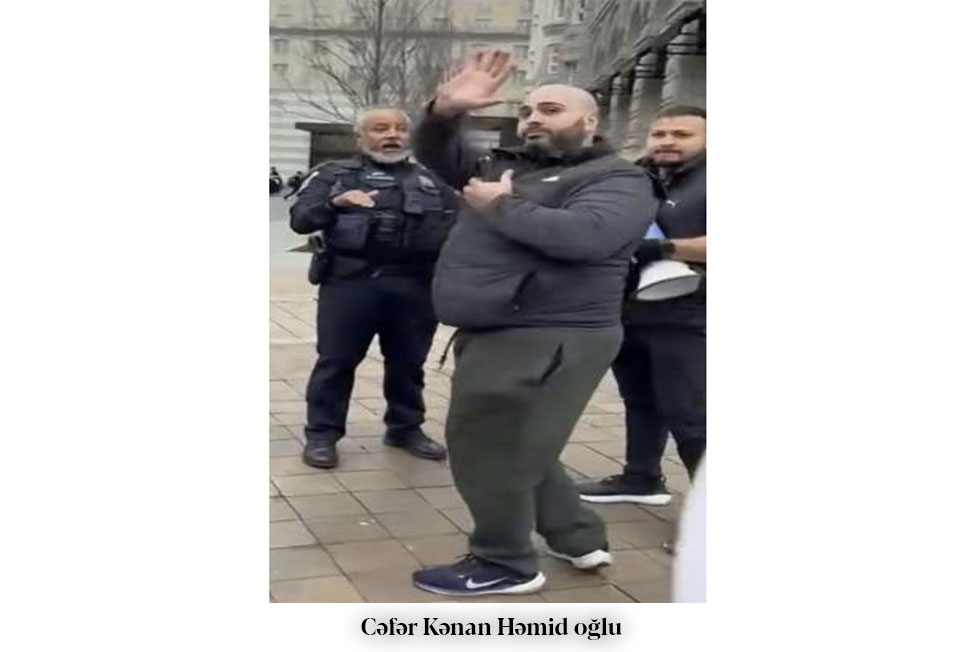
Kanan Hamid oglu Jafar, born on 03.06.1988, left Azerbaijan for Russia on 10.11.2015. He returned to the country on 17.11.2015. Most recently, on 08.04.2017, he left Azerbaijan for Qatar. He currently resides in the USA.
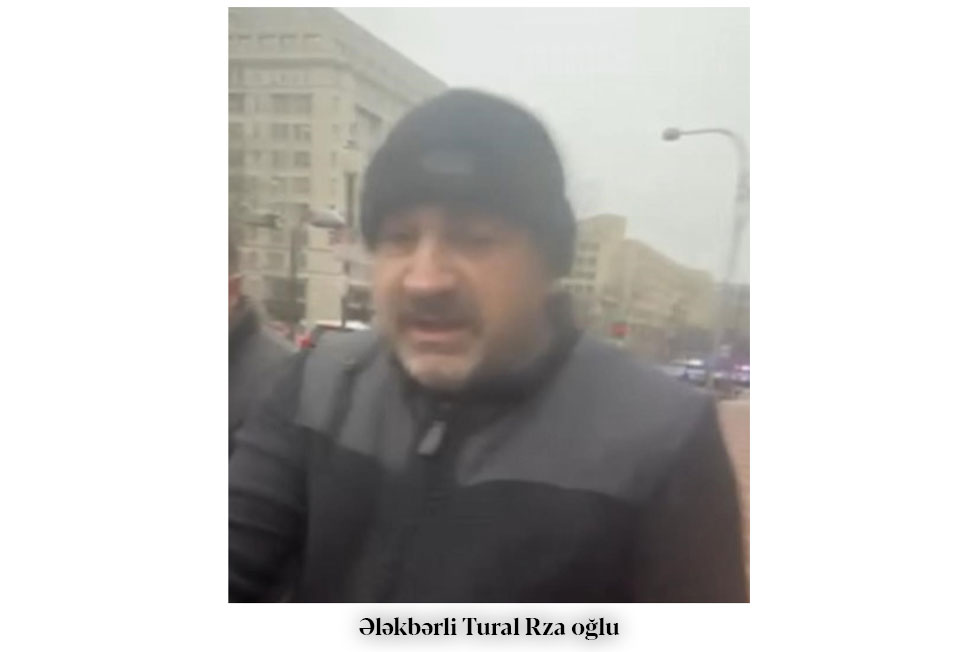
Tural Rza oglu Alekberli, born on 28.08.1981, repeatedly traveled to Russia while living in Azerbaijan. There is information that he traveled to Russia 54 times. Most recently, on 16.10.2018, he left Azerbaijan for Russia. He currently resides in the USA.
It is evident that the participants in the planned provocation against Azerbaijan and its leadership are linked to Russia. Moscow, using an extensive agent network, employs its proxies even in the United States to achieve its geopolitical objectives.
Why Now?
The answer to this question lies in a chain of processes that began long before the Washington events. A key turning point was the tragic incident—the downing of an AZAL passenger plane in Russian airspace.
Azerbaijan took a principled and sovereign stance, demanding a thorough investigation and real punishment for those responsible. Baku did not allow the incident to be hushed up and did not limit itself to diplomatic expressions of 'regret,' thereby disrupting Moscow's accustomed model of impunity.
For the first time in a long while, Moscow faced a situation in the post-Soviet space where it is not only contradicted but also consistently met with the defense of national interests without regard for the status of a 'senior partner.'
A Hybrid Attack with a Backfire Effect
The deployment of agents of influence overseas, the attempt to use the emigrant community as a tool of pressure, and the coordination of radicals under the guise of 'freedom of speech' all indicate not strength but Moscow's strategic weakness.
Russia is losing influence in the South Caucasus and increasingly responds not with a well-thought-out strategy but with irritation and destructive methods. The Washington action did not harm Azerbaijan but vividly demonstrated the true source of destabilization.
The professional response of American law enforcement agencies and the lack of any support for the radicals from official US structures only emphasized that such scenarios find no resonance in the civilized world.
Azerbaijan: A Subject, Not an Object
Today's Azerbaijan is a state that not only defends its interests but also shapes its own agenda in international affairs. This is precisely why it becomes a target of hybrid attacks.
Moscow can disguise its actions as 'civil society initiatives' as much as it wants, but the facts, biographies, routes, and connections speak for themselves. The Russian trace in the Washington provocation is evident, and it only confirms that Baku is moving in the right direction.
The louder such provocations become, the clearer one thing is—Azerbaijan is strengthening its position, while those who bet on pressure and subversive scenarios are rapidly losing influence, allies, and trust.